Evaluating Shared Decision Making in Trial of Labor After Cesarean Counseling Using Objective Structured Clinical Examinations
- PMID: 32342013
- PMCID: PMC7182044
- DOI: 10.15766/mep_2374-8265.10891
Evaluating Shared Decision Making in Trial of Labor After Cesarean Counseling Using Objective Structured Clinical Examinations
Abstract
Introduction: Although shared decision making (SDM) is optimal for trial of labor after cesarean (TOLAC) counseling, resources to assess residents' clinical competency and communication skills are lacking. We addressed this gap by developing and testing an objective structured clinical examination (OSCE) to evaluate whether learners were able to use SDM in TOLAC counseling.
Methods: We created three simulation scenarios with increasing complexity to assess the skills of residents in their first, second, or third postgraduate year in using SDM in TOLAC counseling. All cases involved a standardized patient requesting a TOLAC consultation. Residents were provided with a medical history and instructed to counsel and develop a care plan. A 10-item scoring rubric was used, and each item was rated 0 (absent), 1 (partial), or 2 (complete). Three coders independently rated the encounters; discrepancies were resolved by consensus.
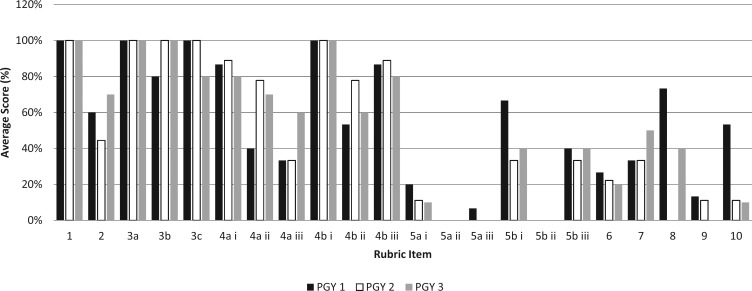
Results: Over 3 years, 39 residents participated in 60 OSCE encounters. The majority provided complete discussions of the clinical issue (93%), chances of success (72%), and maternal and fetal risks (100% and 85%, respectively) but obtained partial assessments of understanding (78%). Discussions of benefits were typically absent, with the exception of the maternal benefits (47%). More than 40% of residents did not discuss the patient's goals, 53% lacked discussion of uncertainties related to TOLAC, and half failed to explore the patient's preference, with most deferring a decision to a future encounter.
Discussion: Residents consistently discussed diagnosis, prognosis, and maternal risks yet infrequently addressed goals and preferences-two critical elements of SDM.
Keywords: Birth Counseling; Case-Based Learning; Clinical Skills Assessment/OSCEs; Communication Skills; OB/GYN; Resident Training; Shared Decision Making; Simulation; Standardized Patient; TOLAC; Trial of Labor; VBAC; Vaginal Birth After Cesarean.
Copyright © 2020 Tucker Edmonds et al.
Conflict of interest statement
None to report.
Figures
References
-
- Macones GA, Peipert J, Nelson DB, et al.. Maternal complications with vaginal birth after cesarean delivery: a multicenter study. Am J Obstet Gynecol. 2005;193(5):1656-1662. https://doi.org/10.1016/j.ajog.2005.04.002 - PubMed
-
- Mercer BM, Gilbert S, Landon MB, et al.. Labor outcomes with increasing number of prior vaginal births after cesarean delivery. Obstet Gynecol. 2008;111(2):285-291. https://doi.org/10.1097/AOG.0b013e31816102b9 - PubMed
-
- Zia S, Rafique M. Intra-operative complications increase with successive number of cesarean sections: myth or fact? Obstet Gynecol Sci. 2014;57(3):187-192. https://doi.org/10.5468/ogs.2014.57.3.187 - PMC - PubMed
-
- Cook JR, Jarvis S, Knight M, Dhanjal MK. Multiple repeat caesarean section in the UK: incidence and consequences to mother and child. A national, prospective, cohort study. BJOG. 2013;120(1):85-91. https://doi.org/10.1111/1471-0528.12010 - PubMed
-
- Landon MB, Hauth JC, Leveno KJ, et al; for the National Institute of Child Health and Human Development Maternal–Fetal Medicine Units Network. Maternal and perinatal outcomes associated with a trial of labor after prior cesarean delivery. N Engl J Med. 2004;351(25):2581-2589. https://doi.org/10.1056/NEJMoa040405 - PubMed
MeSH terms
LinkOut - more resources
Full Text Sources
Miscellaneous