


In Vitro Impact of FSH Glycosylation Variants on FSH Receptor-stimulated Signal Transduction and Functional Selectivity
- PMID: 32342021
- PMCID: PMC7175721
- DOI: 10.1210/jendso/bvaa019
In Vitro Impact of FSH Glycosylation Variants on FSH Receptor-stimulated Signal Transduction and Functional Selectivity
Abstract
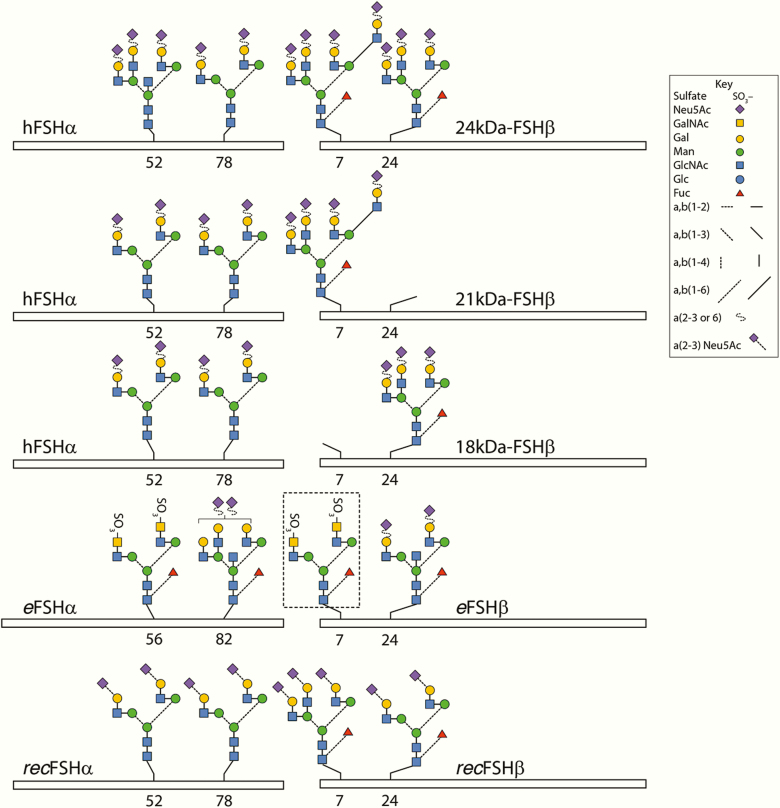
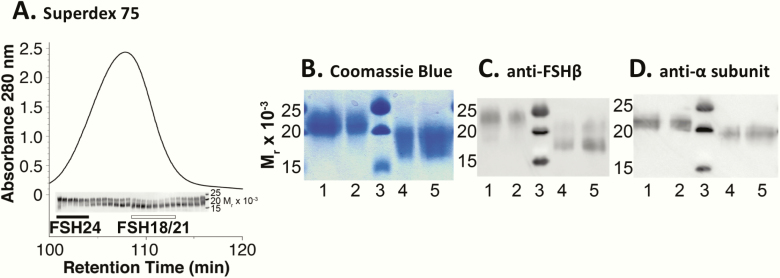
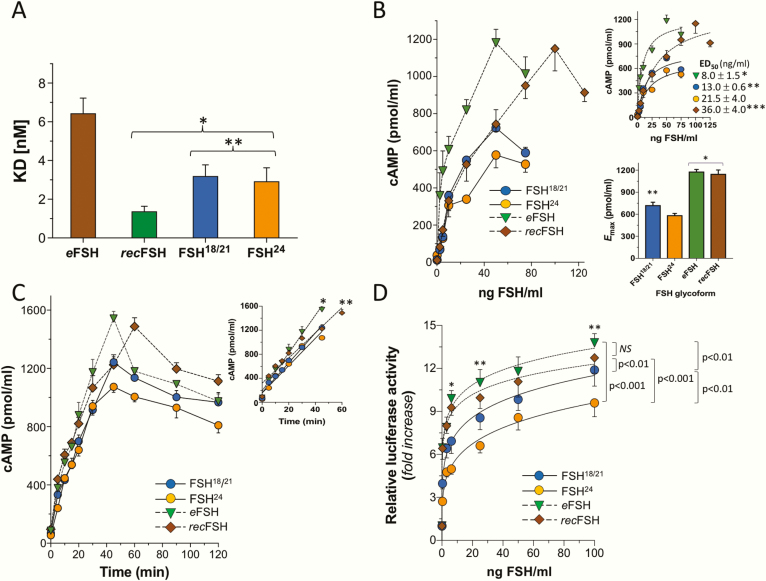
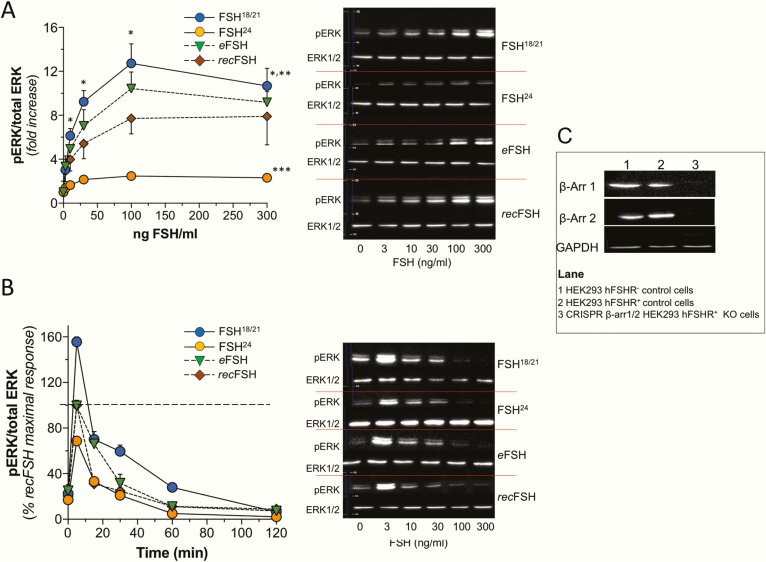
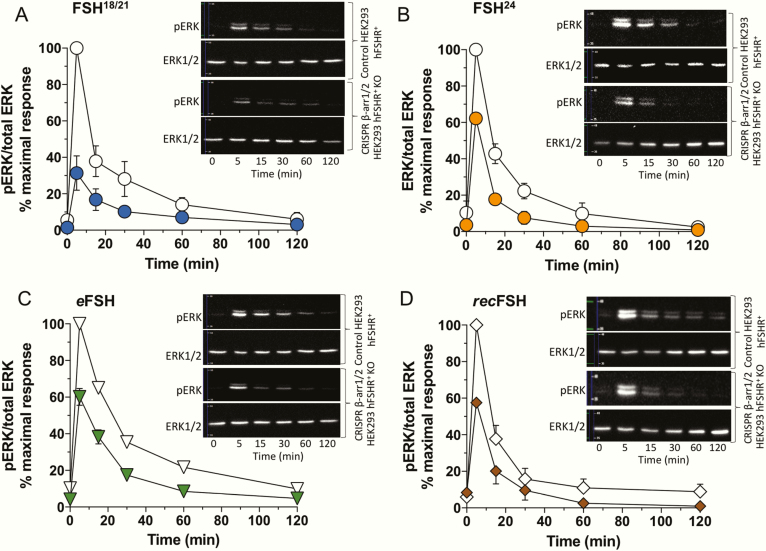
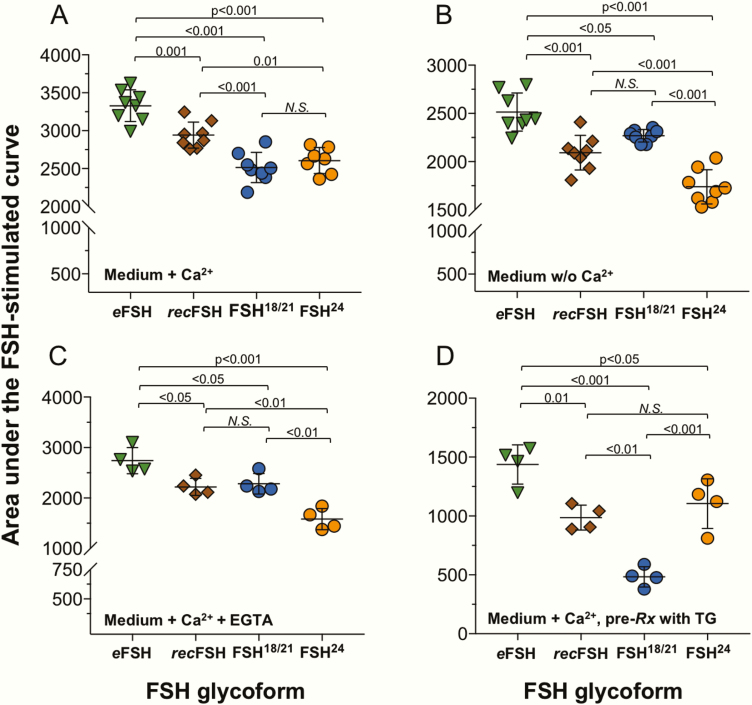
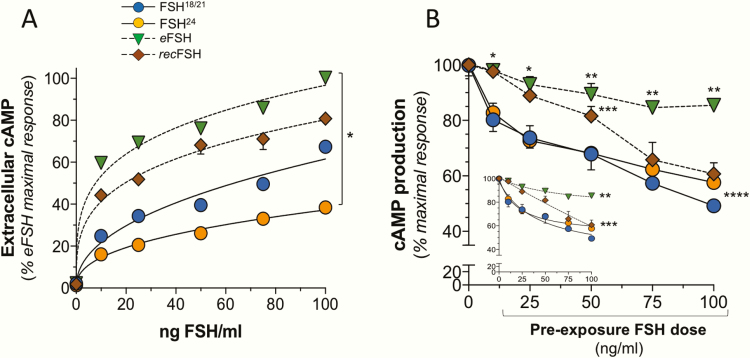
FSH exists as different glycoforms that differ in glycosylation of the hormone-specific β-subunit. Tetra-glycosylated FSH (FSH24) and hypo-glycosylated FSH (FSH18/21) are the most abundant glycoforms found in humans. Employing distinct readouts in HEK293 cells expressing the FSH receptor, we compared signaling triggered by human pituitary FSH preparations (FSH18/21 and FSH24) as well as by equine FSH (eFSH), and human recombinant FSH (recFSH), each exhibiting distinct glycosylation patterns. The potency in eliciting cAMP production was greater for eFSH than for FSH18/21, FSH24, and recFSH, whereas in the ERK1/2 activation readout, potency was highest for FSH18/21 followed by eFSH, recFSH, and FSH24. In β-arrestin1/2 CRISPR/Cas9 HEK293-KO cells, FSH18/21 exhibited a preference toward β-arrestin-mediated ERK1/2 activation as revealed by a drastic decrease in pERK during the first 15-minute exposure to this glycoform. Exposure of β-arrestin1/2 KO cells to H89 additionally decreased pERK1/2, albeit to a significantly lower extent in response to FSH18/21. Concurrent silencing of β-arrestin and PKA signaling, incompletely suppressed pERK response to FSH glycoforms, suggesting that pathways other than those dependent on Gs-protein and β-arrestins also contribute to FSH-stimulated pERK1/2. All FSH glycoforms stimulated intracellular Ca2+ (iCa2+) accumulation through both influx from Ca2+ channels and release from intracellular stores; however, iCa2+ in response to FSH18/21 depended more on the latter, suggesting differences in mechanisms through which glycoforms promote iCa2+ accumulation. These data indicate that FSH glycosylation plays an important role in defining not only the intensity but also the functional selectivity for the mechanisms leading to activation of distinct signaling cascades.
Keywords: biased agonism; follicle-stimulating hormone; follicle-stimulating hormone receptor; functional selectivity; glycosylation; macroheterogeneity; signal transduction.
© Endocrine Society 2020.
Figures

References
-
- Baenziger JU. Glycoprotein hormone GalNAc-4-sulphotransferase. Biochem Soc Trans. 2003;31(2):326–330. - PubMed
-
- Chappel SC, Ulloa-Aguirre A, Coutifaris C. Biosynthesis and secretion of follicle-stimulating hormone. Endocr Rev. 1983;4(2):179–211. - PubMed
-
- Pierce JG, Parsons TF. Glycoprotein hormones: structure and function. Annu Rev Biochem. 1981;50:465–495. - PubMed
-
- Bousfield GR, Butnev VY, Gotschall RR, Baker VL, Moore WT. Structural features of mammalian gonadotropins. Mol Cell Endocrinol. 1996;125(1-2):3–19. - PubMed
Grants and funding
LinkOut - more resources
Full Text Sources
Research Materials
Miscellaneous