


Oncobiosis and Microbial Metabolite Signaling in Pancreatic Adenocarcinoma
- PMID: 32344895
- PMCID: PMC7281526
- DOI: 10.3390/cancers12051068
Oncobiosis and Microbial Metabolite Signaling in Pancreatic Adenocarcinoma
Abstract
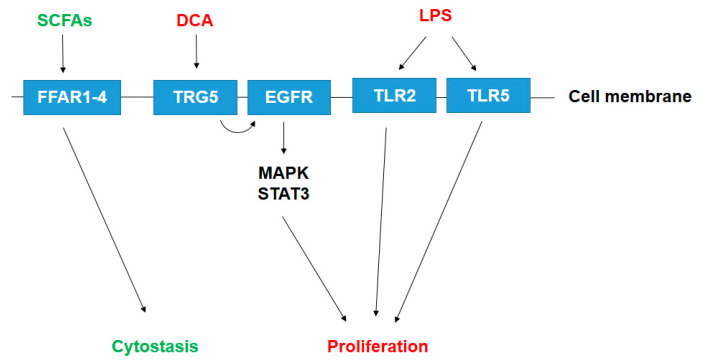
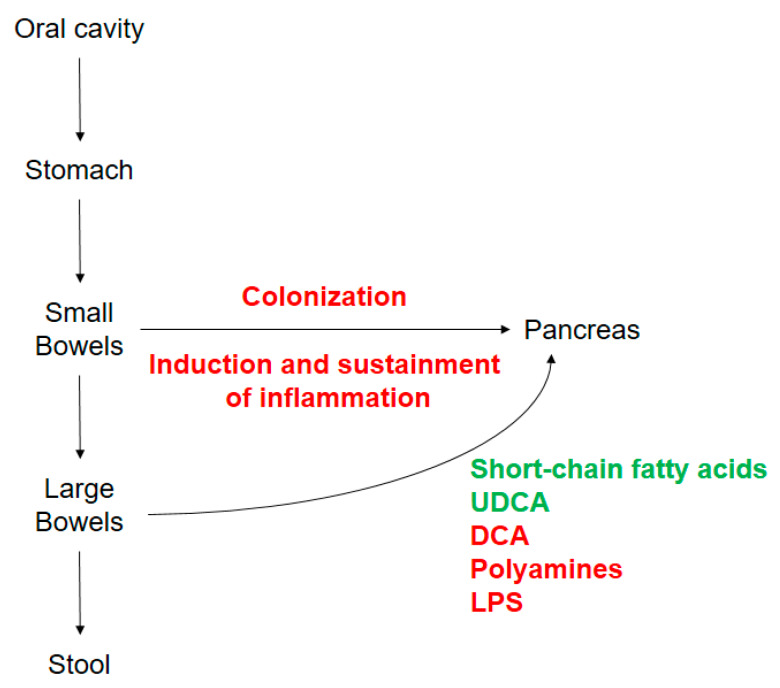
Pancreatic adenocarcinoma is one of the most lethal cancers in both men and women, with a median five-year survival of around 5%. Therefore, pancreatic adenocarcinoma represents an unmet medical need. Neoplastic diseases, such as pancreatic adenocarcinoma, often are associated with microbiome dysbiosis, termed oncobiosis. In pancreatic adenocarcinoma, the oral, duodenal, ductal, and fecal microbiome become dysbiotic. Furthermore, the pancreas frequently becomes colonized (by Helicobacter pylori and Malassezia, among others). The oncobiomes from long- and short-term survivors of pancreatic adenocarcinoma are different and transplantation of the microbiome from long-term survivors into animal models of pancreatic adenocarcinoma prolongs survival. The oncobiome in pancreatic adenocarcinoma modulates the inflammatory processes that drive carcinogenesis. In this review, we point out that bacterial metabolites (short chain fatty acids, secondary bile acids, polyamines, indole-derivatives, etc.) also have a role in the microbiome-driven pathogenesis of pancreatic adenocarcinoma. Finally, we show that bacterial metabolism and the bacterial metabolome is largely dysregulated in pancreatic adenocarcinoma. The pathogenic role of additional metabolites and metabolic pathways will be identified in the near future, widening the scope of this therapeutically and diagnostically exploitable pathogenic pathway in pancreatic adenocarcinoma.
Keywords: LPS; amino acid metabolites; bacterial metabolite; bile acids; microbiome; oncobiome; pancreatic adenocarcinoma; polyamines; short chain fatty acid.
Conflict of interest statement
The authors declare no conflict of interest.
Figures
References
-
- Ducreux M., Cuhna A.S., Caramella C., Hollebecque A., Burtin P., Goere D., Seufferlein T., Haustermans K., Van Laethem J.L., Conroy T., et al. Cancer of the pancreas: ESMO Clinical Practice Guidelines for diagnosis, treatment and follow-up. Ann. Oncol. 2015;26:56–68. doi: 10.1093/annonc/mdv295. - DOI - PubMed
Publication types
Grants and funding
LinkOut - more resources
Full Text Sources
Other Literature Sources
