Global Prevalence and Device Related Causes of Needle Stick Injuries among Health Care Workers: A Systematic Review and Meta-Analysis
- PMID: 32346521
- PMCID: PMC7181946
- DOI: 10.5334/aogh.2698
Global Prevalence and Device Related Causes of Needle Stick Injuries among Health Care Workers: A Systematic Review and Meta-Analysis
Abstract
Background: Healthcare workers (HCWs) suffer more than 2 million occupational needle-stick injuries (NSIs) annually.
Goal: To determine the global prevalence and causes of NSIs among HCWs.
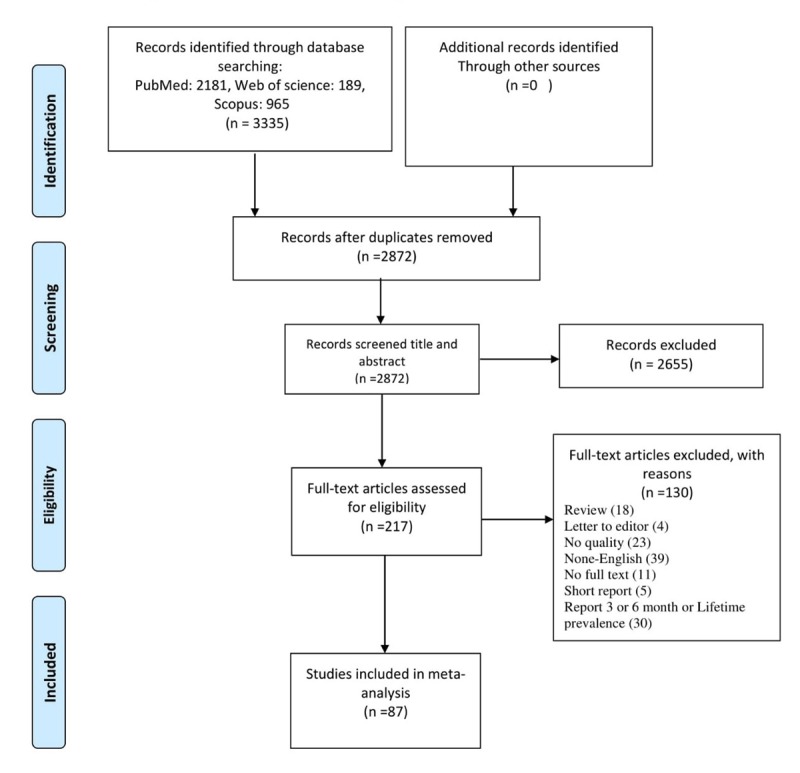
Methods: In this systematic review and meta-analysis, three databases (PubMed, Web of science, and Scopus) were searched for reports from January 1, 2000 to December 31, 2018. The random effects model was used to determine the prevalence of NSIs among HCWs. Hoy et al.'s instrument was employed to evaluate the quality of the included studies.
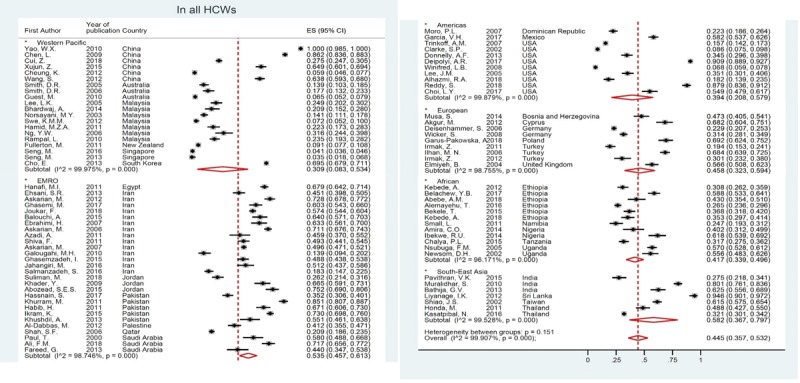
Findings: A total of 87 studies performed on 50,916 HCWs in 31 countries worldwide were included in the study. The one-year global pooled prevalence of NSIs among HCWs was 44.5% (95% CI: 35.7, 53.2). Highest prevalence of NSIs occurred in the South East Asia region at 58.2% (95%, CI: 36.7, 79.8). By job category, prevalence of NSIs was highest among dentists at 59.1% (95% CI: 38.8, 79.4), Hypodermic needles were the most common cause of NSIs at 55.1% (95% CI: 41.4, 68.9).
Conclusion: The current high prevalence of NSIs among HCWs suggests need to improve occupational health services and needle-stick education programs globally.
Copyright: © 2020 The Author(s).
Conflict of interest statement
The authors have no competing interests to declare.
Figures
References
-
- World Health Organization (WHO). Needlestick injuries. 2019; Available from: https://www.who.int/occupational_health/topics/needinjuries/en/.
-
- Centers for Disease Control and Prevention (CDC). STOP STICKS CAMPAIGN–Sharps Injuries. 2019; Available from: https://www.cdc.gov/niosh/stopsticks/sharpsinjuries.html.
Publication types
MeSH terms
LinkOut - more resources
Full Text Sources
Medical
Miscellaneous