Review
. 2020 Jun 16;9(12):e017013.
doi: 10.1161/JAHA.120.017013. Epub 2020 Apr 29.

Current Perspectives on Coronavirus Disease 2019 and Cardiovascular Disease: A White Paper by the JAHA Editors

Affiliations
Review

Current Perspectives on Coronavirus Disease 2019 and Cardiovascular Disease: A White Paper by the JAHA Editors

Ajay K Gupta et al. J Am Heart Assoc. .

Abstract

Coronavirus Disease 2019 (COVID-19) has infected more than 3.0 million people worldwide and killed more than 200,000 as of April 27, 2020. In this White Paper, we address the cardiovascular co-morbidities of COVID-19 infection; the diagnosis and treatment of standard cardiovascular conditions during the pandemic; and the diagnosis and treatment of the cardiovascular consequences of COVID-19 infection. In addition, we will also address various issues related to the safety of healthcare workers and the ethical issues related to patient care in this pandemic.

Keywords: COVID‐19; SARS‐CoV‐2; cardiovascular disease; cardiovascular risk factors; coronavirus disease 2019; management; treatment.


Figures
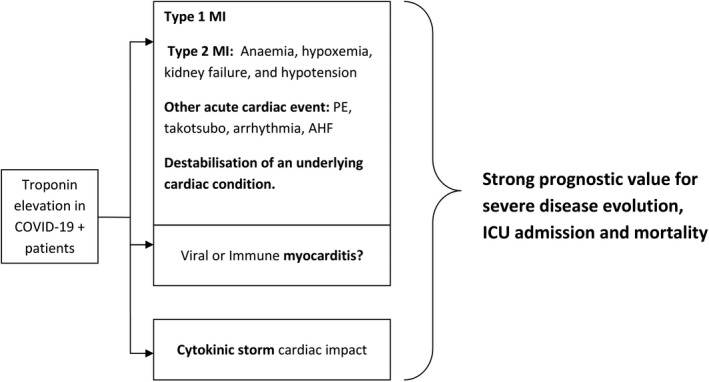
Figure 1
Figure 1. Cause of troponin elevation in patients with severe acute respiratory syndrome coronavirus‐2 infection and its prognostic implication.
AHF indicates acute heart failure; COVID‐19, coronavirus disease 2019; ICU, intensive care unit; MI, myocardial infarction; and PE, pulmonary embolism.
Figure 2
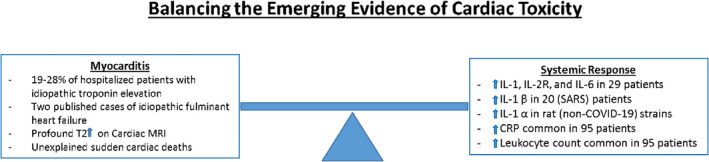
Figure 2. Balance of the evidence to guide current understanding of mechanisms of clinical cardiac events after coronavirus disease 2019 (COVID‐19) infection.
CRP indicates C‐reactive protein; IL, interleukin; MRI, magnetic resonance imaging; and SARS, severe acute respiratory syndrome.
Figure 3
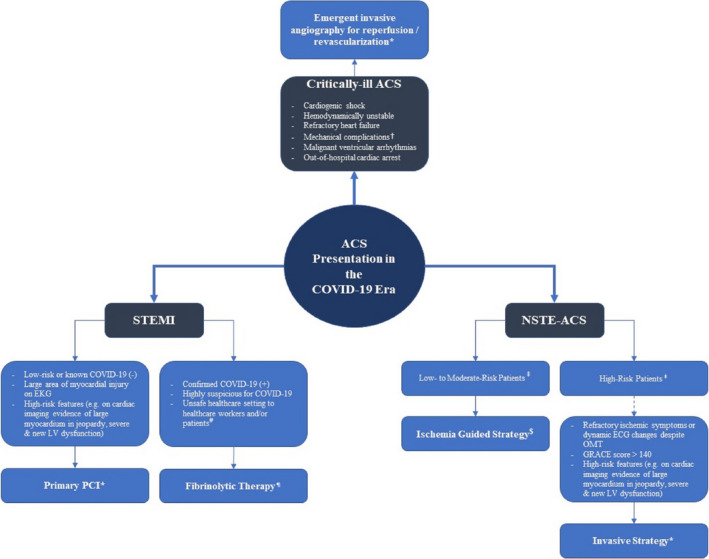
Figure 3. Invasive therapies for acute coronary syndrome (ACS) patients in the coronavirus disease 2019 (COVID‐19) era.
*When pursuing an invasive approach, appropriate personal protective equipment (eg, gowns, face shield/goggles, and N95 masks) and setup (eg, negative pressure room) must be available for the safety of healthcare workers and patients. Otherwise, defaulting to the alternative approach (pharmacologic reperfusion or ischemia‐guided strategy) after deliberation between the heart team members, invoking the ethics team when appropriate, and in a process of shared decision making with the patient and family. †Acute myocardial infarction with mechanical complications is best treated with surgical revascularization and concomitant repair (with adjunctive percutaneous ventricular assist devices). ‡Risk stratification after non–ST‐segment–elevation ACS (NSTE‐ACS) can be performed using an objective risk score (eg, GRACE [Global Registry of Acute Coronary Events] or TIMI [Thrombolysis in Myocardial Infarction]). §Patients treated with an ischemia‐guided strategy may cross over to an invasive strategy in case of significant spontaneous or inducible ischemia, or any evidence of hemodynamic or electrical instability. ¶Fibrinolytic therapy should be administered within door‐to‐needle time of 30 minutes. On failure of pharmacologic reperfusion, rescue percutaneous coronary intervention (PCI) is recommended. #Unsafe healthcare setting can be attributed to a myriad of factors (eg, lack of personal protective equipment, lack of ventilators, shortage of healthcare workers, or negative pressure catheterization laboratory not available). LV indicates left ventricular; OMT, optimal medical therapy; and STEMI, ST‐segment–elevation myocardial infarction.

References

    1. John Hopkins University of Medicine Coronavirus Resource Center. Available at: https://coronavirus.jhu.edu/. Accessed April 27, 2020.
    1. Zhou F, Yu T, Du R, Fan G, Liu Y, Liu Z, Xiang J, Wang Y, Song B, Gu X, et al. Clinical course and risk factors for mortality of adult inpatients with COVID‐19 in Wuhan, China: a retrospective cohort study. Lancet. 2020;395:1054–1062. DOI: 10.1016/S0140-6736(20)30566-3. Epub March 11, 2020. - DOI - PMC - PubMed
    1. Zheng YY, Ma YT, Zhang JY, Xie X. COVID‐19 and the cardiovascular system. Nat Rev Cardiol. 2020;17:259–260. DOI: 10.1038/s41569-020-0360-5. [Epub ahead of print] - DOI - PMC - PubMed
    1. Yang X, Yu Y, Xu J, Shu H, Xia J, Liu H, Wu Y, Zhang L, Yu Z, Fang M, et al. Clinical course and outcomes of critically ill patients with SARS‐CoV‐2 pneumonia in Wuhan, China: a single‐centered, retrospective, observational study. Lancet Respir Med. 2020;8:475‐481. - PMC - PubMed
    1. Wang D, Hu B, Hu C, Zhu F, Liu X, Zhang J, Wang B, Xiang H, Cheng Z, Xiong Y, et al. Clinical characteristics of 138 hospitalized patients with 2019 novel coronavirus–infected pneumonia in Wuhan, China. JAMA. 2020;323:1061–1069. - PMC - PubMed

Publication types