


Extracorporeal cardiopulmonary resuscitation for cardiac arrest
- PMID: 32348091
- PMCID: PMC7340131
- DOI: 10.1097/MCC.0000000000000717
Extracorporeal cardiopulmonary resuscitation for cardiac arrest
Abstract
Purpose of review: Extracorporeal cardiopulmonary resuscitation (ECPR) is a contemporary resuscitation approach that employs veno-arterial extracorporeal membrane oxygenation (VA-ECMO). This approach is increasingly used worldwide to mitigate the widespread hemodynamic and multiorgan dysfunction that accompanies cardiac arrest.
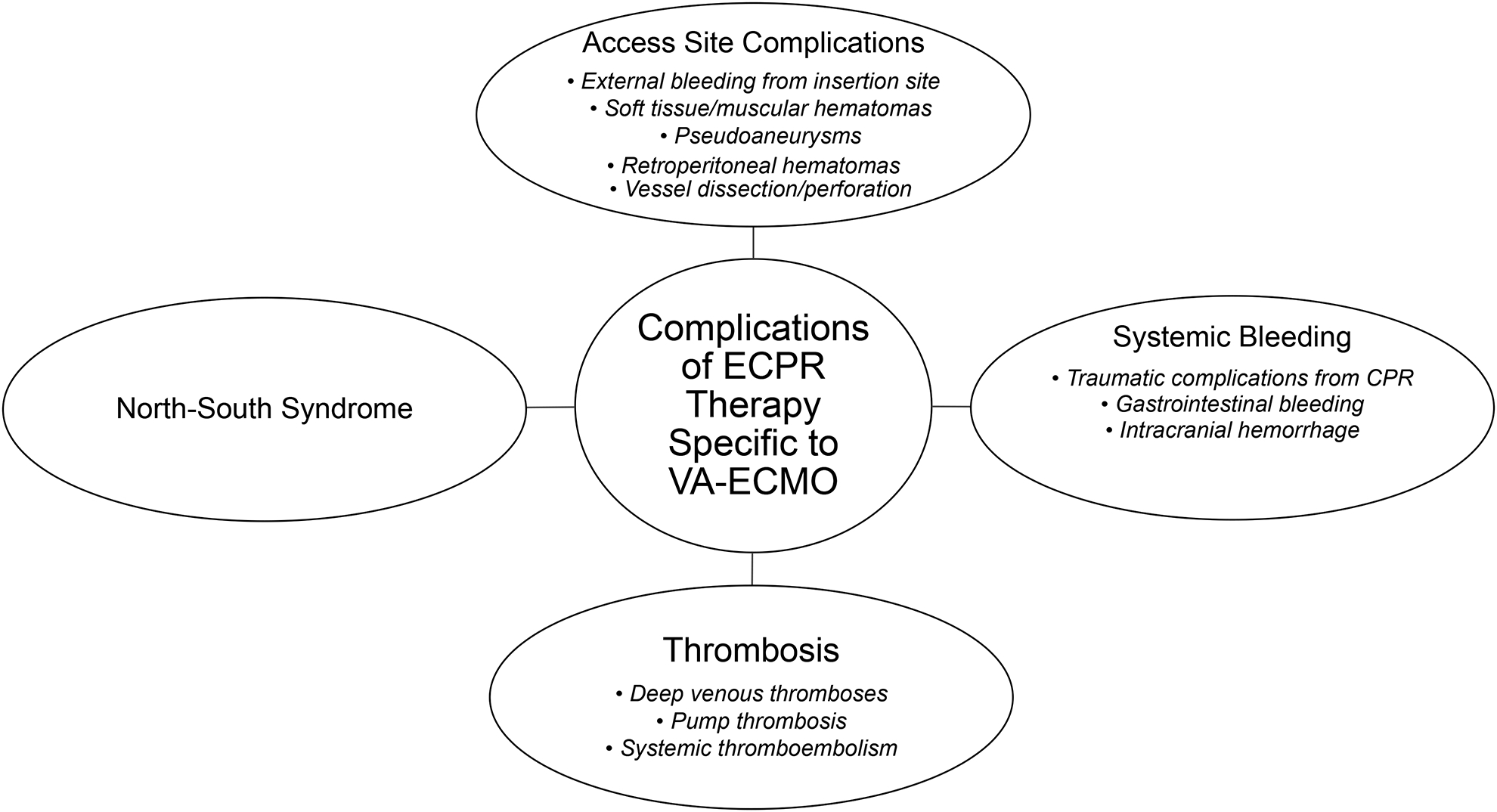
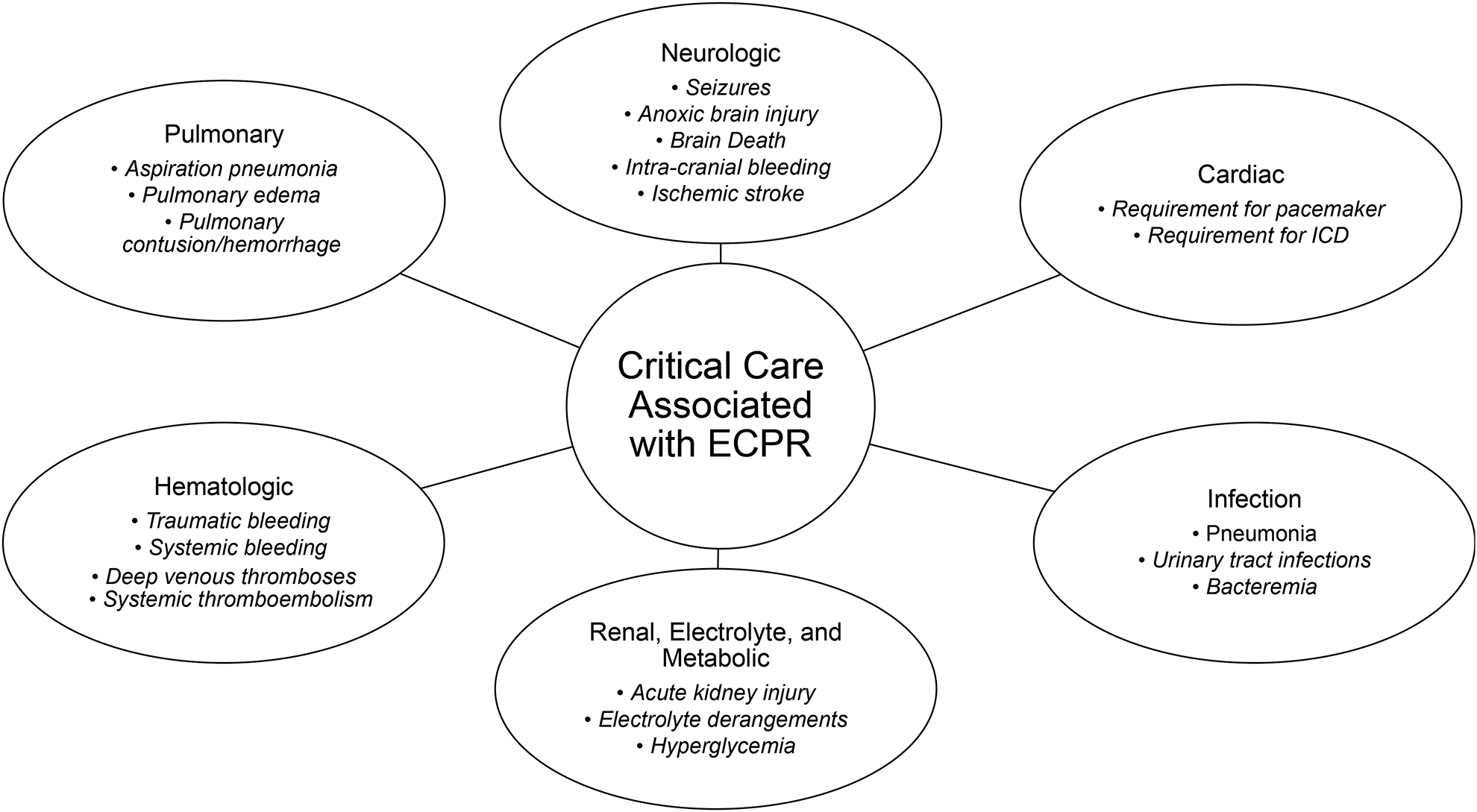
Recent findings: In this review, the physiology of VA-ECMO and ECPR, the role of ECPR in contemporary resuscitation care, the complications associated with ECPR and VA-ECMO usage, and intensive care considerations for this population are discussed.
Summary: ECPR offers a promising mechanism to mitigate multiorgan injury and allow time for the institution of supportive interventions required to effectively treat cardiac arrest. More prospective data in the context of extensive prehospital and hospital collaboration is needed to promote its successful use.
Conflict of interest statement
Figures
References
-
- American Heart Association. Heart disease and stroke statistics—2019 update. Circulation. 2019;139(10):e56–e528. - PubMed
-
- Yannopoulos D, Bartos JA, Aufderheide TP, et al. The evolving role of the cardiac catheterization laboratory in the management of patients with out-of-hospital cardiac arrest. Circulation. 2019;139(12):e530–e552. - PubMed
-
This scientific statement outlines the role of VA-ECMO as a hemodynamic support mechanism in cardiac arrest.
-
- Kosmopoulos M, Kalra R, Bartos JA, Raveendran G, Yannopoulos D. Contemporary approaches to cardiopulmonary resuscitation: physiology-guided approaches. Journal of Emergency and Critical Care Medicine. 2019.
-
- Duggal C, Weil MH, Gazmuri RJ, et al. Regional blood flow during closed-chest cardiac resuscitation in rats. Journal of applied physiology (Bethesda, Md : 1985). 1993;74(1):147–152. - PubMed
-
- Lurie KG, Mulligan KA, McKnite S, Detloff B, Lindstrom P, Lindner KH. Optimizing standard cardiopulmonary resuscitation with an inspiratory impedance threshold valve. Chest. 1998;113(4):1084–1090. - PubMed
Publication types
MeSH terms
Grants and funding
LinkOut - more resources
Full Text Sources
Medical
Research Materials
