


Genotype-phenotype correlations of Berardinelli-Seip congenital lipodystrophy and novel candidate genes prediction
- PMID: 32349771
- PMCID: PMC7191718
- DOI: 10.1186/s13023-020-01383-y
Genotype-phenotype correlations of Berardinelli-Seip congenital lipodystrophy and novel candidate genes prediction
Abstract
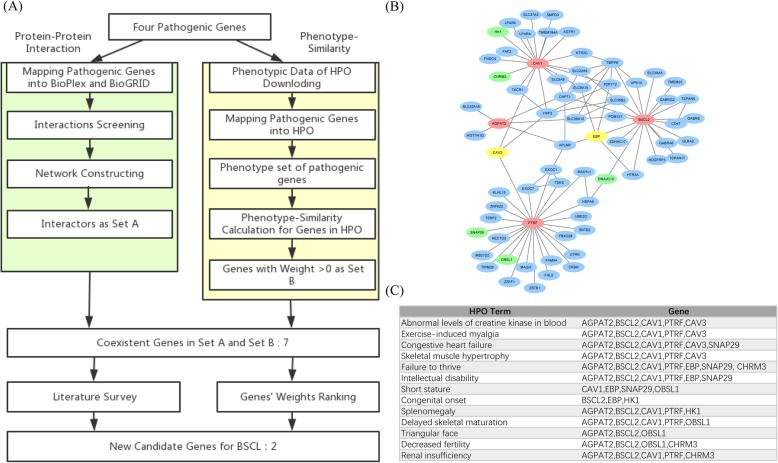
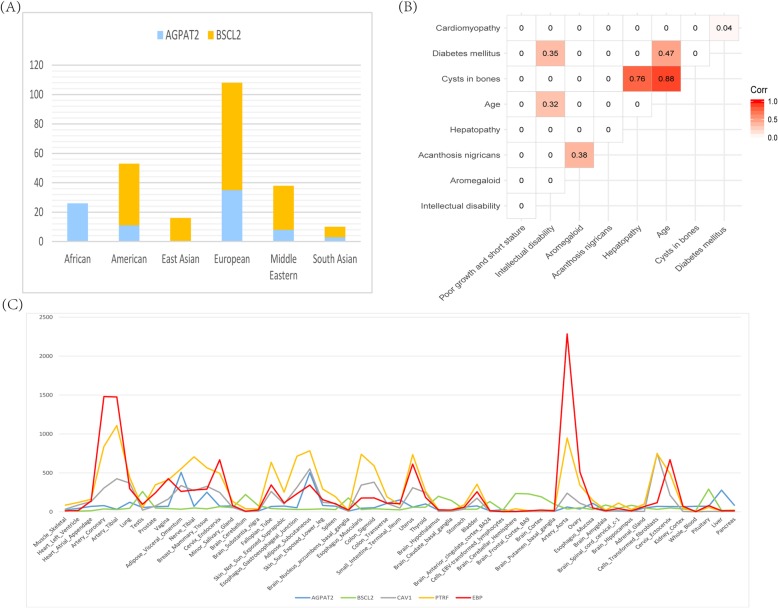
Background: Berardinelli-Seip congenital lipodystrophy (BSCL) is a heterogeneous autosomal recessive disorder characterized by an almost total lack of adipose tissue in the body. Mutations in the AGPAT2, BSCL2, CAV1 and PTRF genes define I-IV subtype of BSLC respectively and clinical data indicate that new causative genes remain to be discovered. Here, we retrieved 341 cases from 60 BSCL-related studies worldwide and aimed to explore genotype-phenotype correlations based on mutations of AGPAT2 and BSCL2 genes from 251 cases. We also inferred new candidate genes for BSCL through protein-protein interaction and phenotype-similarity.
Results: Analysis results show that BSCL type II with earlier age of onset of diabetes mellitus, higher risk to suffer from premature death and mental retardation, is a more severe disorder than BSCL type I, but BSCL type I patients are more likely to have bone cysts. In BSCL type I, females are at higher risk of developing diabetes mellitus and acanthosis nigricans than males, while in BSCL type II, males suffer from diabetes mellitus earlier than females. In addition, some significant correlations among BSCL-related phenotypes were identified. New candidate genes prediction through protein-protein interaction and phenotype-similarity was conducted and we found that CAV3, EBP, SNAP29, HK1, CHRM3, OBSL1 and DNAJC13 genes could be the pathogenic factors for BSCL. Particularly, CAV3 and EBP could be high-priority candidate genes contributing to pathogenesis of BSCL.
Conclusions: Our study largely enhances the current knowledge of phenotypic and genotypic heterogeneity of BSCL and promotes the more comprehensive understanding of pathogenic mechanisms for BSCL.
Keywords: Berardinelli-Seip congenital lipodystrophy; Gene prediction; Genotype; Phenotype; Phenotype-similarity; Protein-protein interaction.
Conflict of interest statement
The authors declare that they have no competing interests.
Figures
References
-
- Seip M. Lipodystrophy and gigantism with associated endocrine manifestations. A new diencephalic syndrome? Acta Paediatr. 1959;48:555–574. - PubMed
-
- Seip M, Trygstad O. Generalized lipodystrophy, congenital and acquired (lipoatrophy) Acta Paediatr Suppl. 1996;413:2–28. - PubMed
-
- Chandalia M, Garg A, Vuitch F, Nizzi F. Postmortem findings in congenital generalized lipodystrophy. J Clin Endocrinol Metab. 1995;80(10):3077–3081. - PubMed
Publication types
MeSH terms
Substances
LinkOut - more resources
Full Text Sources
Miscellaneous
