


Procarcinogen Activation and Mutational Signatures Model the Initiation of Carcinogenesis in Human Urothelial Tissues In Vitro
- PMID: 32349929
- PMCID: PMC7397502
- DOI: 10.1016/j.eururo.2020.03.049
Procarcinogen Activation and Mutational Signatures Model the Initiation of Carcinogenesis in Human Urothelial Tissues In Vitro
Abstract
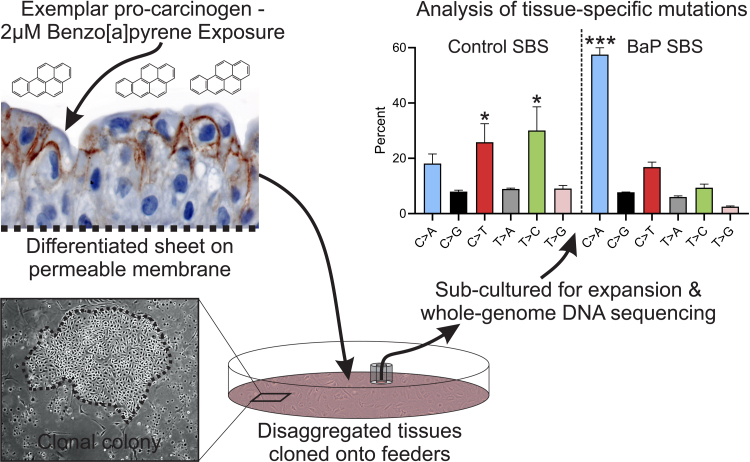
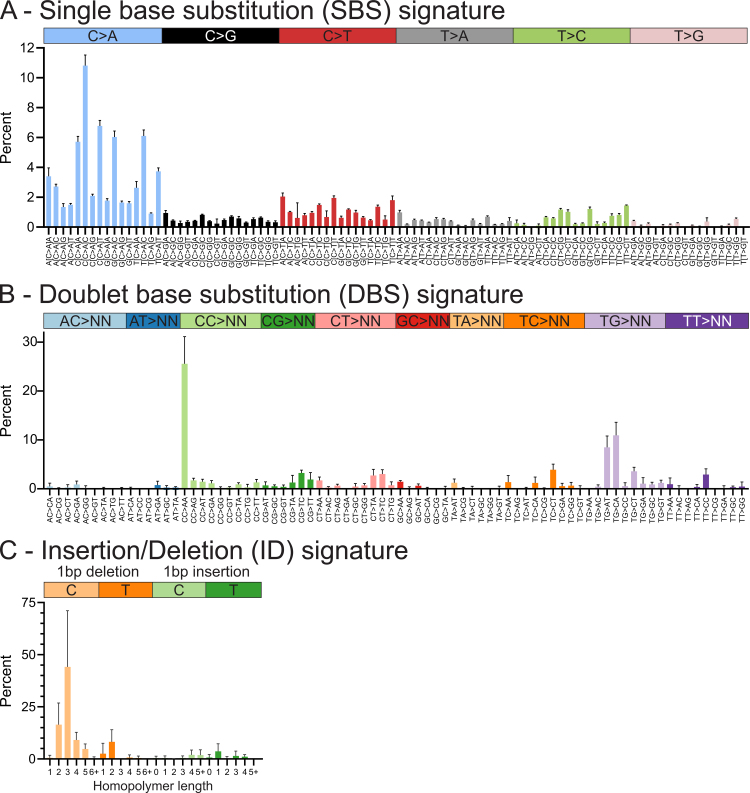
Disparity between genome-wide mutations in bladder and other cancers where smoking is a risk factor raises questions about carcinogenesis in different epithelia. To develop an experimental model of bladder carcinogenesis, we clonally expanded in vitro differentiated normal human urothelial (NHU) cells following exposure to an exemplar procarcinogen and used whole-genome DNA sequencing to derive mutational signatures. Benzo[a]pyrene (BaP) was activated by endogenous cytochrome P450 (cytochrome P450 family 1 subfamily A member 1 [CYP1A1]) to create genomically modified NHU cells. Comparison with the Catalogue of Somatic Mutations in Cancer (COSMIC) showed that mutations induced by BaP in NHU cells were similar to smoking-associated signatures in bladder and other cancers, including single- and doublet-base substitution signatures characterised by C > A transversions (COSMIC_SBS4 and COSMIC_DBS2, respectively), and an insertion/deletion signature of C deletions in homopolymer regions (COSMIC ID3). Our study provides the first direct evidence that BaP is activated locally in the urothelium, initiating the well-described smoking-associated mutational signatures. An absence of other common bladder cancer (BLCA)-associated genomic signatures points strongly to other primary causes of BLCA, which the new experimental approach described here is well placed to investigate. Mutational signatures ignore whether genes are affected, but tissue-specific drivers (KMT2D, KMT2C, and CDKN1A) were significantly overmutated in this model, providing insight on the emergent selection pressures. PATIENT SUMMARY: In a carefully controlled laboratory setting, we exposed normal human urothelial tissues to a procarcinogen (benzo[a]pyrene) found in cigarette smoke. We show that the urothelial tissues activated the carcinogen and led to mutations forming across the genome in a characteristic pattern. This particular "mutational signature" is found in bladder tumours and other smoking-induced cancers (eg, lung); however, our study highlights that there are other unknown mutational processes in bladder cancer that is not the direct result of smoke carcinogens, and this will require further investigation.
Keywords: APOBEC; BaP; Benzo[a]pyrene; Bladder; Bladder cancer; CYP1A1; Cytochrome P450; DNA mutation; Urothelium; Whole-genome DNA sequencing.
Copyright © 2020. Published by Elsevier B.V.
Figures
References
-
- Grando J.P., Kuasne H., Losi-Guembarovski R. Association between polymorphisms in the biometabolism genes CYP1A1, GSTM1, GSTT1 and GSTP1 in bladder cancer. Clin Exp Med. 2009;9:21–28. - PubMed
Publication types
MeSH terms
Substances
Grants and funding
LinkOut - more resources
Full Text Sources
Medical
Molecular Biology Databases
Miscellaneous
