. 2021 Apr;36(4):797-807.
doi: 10.1007/s00467-020-04534-2. Epub 2020 Apr 29.

Nephron number and its determinants: a 2020 update

Affiliations

Nephron number and its determinants: a 2020 update

Jennifer R Charlton et al. Pediatr Nephrol. 2021 Apr.

Abstract

Studies of human nephron number have been conducted for well over a century and have uncovered a large variability in nephron number. However, the mechanisms influencing nephron endowment and loss, along with the etiology for the wide range among individuals are largely unknown. Advances in imaging technology have allowed investigators to revisit the principles of renal structure and physiology and their roles in the progression of kidney disease. Here, we will review the latest data on the influences impacting nephron number, innovations made over the last 6 years to understand and integrate renal structure and function, and new developments in the tools used to count nephrons in vivo.

Keywords: CFE-MRI; Glomerular number; Nephrogenesis; Nephron endowment.


Conflict of interest statement

Conflicts of Interest:

JRC and KMB are co-owners of Sindri Technologies, LLC. EJB and KMB are co-owners of XN Biotechnologies, LLC. KMB owns Nephrodiagnostics, LLC (US patent: 10,251,592 B2). KMB has a research agreement with Janssen, LLC. DMH has no conflicts of interest to disclose.

Figures
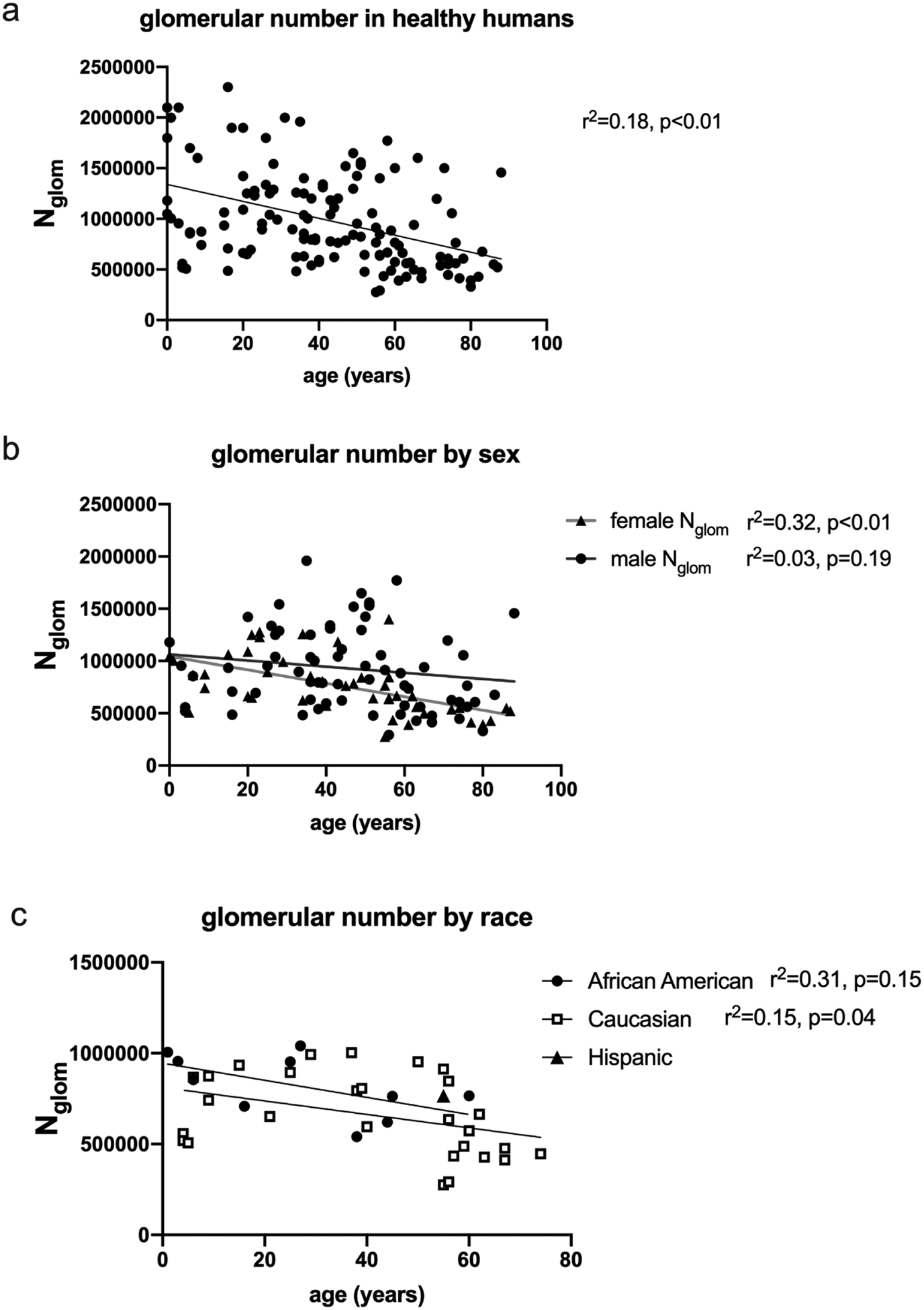
Figure 1.
Figure 1.. Nephron number in healthy humans (a) and stratified by sex (b) and race (c).
Using individual data available from the cross-sectional autopsy studies in Table 1, glomerular number is variable at birth and throughout life, but appears to decline over time (a). For panel a, data were included from the following studies: Moore [78], Hayman [79], Moritz [80], Nyengaard [3], Keller [4], Dunnill [81] and Lenihan [86] were included. When stratified by sex (b), the reduced glomerular number may be more prominent in aging females as compared to males. Data from the studies conducted by Moore [78], Hayman [79], Moritz [79], Nyengaard [3], Keller [4], and Lenihan [86] were included. A limited subset of data was available in the above studies to stratify by race, but the trend of lower glomerular number in aging appears to apply across races. Data were included from Moore [78] and Lenihan [86]. As the techniques to detect glomerular number in vivo improve, the influence of aging, sex and ethnicity on glomerular number will be answered.
Figure 2.
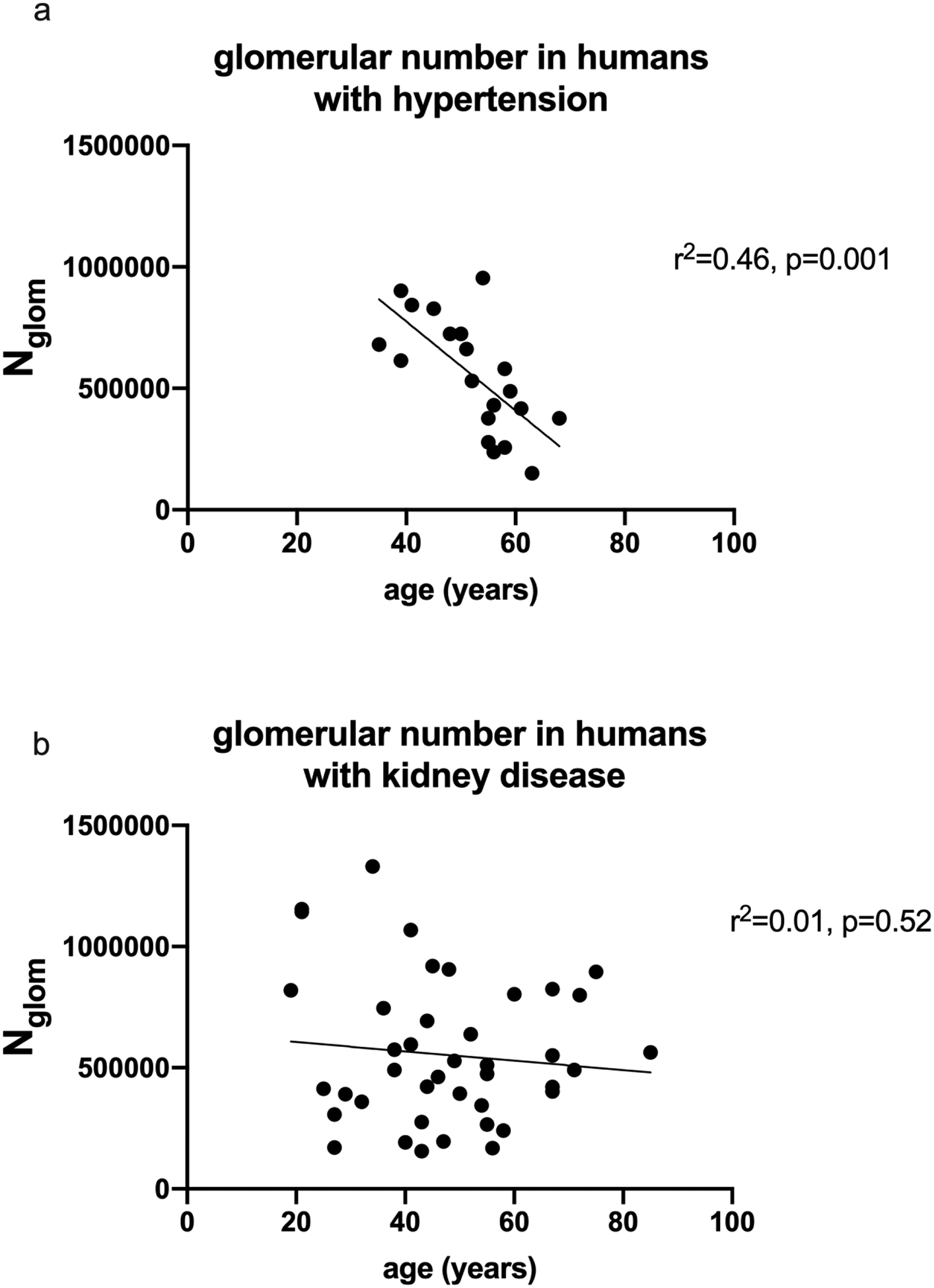
Figure 2.. Nephron number in humans with hypertension (a) and renal disease (b).
Few studies provided individual data on subjects with hypertension (a) and those studies that did report had a narrow age range beginning near 40 years. From this data, there appears to be significantly fewer glomeruli in the older subjects with hypertension. Data from hypertensive subjects were included from studies conducted by Keller [4] and Lenihan [86]. In subjects with renal disease (mainly Bright’s disease with chronic glomerulonephritis and cardiac disease), there is no correlation with nephron number and age. Data from subjects with CKD were included from studies conducted by Hayman [79] and Moritz [80].
Figure 3.
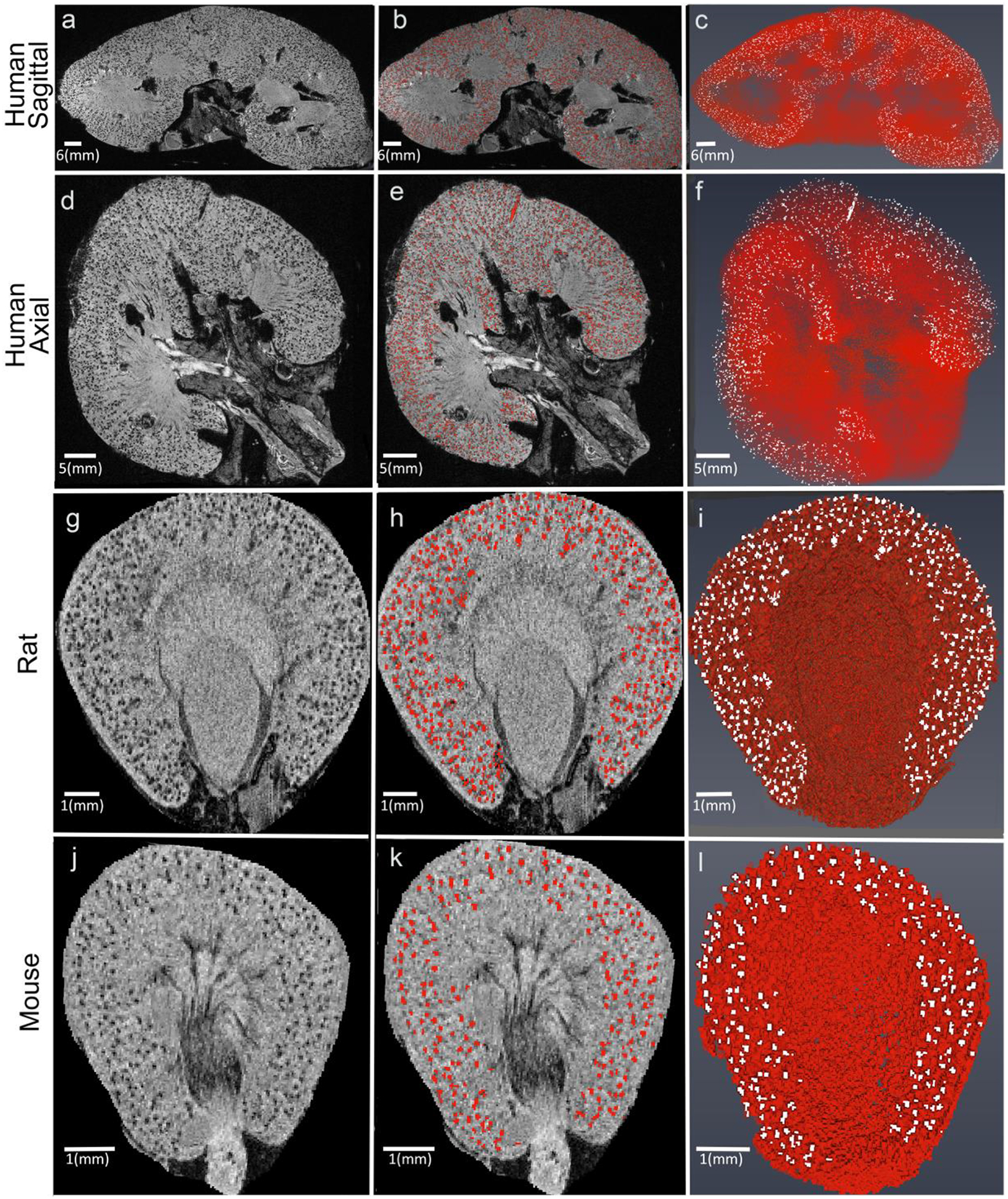
Figure 3.. CFE-MRI in ex vivo human, rat and mouse kidneys.
Human kidneys deemed unsuitable for transplant were injected with CF and scanned ex vivo both sagittal (a-c) and axial views are provided (d-f)[66]. Each black dot is an individual glomerulus (column 1) and the glomeruli are highlighted using this red overlay (column 2). The glomeruli can be rendered in 3D (column 3). CFE-MRI has been applied for use in rats (panels g-i)[87] and mice (panels j-l)[67].

References

    1. Smith HW (1953) From fish to philosopher. Little, Boston,.
    1. Charlton JR, Springsteen CH, Carmody JB (2014) Nephron number and its determinants in early life: a primer. Pediatric nephrology (Berlin, Germany) 29:2299–2308. - PubMed
    1. Nyengaard JR, Bendtsen TF (1992) Glomerular number and size in relation to age, kidney weight, and body surface in normal man. The Anatomical Record 232:194–201. - PubMed
    1. Keller G, Zimmer G, Mall G, Ritz E, Amann K (2003) Nephron number in patients with primary hypertension. The New England journal of medicine 348:101–108. - PubMed
    1. Bertram JF, Douglas-Denton RN, Diouf B, Hughson MD, Hoy WE (2011) Human nephron number: implications for health and disease. Pediatric nephrology (Berlin, Germany) 26:1529–1533. - PubMed

Publication types