


Estimating the First 90 of the UNAIDS 90-90-90 Goal: A Review
- PMID: 32351155
- PMCID: PMC7235967
- DOI: 10.1177/2325958220919290
Estimating the First 90 of the UNAIDS 90-90-90 Goal: A Review
Abstract
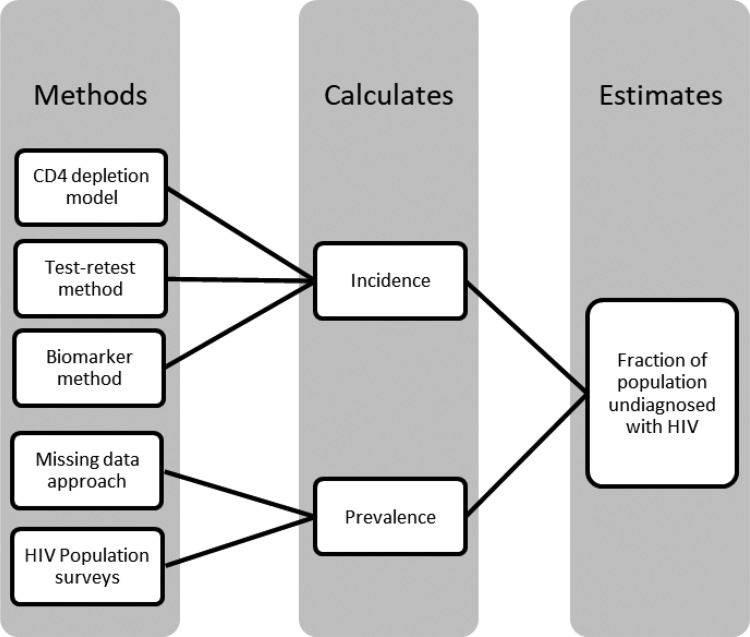
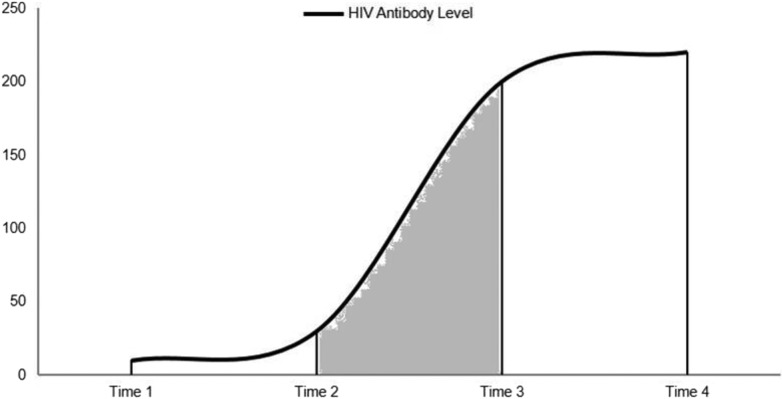
Estimating the population with undiagnosed HIV (PUHIV) is the most methodologically challenging aspect of evaluating 90-90-90 goals. The objective of this review is to discuss assumptions, strengths, and shortcomings of currently available methods of this estimation. Articles from 2000 to 2018 on methods to estimate PUHIV were reviewed. Back-calculation methods including CD4 depletion and test-retest use diagnosis CD4 count, or previous testing history to determine likely infection time thus, providing an estimate of PUHIV for previous years. Biomarker methods use immunoassays to differentiate recent from older infections. Statistical techniques treat HIV status as missing data and impute data for models of infection. Lastly, population surveys using HIV rapid testing most accurately calculates the current HIV prevalence. Although multiple methods exist to estimate the number of PUHIV, the appropriate method for future applications depends on multiple factors, namely data availability and population of interest.
Keywords: 90-90-90; HIV prevalence; HIV status; UNAIDS HIV estimates; undiagnosed HIV.
Conflict of interest statement
Figures


References
-
- Joint United Nations Programme on HIV/AIDS. 90-90-90 An Ambitious Treatment Target to Help End the AIDS Epidemic. Switzerland: UNAIDS; 2014.
-
- Centers for Disease Control and Prevention. HIV in the United States: At a Glance. United States: CDC; 2017.
Publication types
MeSH terms
Grants and funding
LinkOut - more resources
Full Text Sources
Medical
Research Materials
