


Trametinib potentiates TRAIL-induced apoptosis via FBW7-dependent Mcl-1 degradation in colorectal cancer cells
- PMID: 32352219
- PMCID: PMC7299726
- DOI: 10.1111/jcmm.15336
Trametinib potentiates TRAIL-induced apoptosis via FBW7-dependent Mcl-1 degradation in colorectal cancer cells
Abstract
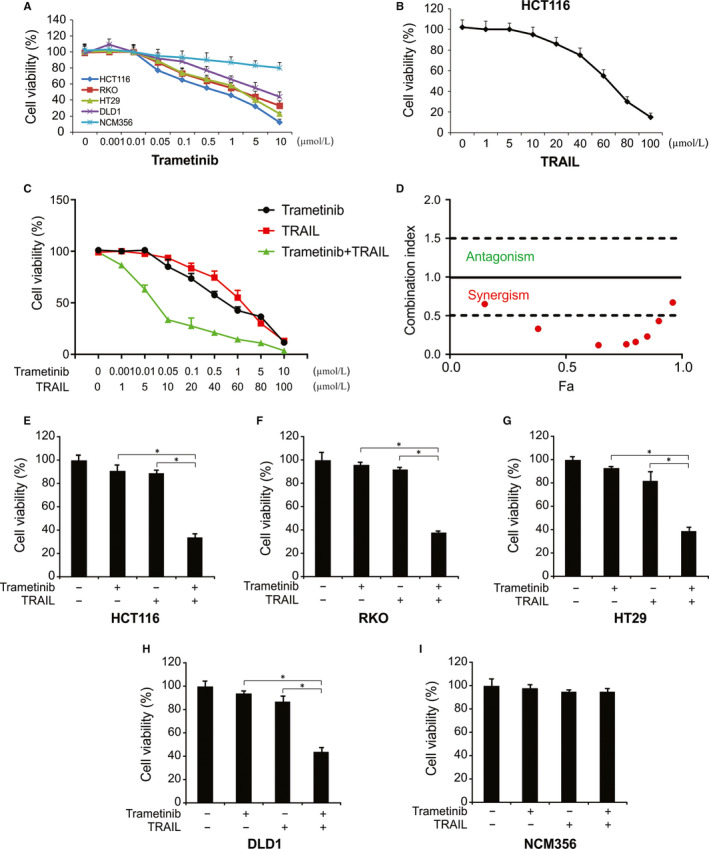
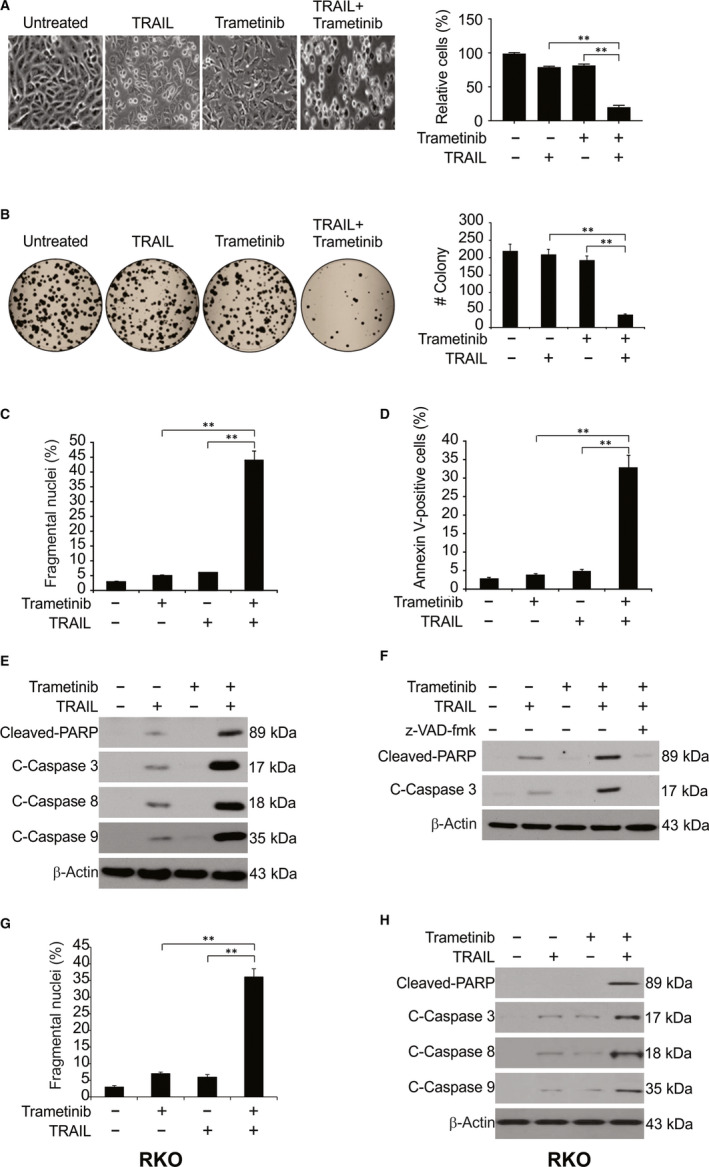
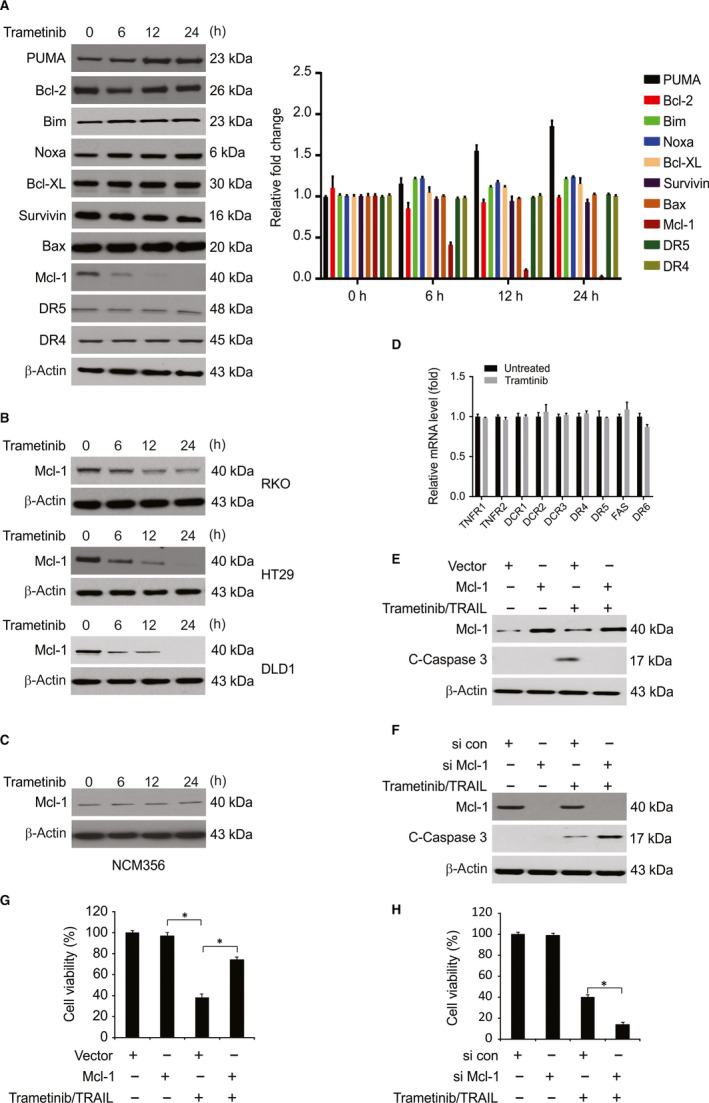
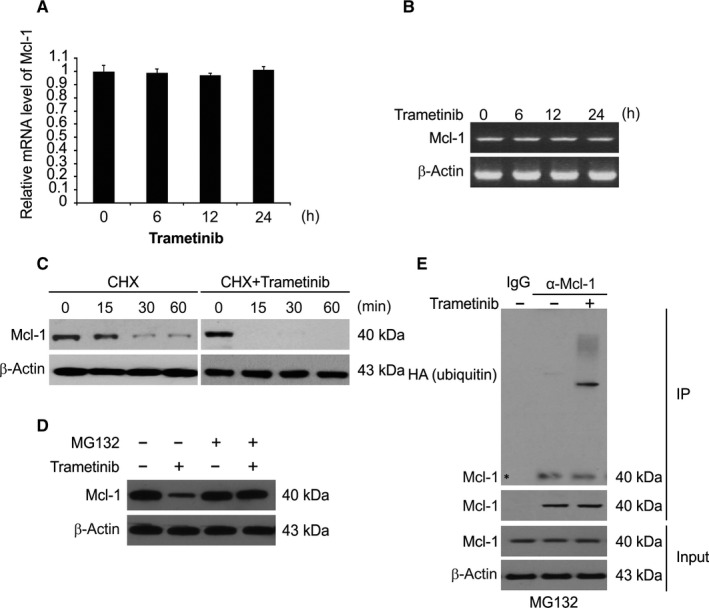
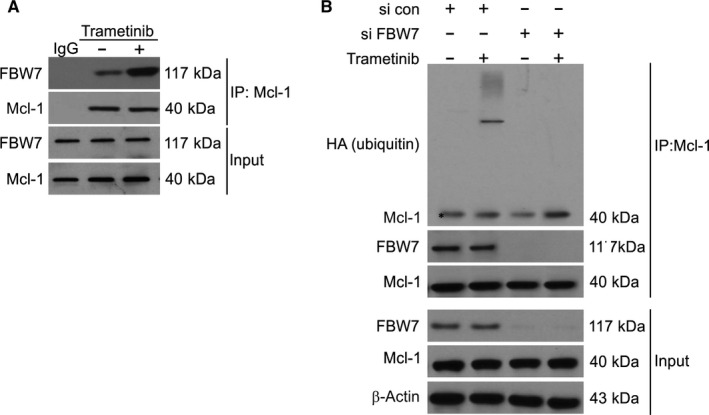
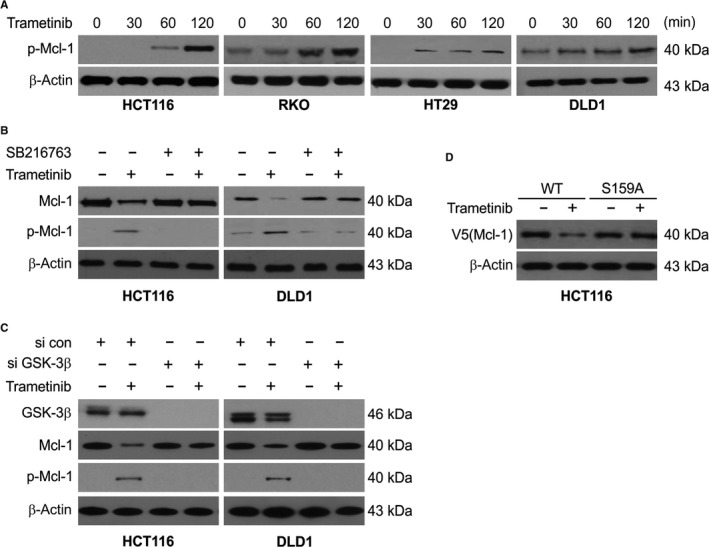
Trametinib is a MEK1/2 inhibitor and exerts anticancer activity against a variety of cancers. However, the effect of Trametinib on colorectal cancer (CRC) is not well understood. In the current study, our results demonstrate the ability of sub-toxic doses of Trametinib to enhance TRAIL-mediated apoptosis in CRC cells. Our findings also indicate that Trametinib and TRAIL activate caspase-dependent apoptosis in CRC cells. Moreover, Mcl-1 overexpression can reduce apoptosis in CRC cells treated with Trametinib with or without TRAIL. We further demonstrate that Trametinib degrades Mcl-1 through the proteasome pathway. In addition, GSK-3β phosphorylates Mcl-1 at S159 and promotes Mcl-1 degradation. The E3 ligase FBW7, known to polyubiquitinate Mcl-1, is involved in Trametinib-induced Mcl-1 degradation. Taken together, these results provide the first evidence that Trametinib enhances TRAIL-mediated apoptosis through FBW7-dependent Mcl-1 ubiquitination and degradation.
Keywords: Mcl-1; TRAIL; Trametinib; apoptosis; degradation.
© 2020 The Authors. Journal of Cellular and Molecular Medicine published by Foundation for Cellular and Molecular Medicine and John Wiley & Sons Ltd.
Conflict of interest statement
The authors have declared that no conflicts of interest exist.
Figures
References
-
- Modest DP, Pant S, Sartore‐Bianchi A. Treatment sequencing in metastatic colorectal cancer. Eur J Cancer. 2019;109:70‐83. - PubMed
Publication types
MeSH terms
Substances
LinkOut - more resources
Full Text Sources
Medical
Miscellaneous
