


Normal saline (0.9% sodium chloride) versus heparin intermittent flushing for the prevention of occlusion in long-term central venous catheters in infants and children
- PMID: 32352563
- PMCID: PMC7192095
- DOI: 10.1002/14651858.CD010996.pub3
Normal saline (0.9% sodium chloride) versus heparin intermittent flushing for the prevention of occlusion in long-term central venous catheters in infants and children
Abstract
Background: Guidelines and clinical practice for the prevention of complications associated with central venous catheters (CVC) around the world vary greatly. Most institutions recommend the use of heparin to prevent occlusion; there is debate, however, regarding the need for heparin and evidence to suggest normal saline (0.9% sodium chloride) may be as effective. The use of heparin is not without risk, may be unnecessary and is also associated with increased cost. This is an update of the review published in 2015.
Objectives: To assess the clinical effects (benefits and harms) of intermittent flushing of normal saline versus heparin to prevent occlusion in long-term central venous catheters in infants and children.
Search methods: The Cochrane Vascular Information Specialist searched the Cochrane Vascular Specialised Register, CENTRAL, MEDLINE, Embase and CINAHL databases; World Health Organization International Clinical Trials Registry Platform and ClinicalTrials.gov trials register to 9 April 2019. We also undertook reference checking, citation searching and contact with study authors to identify additional studies.
Selection criteria: We included randomised controlled trials (RCTs) that compared the efficacy of intermittent flushing with normal saline versus heparin to prevent occlusion of long-term CVCs in infants and children aged up to 18 years of age. We excluded temporary CVCs and peripherally inserted central catheters (PICC).
Data collection and analysis: Two review authors independently assessed trial inclusion criteria, trial quality and extracted data. We assessed study quality with the Cochrane 'Risk of bias' tool. For dichotomous outcomes, we calculated the rate ratio (RR) and corresponding 95% confidence interval (CI). We pooled data using a random-effects model; and we used GRADE to assess the overall certainty of the evidence supporting the outcomes assessed in this review.
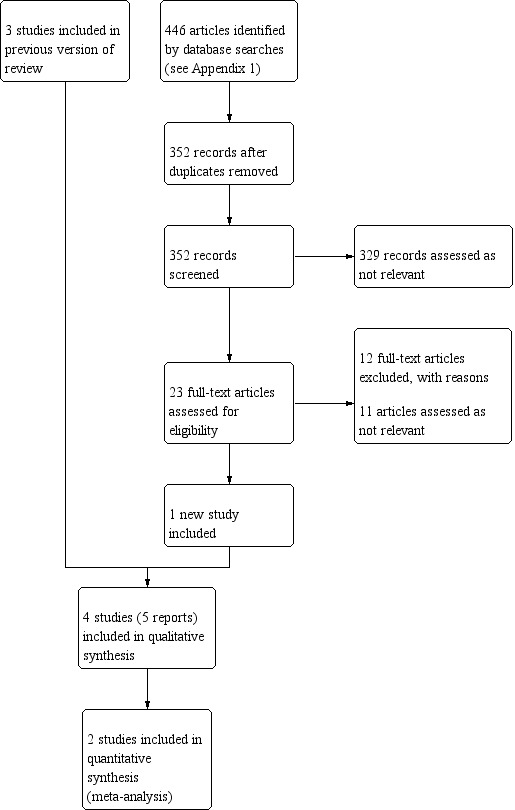
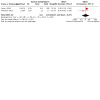
Main results: We identified one new study for this update, bringing the total number of included studies to four (255 participants). The four trials directly compared the use of normal saline and heparin; the studies all used different protocols for the intervention and control arms, however, and all used different concentrations of heparin. Different frequencies of flushes were also reported between studies. In addition, not all studies reported on all outcomes. The certainty of the evidence ranged from moderate to very low because there was no blinding; heterogeneity and inconsistency between studies was high; and the CIs were wide. CVC occlusion was assessed in all four trials. We were able to pool the results of two trials for the outcomes of CVC occlusion and CVC-associated blood stream infection. The estimated RR for CVC occlusion per 1000 catheter days between the normal saline and heparin groups was 0.75 (95% CI 0.10 to 5.51; 2 studies, 229 participants; very low certainty evidence). The estimated RR for CVC-associated blood stream infection was 1.48 (95% CI 0.24 to 9.37; 2 studies, 231 participants; low-certainty evidence). The duration of catheter placement was reported to be similar for the two study arms in one study (203 participants; moderate-certainty evidence), and not reported in the remaining studies.
Authors' conclusions: The review found that there was not enough evidence to determine the effects of intermittent flushing with normal saline versus heparin to prevent occlusion in long-term central venous catheters in infants and children. It remains unclear whether heparin is necessary to prevent occlusion, CVC-associated blood stream infection or effects duration of catheter placement. Lack of agreement between institutions around the world regarding the appropriate care and maintenance of these devices remains.
Copyright © 2020 The Cochrane Collaboration. Published by John Wiley & Sons, Ltd.
Conflict of interest statement
NB: none known RE: none known RC: none known
Figures


Update of
-
Heparin versus 0.9% sodium chloride intermittent flushing for the prevention of occlusion in long term central venous catheters in infants and children.Cochrane Database Syst Rev. 2015 Nov 23;(11):CD010996. doi: 10.1002/14651858.CD010996.pub2. Cochrane Database Syst Rev. 2015. Update in: Cochrane Database Syst Rev. 2020 Apr 30;4:CD010996. doi: 10.1002/14651858.CD010996.pub3. PMID: 26590504 Updated.
References
References to studies included in this review
Cesaro 2009 {published data only}
-
- Cesaro S, Tridello G, Cavaliere M, Magagna L, Gavin P, Cusinato R, et al. Prospective, randomized trial of two different modalities of flushing central venous catheters in pediatric patients with cancer. Journal of Clinical Oncology 2009;27(12):2059-65. - PubMed
da Silva 2018 {published data only (unpublished sought but not used)}
-
- da Silva RS. Effect of heparin to prevent obstruction of the Hickman catheter [Efetividade da solucao de heparina na prevencao de oclusao do cateter de kickman: ensaio clinico randomizado]. [Thesis dissertation] acervodigital.ufpr.br/handle/1884/56046 2018 (accessed 13 September 2019).
Goossens 2013 {published and unpublished data}
-
- Goosens GA, Jerome M, Janssens C, Peetermans WE, Fieuws S, Moons P, et al. Comparing normal saline versus diluted heparin to lock non-valved totally implantable venous access devices in cancer patients: a randomised, non-inferiority, open trial. Annals of Oncology 2013;24(7):1892-9. - PubMed
-
- Goossens GA, Jerome M, Janssens C, Peetermans WE, Fieuws S, Moons P, et al. Heparin versus normal saline as locking solution in totally implantable venous ports: A randomized controlled trial in cancer patients. Supportive Care in Cancer 2013;21:S28.
Smith 1991 {published data only (unpublished sought but not used)}
-
- Smith S, Dawson S, Hennessey R, Andrew M. Maintenance of the patency of indwelling central venous catheters: is heparin necessary? American Journal of Pediatric Hematology/oncology 1991;13(2):141-3. - PubMed
References to studies excluded from this review
Arauj 2011 {published data only}
-
- Araujo O, Araujo M, Silva J, Barros M, . Intermittent heparin is not effective at preventing the occlusion of peripherally inserted central venous catheters in preterm and term neonates. Revista Brasileira de Terapia Intensiva 2011;23(3):335-40. - PubMed
Arnts 2011 {published data only}
-
- Arnts IJ, Heijnen JA, Wilbers HT, Wilt GJ, Groenewoud JM, Liem KD, . Effectiveness of heparin solution versus normal saline in maintaining patency of intravenous locks in neonates: a double blind randomized controlled study. Journal of Advanced Nursing 2011;67(12):2677-85. - PubMed
Brito 2018 {published data only}
-
- Brito ARO, Nishinari K, Saad PF, Saad KR, Pereira MAT, Emidio SCD, et al. Comparison between saline solution containing heparin versus saline solution in the lock of totally implantable catheters. Annals of Vascular Surgery 2018;47:85-9. - PubMed
De Neef 2002 {published data only}
-
- De Neef M, Heijboer H, Van Woensel JB, De Haan RJ. The efficacy of heparinization in prolonging patency of arterial and central venous catheters in children: a randomized double-blind trial. Pediatric Hematology and Oncology 2002;19(8):553-60. - PubMed
Geritz 1992 {published data only}
-
- Geritz MA. Saline versus heparin in intermittent infuser patency maintenance. Western Journal of Nursing Research 1992;14(2):131-7. - PubMed
Heidari Gorji 2015 {published data only}
Kaneko 2004 {published data only}
-
- Kaneko Y, Iwano M, Yoshida H, Kosuge M, Ito S, Narita I, et al. Natural saline-flush is sufficient to maintain patency of immobilized-urokinase double-lumen catheter used to provide temporary blood access for hemodialysis. Blood Purification 2004;22(5):473-9. - PubMed
Klein 2017 {published data only}
-
- Klein J, Patterson A, Jepsen A, Badgero K, Moore M, Warrell WA, Thornton K. Effectiveness of heparin versus saline flushing for managing central venous catheters (CVCs) in the blood and marrow transplant (BMT) patients: a pilot study. Biology of Blood and Marrow Transplantation 2017;23(3):S386.
Klein 2018 {published data only}
-
- Klein J, Jepsen A, Patterson A, Reich RR, Mason TM. Heparin versus normal saline: flushing effectiveness in managing central venous catheters in patients undergoing blood and marrow transplantation. Clinical Journal of Oncology Nursing 2018;22(2):1-5. - PubMed
NCT00001518 {published data only}
-
- NCT00001518. A randomized evaluation of the effect of routine normal saline flush versus heparinized saline solution in Groshong and Groshong PICC catheters. clinicaltrials.gov/ct2/show/NCT00001518 (first posted December 10 2002).
NCT01343680 {unpublished data only}
-
- NCT01343680. Trial of two central venous catheter (CVC) flushing schemes in pediatric hematology and oncology patients. https://clinicaltrials.gov/show/NCT01343680 (first posted 28 April 2011).
NCT02354118 {published data only}
-
- NCT02354118. Maintaining patency in implanted port catheters. https://clinicaltrials.gov/ct2/show/NCT02354118 (first posted 3 February 2015).
NCT02923830 {published data only}
-
- NCT02923830. Maintaining patency in BioFlo implanted port catheters with saline only flushes. https://clinicaltrials.gov/ct2/show/NCT02923830 (first posted 5 October 2016).
Pumarola 2007 {published data only}
-
- Pumarola C, Casademont Mercader R, Colomer Plana M, Cordon Bueno C, Sabench Casellas S, Felez Vidal M, et al. Comparative study of maintenance of patency of triple lumen central venous catheter [Estudio comparativo del mantenimiento de la permeabilidad de los cateteres venosos centrales de tres luces]. Enfermeria Intensiva 2007;18(1):25-35. - PubMed
Rabe 2002 {published data only}
-
- Rabe C, Gramann T, Sons X, Berna M, Gonzalez-Carmona MA, Klehr HU, et al. Keeping central venous lines open: a prospective comparison of heparin, vitamin C and sodium chloride sealing solutions in medical patients. Intensive Care Medicine 2002;28(8):1172-6. - PubMed
Reichardt 2002 {published data only}
-
- Reichardt P, Kretzschmar A, Biakhov M, Irwin D, Slabber C, Miller L, et al. A phase III randomized, double-blind, placebo-controlled study evaluating the efficacy and safety of daily low-molecular-weight heparin (dalteparin sodium, fragmin) in preventing catheter-related complications (CRCs) in cancer patients with central venous catheters (CVCs). Journal of Clinical Oncology 2002;21:1474.
Schallom 2012 {published data only}
-
- Schallom ME, Prentice D, Sona C, Micek ST, Skrupky LP. Heparin or 0.9% sodium chloride to maintain central venous catheter patency: a randomized trial. Critical Care Medicine 2012;40(6):1820-26. - PubMed
Schultz 2002 {published data only}
-
- Schultz AA, Drew D, Hewitt H. Comparison of normal saline and heparinized saline for patency of IV locks in neonates. Applied Nursing Research 2002;15(1):28-34. - PubMed
Additional references
Abate 2013
-
- Abate ME, Escobosa-Sanchez O, Boschi R, Raspanti C, Loro L, Affinito D, et al. Analysis of risk factors for central venous catheters related complications: a prospective observational study in pediatric patients with bone sarcomas. Cancer Nursing 2013;37(4):292-8. - PubMed
Athale 2012
-
- Athale UH, Siciliano S, Cheng J, Thabane L, Chan AK. Central venous line dysfunction is an independent predictor of poor survival in children with cancer. Journal of Pediatric Hematology/oncology 2012;34(3):188-93. - PubMed
Atkins 2004
Barclay 2012
Baskin 2009
Bertoglio 2012
-
- Bertoglio S, Solari N, Meszaros P, Vassallo F, Bonvento M, Pastorino S, et al. Efficacy of normal saline versus heparinized saline solution for locking catheters of totally implantable long-term central vascular access devices in adult cancer patients. Cancer Nursing 2012;35(4):E35-42. - PubMed
Bowers 2008
-
- Bowers L, Gabel Speroni K, Jones L, Atherton M. Comparison of occlusion rates by flushing solutions for peripherally inserted central venous catheters with positive pressure Luer-activated devices. Journal of Infusion Nursing 2008;31(1):22-7. - PubMed
Conway 2014
-
- Conway MA, McCollom C, Bannon C. Central venous catheter flushing recommendations: a systematic evidenced-based practice review. Journal of Pediatric Oncology Nursing 2014;31(4):185-90. - PubMed
Covidence [Computer program]
-
- Veritas Health Innovation Covidence. Version accessed 10 April 2019. Melbourne, Australia: Veritas Health Innovation.Available at covidence.org.
Dal Molin 2015
-
- Dal Molin A, Clerico M, Baccini M, Guerretta L, Sartorello B, Rasero L. Normal saline versus heparin solution to lock totally implanted venous access devices: results from a multicentred randomized trial. European Journal of Oncology Nursing 2015;19(6):638-43. - PubMed
Davis 2013
-
- Davis MB. Pediatric central venous catheter management: a review of current practice. Journal of the Association for Vascular Access 2013;18(2):93-8.
Deeks 2011
-
- Deeks JJ, Higgins JPT, Altman DG editor(s). Chapter 9: Analysing data and undertaking meta-analyses. In: Higgins JP, Green S editor(s).Cochrane Handbook for Systematic Reviews of Interventions Version 5.1.0 (updated March 2011). The Cochrane Collaboration, 2011. Available from handbook.cochrane.org.
Egger 1997
Fratino 2005
-
- Fratino G, Molinari AC, Parodi S, Longo S, Saracco P, Castagnola E, et al. Central venous catheter-related complications in children with oncological/hematological diseases: an observational study of 418 devices. Annals of Oncology 2005;16(4):648-54. - PubMed
Gonzalez 2012
GRADEpro GDT [Computer program]
-
- McMaster University (developed by Evidence Prime) GRADEpro GDT. Version accessed 13 September 2019. Hamilton (ON): McMaster University (developed by Evidence Prime).Available at www.gradepro.org.
HHSC 2014 [pers comm]
-
- Education Department McMaster Children's Hospital. Protocol for CVC maintenance [personal communication]. Email to: HHS-education@HHSC.CA 29 May 2014.
Higgins 2003
Higgins 2011a
-
- Higgins JP, Green S editor(s). Cochrane Handbook for Systematic Reviews of Interventions Version 5.1.0 (updated March 2011) The Cochrane Collaboration, 2011. Available from handbook.cochrane.org.
Higgins 2011b
-
- Higgins JP, Altman DG, Sterne JAC editor(s). Chapter 8: Assessing risk of bias in included studies. In: Higgins JP, Green S editor(s). Cochrane Handbook for Systematic Reviews of Interventions Version 5.1.0 (updated March 2011). The Cochrane Collaboration, 2011. Available from handbook.cochrane.org.
Jacobs 2004
-
- Jacobs BR, Schilling S, Doellman D, Hutchinson N, Rickey M, Nelson S. Central venous catheter occlusion: a prospective controlled trial examining the impact of a positive pressure valve device. Journal of Parenteral and Enteral Nutrition 2004;28(2):113-8. - PubMed
Jarvis 2009
-
- Jarvis WR, Murphy C, Hall KK, Fogle PJ, Karchmer TB, Harrington G, et al. Health care-associated bloodstream infections associated with negative- or positive-pressure or displacement mechanical valve needleless connectors. Clinical Infectious Diseases 2009;49(12):1821-7. - PubMed
Kelly 2008
-
- Kelly L. The care of vascular access devices in community care. British Journal of Community Nursing 2008;13(5):198-205. - PubMed
Lee 2005
-
- Lee OK, Johnston L. A systematic review for effective management of central venous catheters and catheter sites in acute care paediatric patients. Worldviews on Evidence-based Nursing / Sigma Theta Tau International, Honor Society of Nursing 2005;2(1):4-13, discussion 14-5. - PubMed
Lefebvre 2011
-
- Lefebvre C, Manheimer E, Glanville J. Chapter 6: Searching for studies. In: Higgins JP, Green S editor(s). Cochrane Handbook for Systematic Reviews of Interventions Version 5.1.0 (updated March 2011). The Cochrane Collaboration. Available from handbook.cochrane.org 2011.
Lopez‐Briz 2018
-
- Lopez-Briz E, Ruiz Garcia V, Cabelle JB, Bort-Marti S, Carbonell Sanchis R, Burls A. Heparin versus 0.9% sodium chloride locking for prevention of occlusion in central venous catheters in adults. Cochrane Database of Systematic Reviews 2018, Issue 7. [DOI: 10.1002/14651858.CD008462.pub3] - DOI - PMC - PubMed
Marschall 2008
-
- Marschall J, Mermel LA, Classen D, Arias KM, Podgorny K, Anderson D, et al. Strategies to prevent central-line associated infections in acute care hospitals. Strategies 2008;29(S1):S22-S30. - PubMed
Moher 2009
-
- Moher D, Liberati A, Tezlaff J, Altman DG, The PRISMA Group. Preferred reporting items for systematic reviews and meta-analyses: the PRISMA statement. Annals of Internal Medicine 2009;151(4):264-9. - PubMed
Monagle 2010
-
- Monagle P, Ignjatovic V, Savoia H. Hemostasis in neonates and children: pitfalls and dilemmas. Blood Reviews 2010;24(2):63-8. - PubMed
Nelson 2008
-
- Nelson S, Armes S, Austin A, Clark N, Hicks G, Johnston J, et al. Care and maintenance to reduce vascular access complications. Registered Nurse's Association of Ontario International Affairs and Best Practice Guidelines Programs Guidelines Supplement 2008:1-7.
Revel‐Vilk 2010
-
- Revel-Vilk S, Yacobovich J, Tamary H, Goldstein G, Nemet S, Weintraub M, et al. Risk factors for central venous catheter thrombotic complications in children and adolescents with cancer. Cancer 2010;116(17):4197-205. - PubMed
RevMan Web 2019 [Computer program]
-
- The Cochrane Collaboration Review Manager Web (RevMan Web). The Cochrane Collaboration, 2019.Available at: revman.cochrane.org.
Schoot 2015
-
- Schoot RA, Ommen CH, Stijnen T, Tissing WJE, Michiels E, Abbink FCH, et al. Prevention of central venous catheter-associated bloodstream infections in paediatric oncology patients using 70% ethanol locks: a randomised controlled multi-centre trial. European Journal of Cancer 2015;51(14):2031-8. - PubMed
Schuster 2000
-
- Schuster M, Nave H, Piepenbrock S, Pabst R, Panning B. The carina as a landmark in central venous catheter placement. British Journal of Anaesthesia 2000;85(2):192-4. - PubMed
Schünemann 2011
-
- Schünemann HJ, Oxman AD, Higgins JPT, Vist GE, Glasziou P, Guyatt GH. Chapter 11: Presenting results and ‘Summary of findings' tables. In: Higgins JP, Green S editor(s), Cochrane Handbook for Systematic Reviews of Interventions Version 5.1.0 (updated March 2011). The Cochrane Collaboration, 2011. Available from handbook.cochrane.org.
Shah 2007
-
- Shah PS, Kalyn A, Satodia P, Dunn MS, Parvez B, Daneman A, et al. A randomized, controlled trial of heparin versus placebo infusion to prolong the usability of peripherally placed percutaneous central venous catheters (PCVCs) in neonates: the HIP (Heparin Infusion for PCVC) study. Pediatrics 2007;119(1):e284-e91. - PubMed
Shanks 2005
Sterne 2011
-
- Sterne JAC, Egger M, Moher D editor(s). Chapter 10: Addressing reporting biases. In: Higgins JP, Green S editor(s). Cochrane Handbook for Systematic Reviews of Intervention. Version 5.1.0 (updated March 2011). The Cochrane Collaboration, 2011. Available from handbook.cochrane.org.
Stocco 2012
-
- Stocco JGD, Crozeta K, Taminato M, Reichembach-Danski MT, Meier MJ. Evaluation of the mortality of neonates and children related to the use of central venous catheters: a systematic review. Acta Paulista de Enfermagem 2012;25(1):90-5.
Wong 2012
-
- Wong T, Clifford V, McCallum Z, Shalley H, Peterkin M, Paxton G, et al. Central venous catheter thrombosis associated with 70% ethanol locks in pediatric intestinal failure patients on home parenteral nutrition. A case series. Journal of Parenteral and Enteral Nutrition 2012;36(3):358-60. - PubMed
Young 2008
-
- Young G. New anticoagulants in children. ASH Education Program Book 2008;1:245-50. - PubMed
References to other published versions of this review
Bradford 2014
Bradford 2015
Publication types
MeSH terms
Substances
Grants and funding
LinkOut - more resources
Full Text Sources
Medical
Miscellaneous
