


Helmet Modification to PPE With 3D Printing During the COVID-19 Pandemic at Duke University Medical Center: A Novel Technique
- PMID: 32354536
- PMCID: PMC7166108
- DOI: 10.1016/j.arth.2020.04.035
Helmet Modification to PPE With 3D Printing During the COVID-19 Pandemic at Duke University Medical Center: A Novel Technique
Abstract
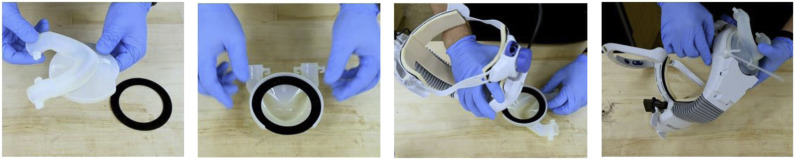
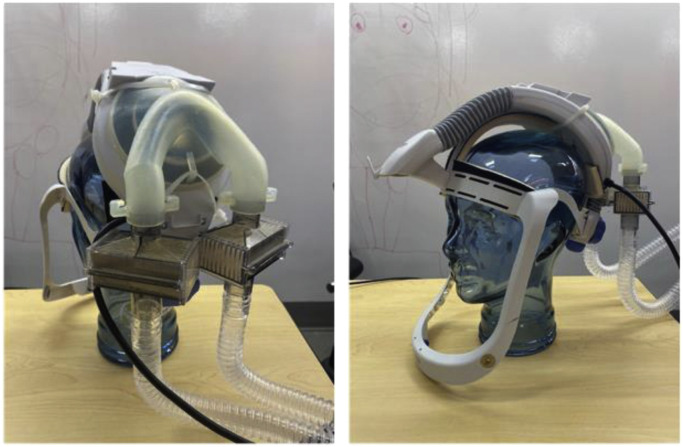
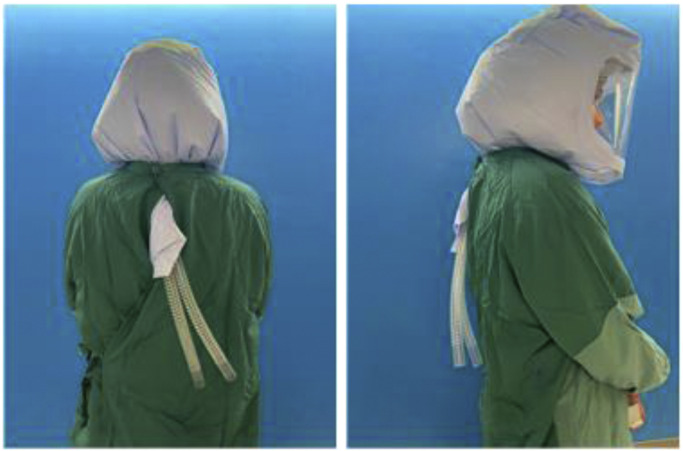
Care for patients during COVID-19 poses challenges that require the protection of staff with recommendations that health care workers wear at minimum, an N95 mask or equivalent while performing an aerosol-generating procedure with a face shield. The United States faces shortages of personal protective equipment (PPE), and surgeons who use loupes and headlights have difficulty using these in conjunction with face shields. Most arthroplasty surgeons use surgical helmet systems, but in the current pandemic, many hospitals have delayed elective arthroplasty surgeries and the helmet systems are going unused. As a result, the authors have begun retrofitting these arthroplasty helmets to serve as PPE. The purpose of this article is to outline the conception, design, donning technique, and safety testing of these arthroplasty helmets being repurposed as PPE.
Keywords: 3D printing; COVID-19; personal protective equipment; surgical helmet systems; total joint arthroplasty.
Copyright © 2020 Elsevier Inc. All rights reserved.
Figures
References
-
- Ranney M.L., Griffeth V., Jha A.K. Critical supply shortages - the need for ventilators and personal protective equipment during the Covid-19 pandemic. N Engl J Med. 2020 - PubMed
-
- McGovern P.D., Albrecht M., Khan S.K., Muller S.D., Reed M.R. The influence of surgical hoods and togas on airborne particle concentration at the surgical site: an experimental study. J Orthop Sci. 2013;18:1027. - PubMed
-
- Vijaysegaran P., Knibbs L.D., Morawska L., Crawford R.W. Surgical space suits increase particle and microbiological emission rates in a simulated surgical environment. J Arthroplasty. 2018;33:1524. - PubMed
-
- Young S.W., Zhu M., Shirley O.C., Wu Q., Spangehl M.J. Do ‘surgical helmet systems’ or ‘body exhaust suits’ affect contamination and deep infection rates in arthroplasty? A systematic review. J Arthroplasty. 2016;31:225. - PubMed
-
- Administration USFD Medical Gowns. https://www.fda.gov/medical-devices/personal-protective-equipment-infect... [accessed 04.02.20]
MeSH terms
Substances
LinkOut - more resources
Full Text Sources
Other Literature Sources
