


Flavor-specific enhancement of electronic cigarette liquid consumption and preference in mice
- PMID: 32354580
- PMCID: PMC7328293
- DOI: 10.1016/j.drugalcdep.2020.107995
Flavor-specific enhancement of electronic cigarette liquid consumption and preference in mice
Abstract
Background: The use of electronic cigarettes has increased over the past decade. To determine how the abuse liability of electronic cigarette liquids (e-liquids) differs from nicotine alone, and to determine the impact of flavor, we compared nicotine-containing fruit- and tobacco-flavored e-liquids, and their nicotine-free versions, to nicotine alone in mouse models of oral consumption, reward and aversion.
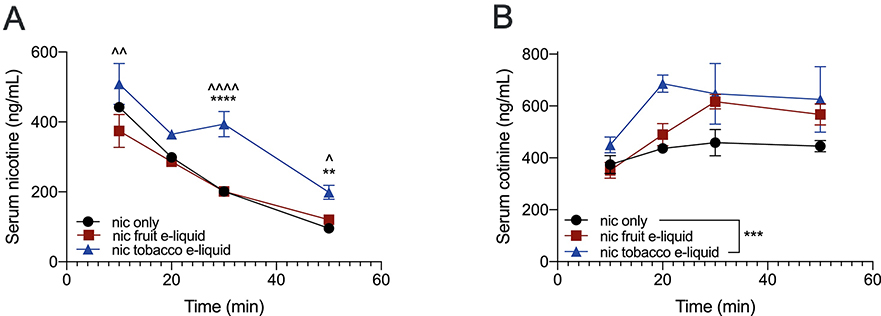
Methods: Adult male C57BL/6 J mice voluntarily consumed oral nicotine, equivalent nicotine concentrations of fruit- and tobacco-flavored e-liquid, and equivalent dilutions of the nicotine-free versions in 2-bottle choice tests. Conditioned place preference and place aversion were assessed with peripherally administered e-liquids or nicotine. Serum nicotine and cotinine levels were measured after subcutaneous injections of e-liquid or nicotine.
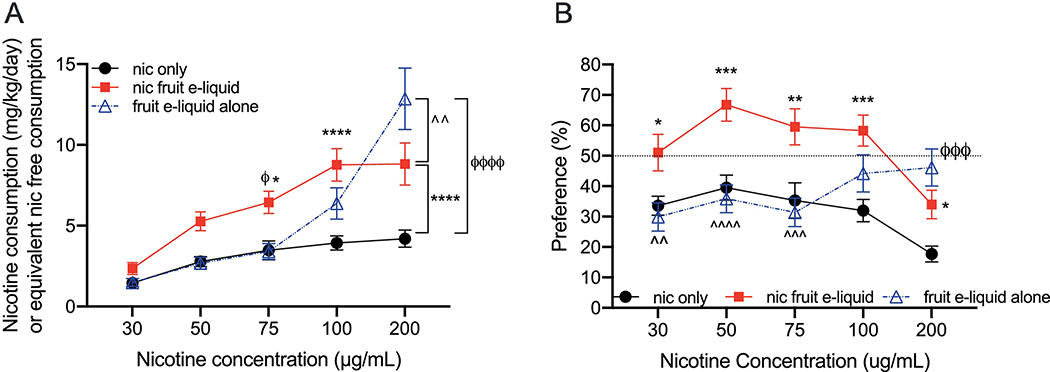
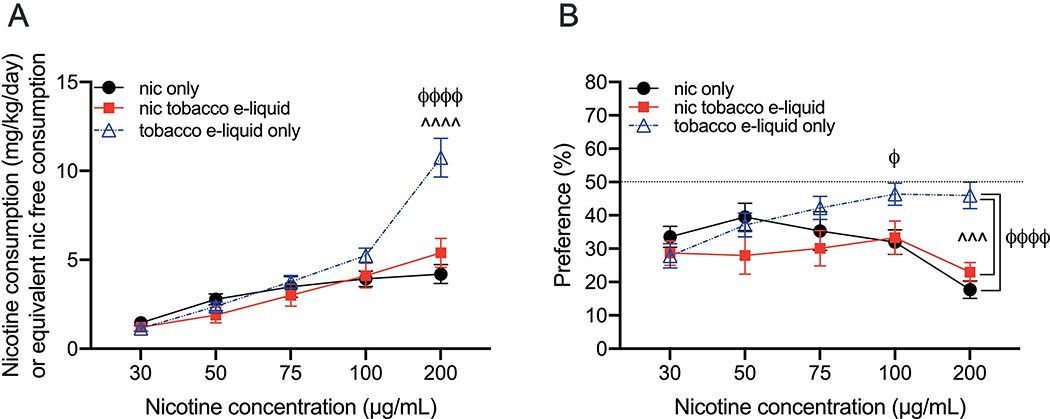
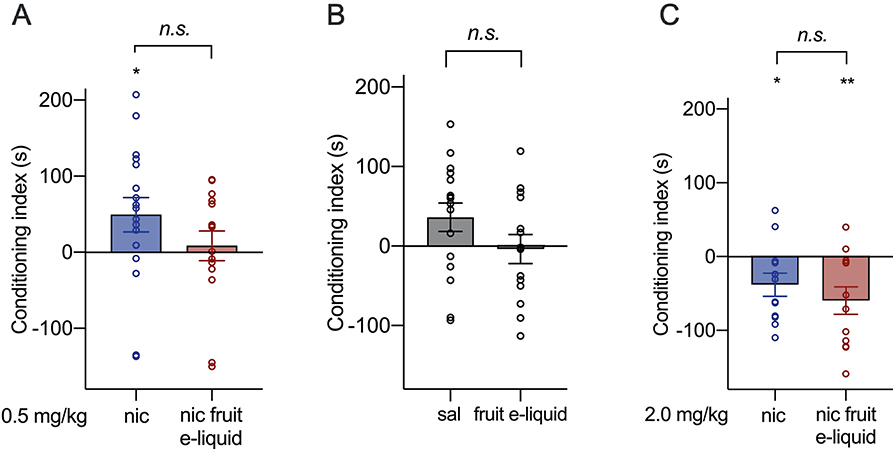
Results: Mice showed higher consumption and preference for the fruit-flavored e-liquid compared with nicotine alone. This increase was not due to the flavor itself as consumption of the nicotine-free fruit-flavored e-liquid was not elevated until the highest concentration tested. The increased consumption and preference were not observed with the tobacco-flavored e-liquid. The conditioned place preference, place aversion and nicotine pharmacokinetics of the fruit-flavored e-liquid were not significantly different from nicotine alone.
Conclusions: Our data suggest that fruit, but not tobacco flavor, increased the oral consumption of e-liquid compared with nicotine alone. Moreover, this enhancement was not due to increased consumption of the flavor itself, altered rewarding or aversive properties after peripheral administration, or altered pharmacokinetics. This flavor-specific enhancement suggests that some flavors may lead to higher nicotine intake and increased use of e-liquids compared with nicotine alone.
Keywords: Electronic cigarette; aversion; consumption; mice; nicotine; preference.
Copyright © 2020 Elsevier B.V. All rights reserved.
Conflict of interest statement
Declaration of Competing Interest The authors declare no conflicts of interest.
Figures
References
-
- Abramovitz A, McQueen A, Martinez RE, Williams BJ, Sumner W, 2015. Electronic cigarettes: The nicotyrine hypothesis. Med Hypotheses. 85, 305–310. - PubMed
-
- Beauval N, Antherieu S, Soyez M, Gengler N, Grova N, Howsam M, Hardy EM, Fischer M, Appenzeller BMR, Goossens JF, Allorge D, Garçon G, Lo-Guidice JM, Garat A, 2017. Chemical Evaluation of Electronic Cigarettes: Multicomponent Analysis of Liquid Refills and their Corresponding Aerosols. J Anal Toxicol. 41, 670–678. - PubMed
Publication types
MeSH terms
Substances
Grants and funding
LinkOut - more resources
Full Text Sources
Medical
Miscellaneous
