


Correlation between breast cancer and lifestyle within the Gulf Cooperation Council countries: A systematic review
- PMID: 32355643
- PMCID: PMC7186238
- DOI: 10.5306/wjco.v11.i4.217
Correlation between breast cancer and lifestyle within the Gulf Cooperation Council countries: A systematic review
Abstract
Background: In the six Gulf Cooperation Council countries (GCCCs), Bahrain, Saudi Arabia, Kuwait, Oman, Qatar and the United Arab Emirates, breast cancer (BC) is the greatest cause of cancer incidence and mortality. Obesity and physical inactivity are established risk factors for BC globally and appear to be more of a problem in high income countries like the GCCCs.
Aim: To determine whether obesity and physical inactivity are associated with BC incidence in the GCCCs using the United Kingdom as a comparator.
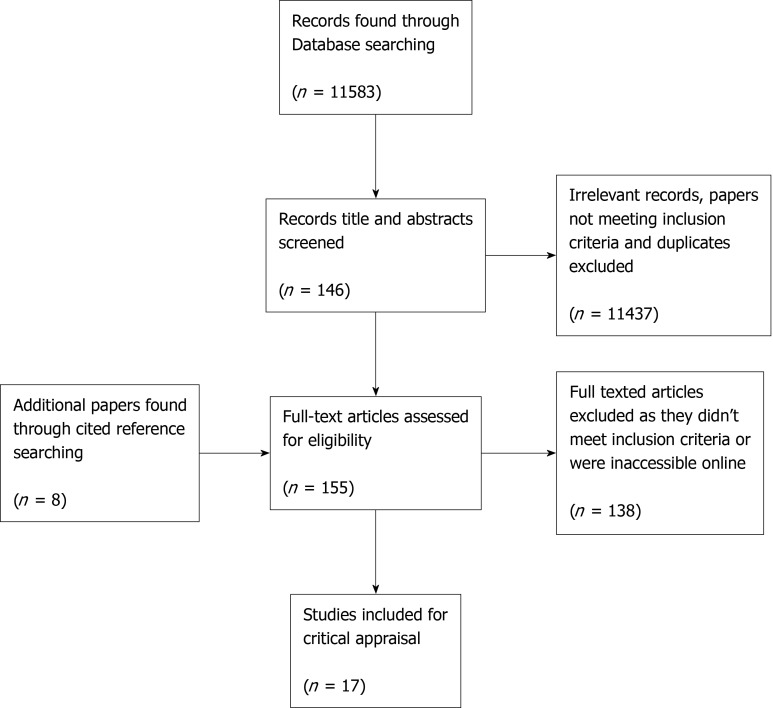
Methods: This systematic review was carried out according to PRISMA guidelines. A cancer registry and a statistical data search was done to identify the BC incidence over the past two decades and the prevalence of obesity and physical inactivity in the GCCCs. Additionally, a systematic search of the databases, MEDLINE, Web of Science, and PubMed between 1999 and 2019 was performed to determine whether obesity and physical inactivity are risk factors for BC in the GCCCs. All papers were critically appraised according to their research methods and were assessed for quality and risk of bias.
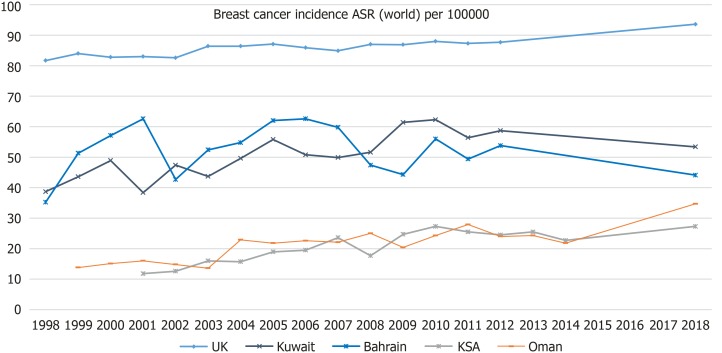
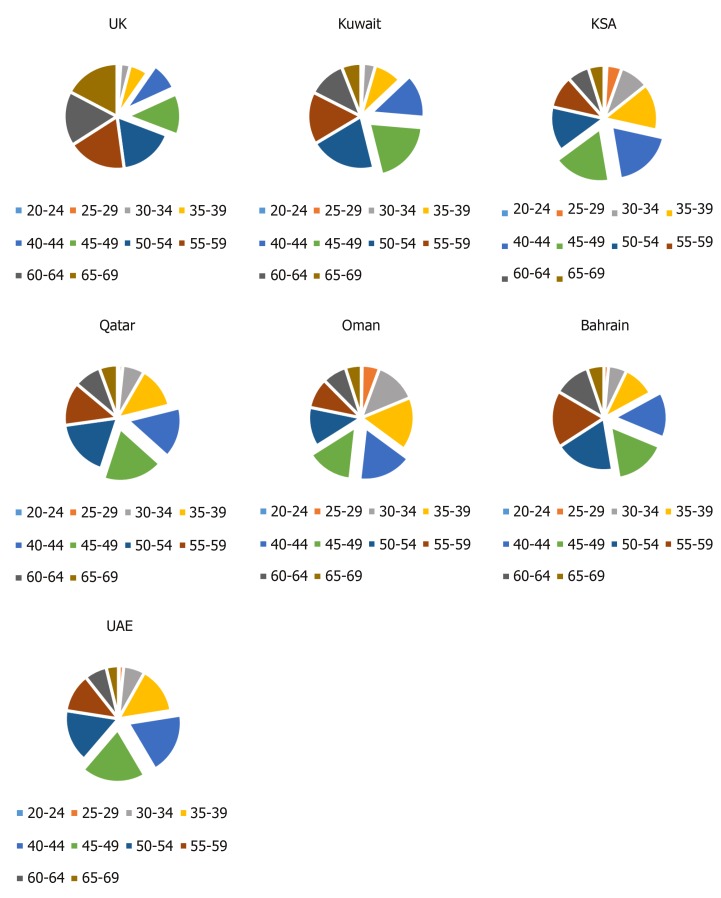
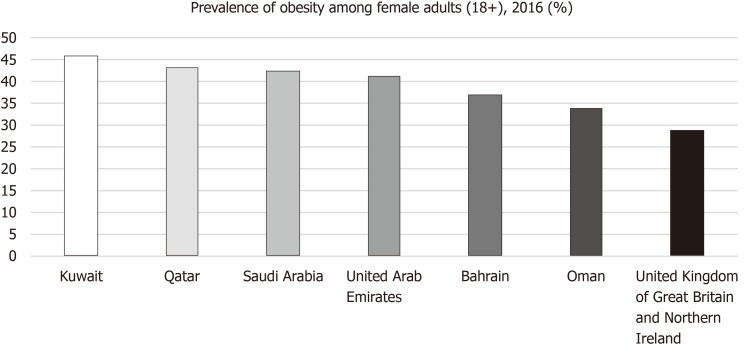
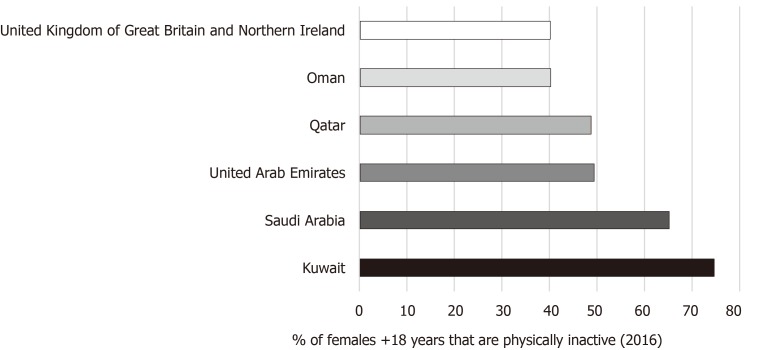
Results: BC was the top malignancy in each GCC country. Women tended to be diagnosed with BC at a younger age than women in the United Kingdom. The greatest 10-year increase in BC incidence was seen in Saudi Arabia (54.2%), approximately seven times the rate of increase seen in the United Kingdom (7.6%). The prevalence of obesity and physical inactivity was greater in all the GCCCs in comparison to the United Kingdom. A total of 155 full studies were reviewed of which 17 were included. Of those, eight looked at the prevalence of obesity and physical inactivity in the Gulf States and nine looked at these as risk factors for BC. Only one study found an association between BC and obesity (odds ratio = 2.29). No studies looked solely at the link between physical inactivity and BC.
Conclusion: The prevalence of obesity and physical inactivity was high within the GCCCs, but the majority of the included studies found no positive correlation between obesity or physical inactivity and BC. A high proportion of women in this study were pre-menopausal which could contribute to the negative findings.
Keywords: Breast cancer; Females; Gulf Cooperation Council Countries; Obesity; Physical inactivity.
©The Author(s) 2020. Published by Baishideng Publishing Group Inc. All rights reserved.
Conflict of interest statement
Conflict-of-interest statement: All the authors declare that they have no competing interests.
Figures
References
-
- Ferlay J, Ervik M, Lam F, Colombet M, Mery L, Piñeros M, Znaor A, Soerjomataram I, Bray F. Cancer Today Lyon, France: International Agency for Research on Cancer; 2018. Available from: https://gco.iarc.fr/today.
-
- Grassa R, Gazdar K. Financial development and economic growth in GCC countries. International Journal of Social Economics. 2014:41: 493–514.
-
- World bank open data-High income 2018. In: The World Bank Group. [cited 2018 October 24] Available from: https://data.worldbank.org/income-level/high-income.
-
- Human development reports 2017. In: United Nations Development Programme. [cited 2018 December 5] Available from: http://hdr.undp.org/en/composite/HDI.
LinkOut - more resources
Full Text Sources
Miscellaneous
