


Interventions to improve adherence to anti-osteoporosis medications: an updated systematic review
- PMID: 32358684
- PMCID: PMC7423788
- DOI: 10.1007/s00198-020-05378-0
Interventions to improve adherence to anti-osteoporosis medications: an updated systematic review
Abstract
An earlier systematic review on interventions to improve adherence and persistence was updated. Fifteen studies investigating the effectiveness of patient education, drug regimen, monitoring and supervision, and interdisciplinary collaboration as a single or multi-component intervention were appraised. Multicomponent interventions with active patient involvement were more effective.
Introduction: This study was conducted to update a systematic literature review on interventions to improve adherence to anti-osteoporosis medications.
Methods: A systematic literature review was carried out in Medline (using PubMed), Embase (using Ovid), Cochrane Library, Current Controlled Trials, ClinicalTrials.gov , NHS Centre for Review and Dissemination, CINHAL, and PsycINFO to search for original studies that assessed interventions to improve adherence (comprising initiation, implementation, and discontinuation) and persistence to anti-osteoporosis medications among patients with osteoporosis, published between July 2012 and December 2018. Quality of included studies was assessed.
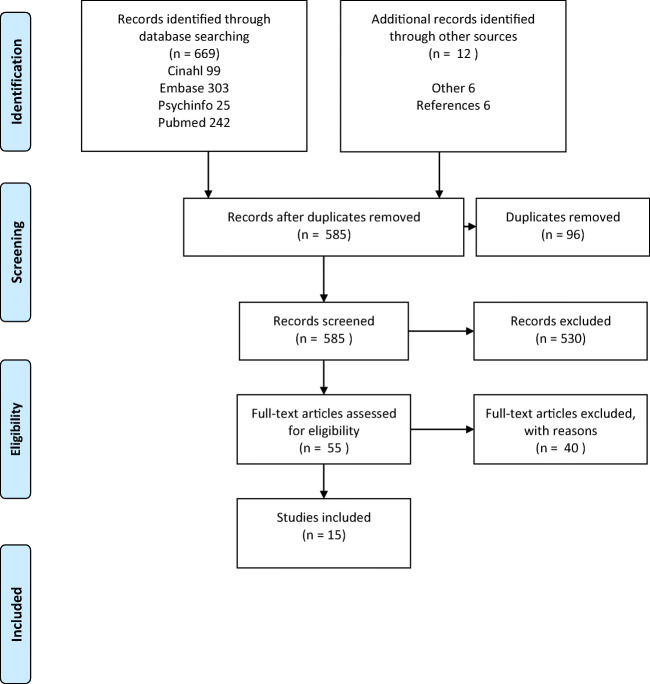
Results: Of 585 studies initially identified, 15 studies fulfilled the inclusion criteria of which 12 were randomized controlled trials. Interventions were classified as (1) patient education (n = 9), (2) drug regimen (n = 3), (3) monitoring and supervision (n = 2), and (4) interdisciplinary collaboration (n = 1). In most subtypes of interventions, mixed results on adherence (and persistence) were found. Multicomponent interventions based on patient education and counseling were the most effective interventions when aiming to increase adherence and/or persistence to osteoporosis medications.
Conclusion: This updated review suggests that patient education, monitoring and supervision, change in drug regimen, and interdisciplinary collaboration have mixed results on medication adherence and persistence, with more positive effects for multicomponent interventions with active patient involvement. Compared with the previous review, a shift towards more patient involvement, counseling and shared decision-making, was seen, suggesting that individualized solutions, based on collaboration between the patient and the healthcare provider, are needed to improve adherence and persistence to osteoporosis medications.
Keywords: Adherence; Counseling; Education; Osteoporosis; Patient; Persistence.
Conflict of interest statement
Jean-Yves Reginster has received research grants from IBSA-Genévrier, Mylan, CNIEL, and Radius Health through institution, has received advisory board or consulting fees from IBSA-Genévrier, Mylan, Radius Health, and Pierre Fabre, and has received lecture fees from IBSA-Genévrier, Mylan, CNIEL, and Dairy Research Council (DRC). Mickaël Hiligsmann has received research grants from Amgen, Bayer, Radius Health, and Theramex through institution. The other authors have no conflict of interest relevant to the content of this study.
References
-
- Hernlund E, Svedbom A, Ivergård M et al (2013) Osteoporosis in the European Union: medical management, epidemiology and economic burden: a report prepared in collaboration with the International Osteoporosis Foundation (IOF) and the European Federation of Pharmaceutical Industry Associations (EFPIA). Arch Osteoporos 8. 10.1007/s11657-013-0136-1 - PMC - PubMed
Publication types
MeSH terms
Grants and funding
LinkOut - more resources
Full Text Sources
Medical
