Review
. 2021 Jan;231(1):e13487.
doi: 10.1111/apha.13487. Epub 2020 Jun 25.

Immunity and Hypertension

Affiliations
Review

Immunity and Hypertension

Rong M Zhang et al. Acta Physiol (Oxf). 2021 Jan.

Abstract

Hypertension is the primary cause of cardiovascular mortality. Despite multiple existing treatments, only half of those with the disease achieve adequate control. Therefore, understanding the mechanisms causing hypertension is essential for the development of novel therapies. Many studies demonstrate that immune cell infiltration of the vessel wall, kidney and central nervous system, as well as their counterparts of oxidative stress, the renal renin-angiotensin system (RAS) and sympathetic tone play a critical role in the development of hypertension. Genetically modified mice lacking components of innate and/or adaptive immunity confirm the importance of chronic inflammation in hypertension and its complications. Depletion of immune cells improves endothelial function, decreases oxidative stress, reduces vascular tone and prevents renal interstitial infiltrates, sodium retention and kidney damage. Moreover, the ablation of microglia or central nervous system perivascular macrophages reduces RAS-induced inflammation and prevents sympathetic nervous system activation and hypertension. Therefore, understanding immune cell functioning and their interactions with tissues that regulate hypertensive responses may be the future of novel antihypertensive therapies.

Keywords: Immunity; hypertension; lymphocytes; macrophages; reactive oxygen species; renin-angiotensin system.


Conflict of interest statement

Conflict of interests: None.

Figures

Figure 1.
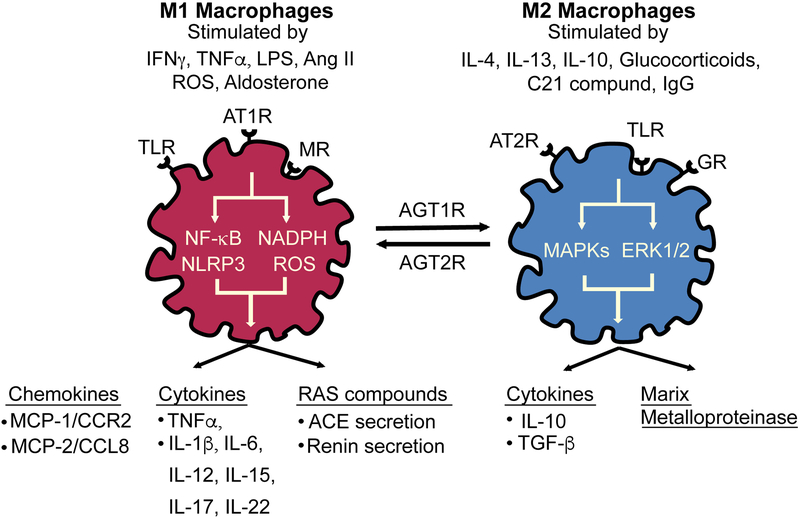
Figure 1.. Effects of Angiotensin II on Macrophage Polarization.
Angiotensin (Ang) II activates AT1R to generate a pro-inflammatory M1 macrophage phenotype. Ang II enhances TLR4 signaling and promotes M1 release of ROS, cytokines, and chemokines, causing more inflammation. Conversely, activation of AT2R promotes M2 differentiation, anti-inflammatory IL10 release, and tissue repair.
Figure 2.
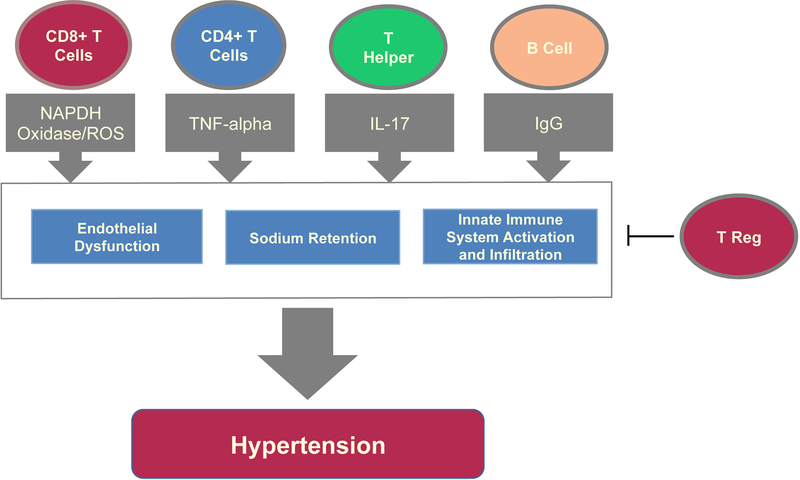
Figure 2.. Role of the Adaptive Immune System in Hypertension.
CD8+, CD4+, T helper cells, and B lymphocytes drive hypertension through mediators such as NADPH oxidase, production of ROS, cytokines (TNF-alpha and IL-17), and IgG production. These mediators worsen hypertension through endothelial dysfunction, sodium retention and impaired natriuresis in the kidney, as well as through further immune activation, including induction of M2 macrophage differentiation. T regulatory cells have a crucial role in modulating and decreasing the adaptive immune system response and help reduce hypertension.
Figure 3.
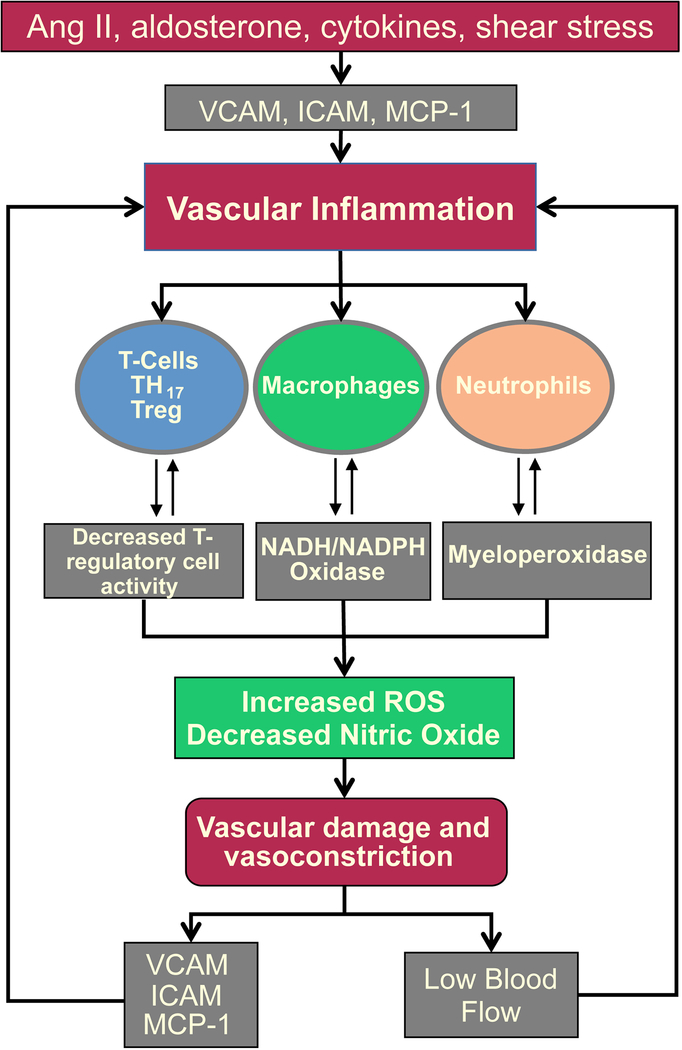
Figure 3.. Vascular Inflammation.
Ang II, aldosterone, cytokines, and shear stress all stimulate adhesion factors to promote immune cell recruitment. Activation of immune cell myeloperoxidases and NADPH oxidases increase vascular ROS, metalloproteinases, tumor TGF-β, and pro-inflammatory endothelial cytokines and chemokines. These all promote endothelial dysfunction, arterial stiffness, decreased vascular flow, and perpetuate the cycle of inflammation and RAS activation.
Figure 4.
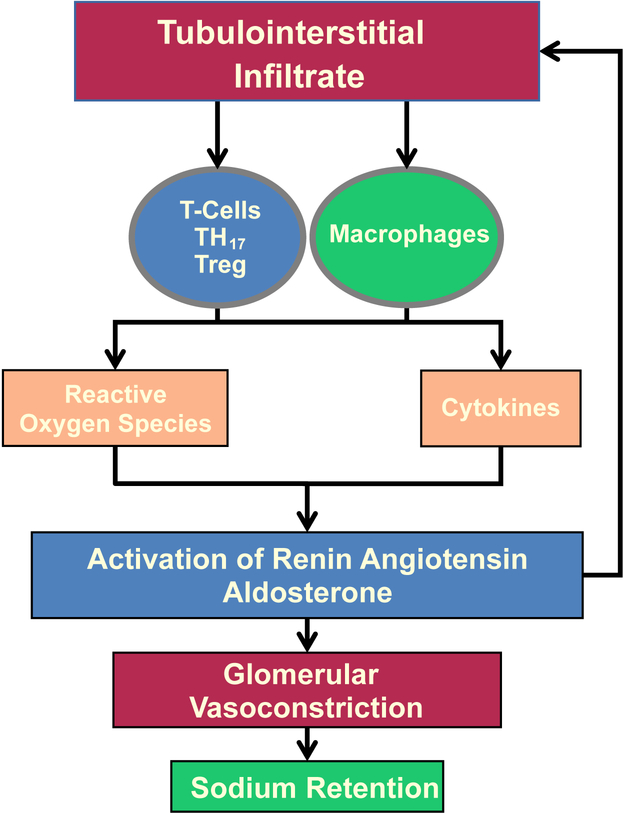
Figure 4.. Immunity and Renal Responses.
Lymphocytes and macrophages promote oxidative stress and intrarenal Ang II generation inducing leukocyte infiltration, tissue damage, and excessive proximal tubular sodium reabsorption.
Figure 5.
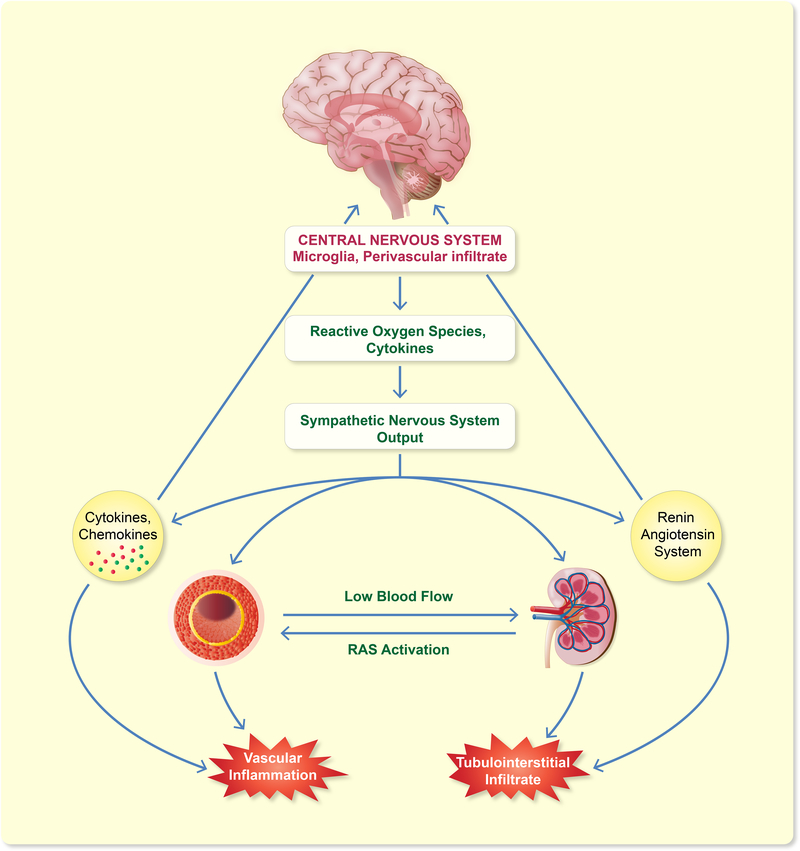
Figure 5.. Contribution of Central Nervous System to Hypertension.
Activation of microglia and perivascular macrophages by increased systemic Ang II or cytokines promotes ROS and local cytokines, activating the sympathetic nervous system. SNS activation increases vascular and renal inflammation, causing hypertension.

References

    1. Nwankwo T, Yoon SS, Burt V, Gu Q. Hypertension among adults in the United States: National Health and Nutrition Examination Survey, 2011–2012. NCHS data brief. 2013(133):1–8. - PubMed
    1. Svendsen UG. Evidence for an initial, thymus independent and a chronic, thymus dependent phase of DOCA and salt hypertension in mice. Acta Pathol Microbiol Scand A. 1976;84(6):523–528. - PubMed
    1. Rodriguez-Iturbe B, Pons H, Johnson RJ. Role of the Immune System in Hypertension. Physiol Rev. 2017;97(3):1127–1164. - PMC - PubMed
    1. Harrison DG, Marvar PJ, Titze JM. Vascular inflammatory cells in hypertension. Front Physiol. 2012;3:128. - PMC - PubMed
    1. White FN, Grollman A. Autoimmune Factors Associated with Infarction of the Kidney. Nephron. 1964;1:93–102. - PubMed

Publication types

Substances