


Sex- and age-dependent effects of maternal organophosphate flame-retardant exposure on neonatal hypothalamic and hepatic gene expression
- PMID: 32360330
- PMCID: PMC7303001
- DOI: 10.1016/j.reprotox.2020.04.001
Sex- and age-dependent effects of maternal organophosphate flame-retardant exposure on neonatal hypothalamic and hepatic gene expression
Abstract
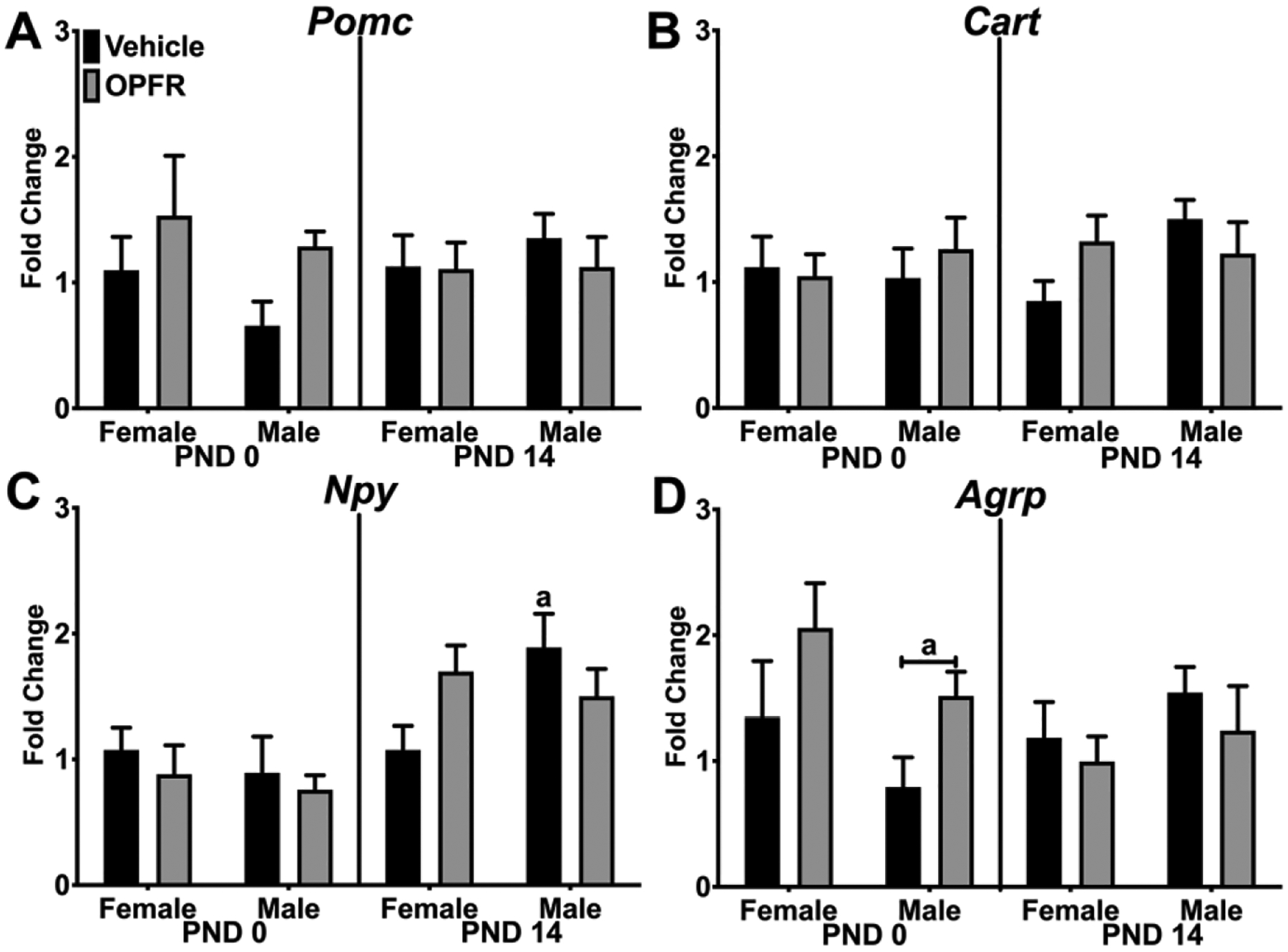
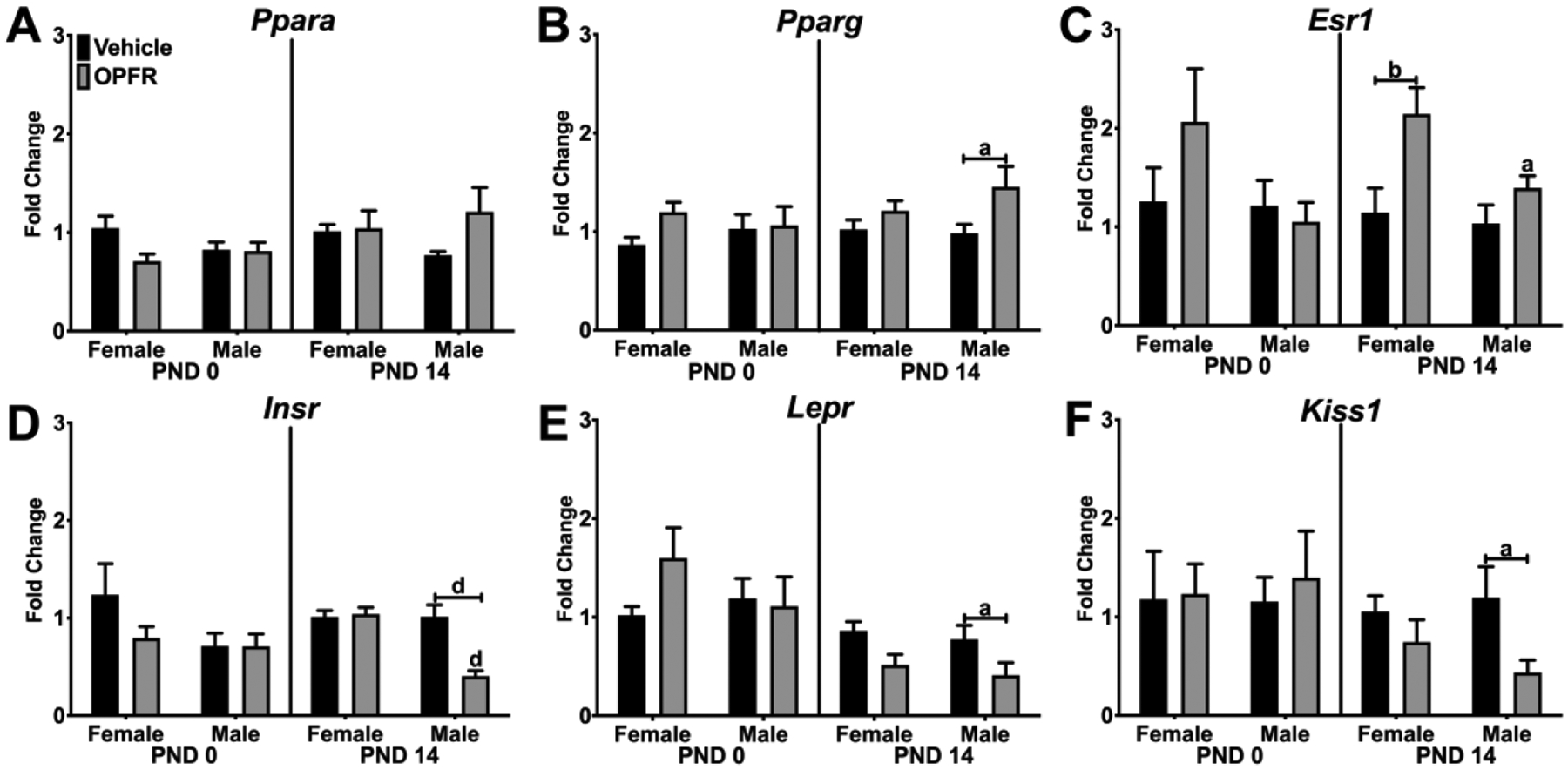
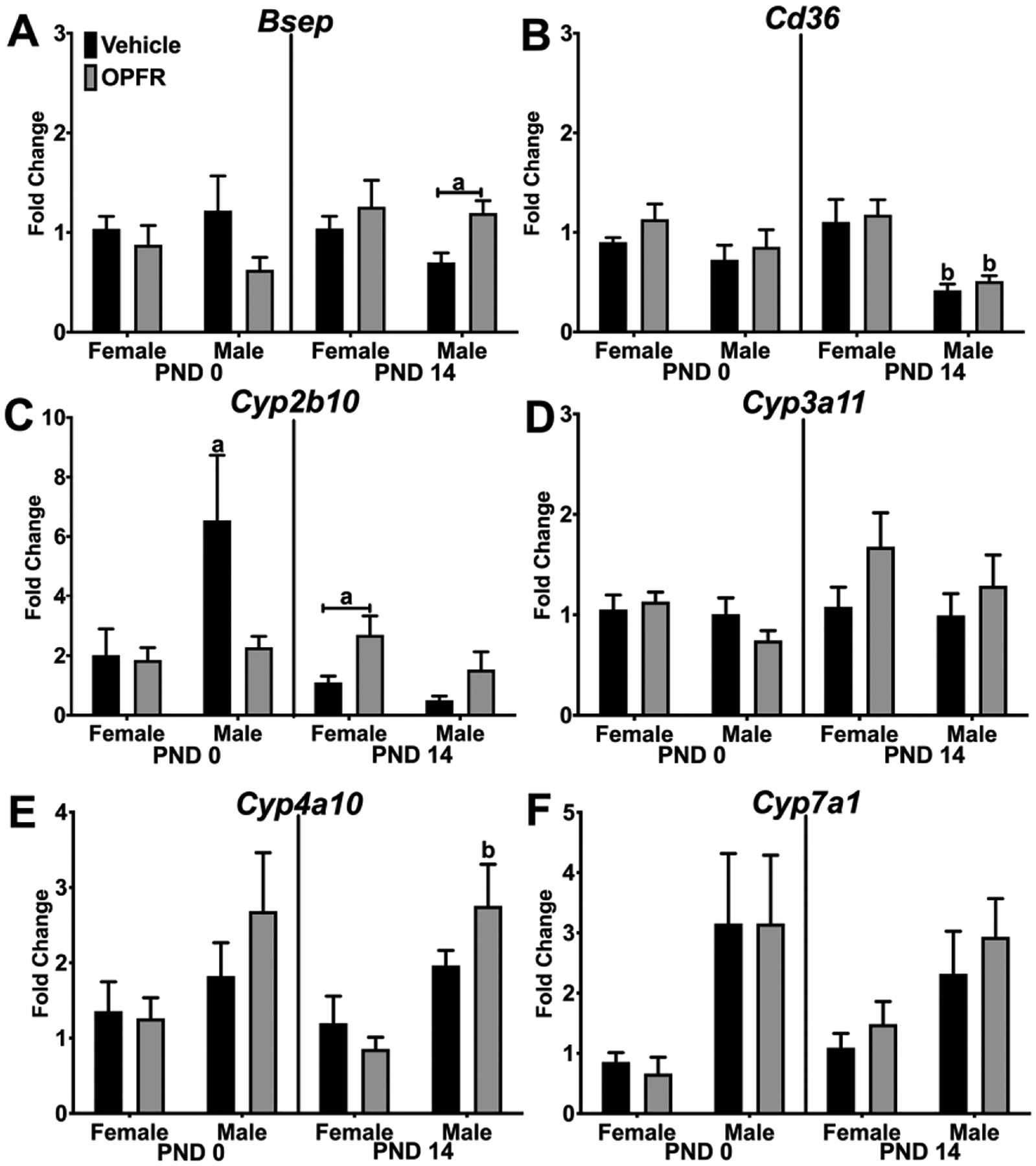
After the phase-out of polybrominated diphenyl ethers, their replacement compounds, organophosphate flame retardants (OPFRs) became ubiquitous in home and work environments. OPFRs, which may act as endocrine disruptors, are detectable in human urine, breast milk, and blood samples collected from pregnant women. However, the effects of perinatal OPFR exposure on offspring homeostasis and gene expression remain largely underexplored. To address this knowledge gap, virgin female mice were mated and dosed with either a sesame oil vehicle or an OPFR mixture (tris(1,3-dichloro-2-propyl)phosphate, tricresyl phosphate, and triphenyl phosphate, 1 mg/kg each) from gestational day (GD) 7 to postnatal day (PND) 14. Hypothalamic and hepatic tissues were collected from one female and one male pup per litter on PND 0 and PND 14. Expression of genes involved in energy homeostasis, reproduction, glucose metabolism, and xenobiotic metabolism were analyzed using quantitative real-time PCR. In the mediobasal hypothalamus, OPFR increased Pdyn, Tac2, Esr1, and Pparg in PND 14 females. In the liver, OPFR increased Pparg and suppressed Insr, G6pc, and Fasn in PND 14 males and increased Esr1, Foxo1, Dgat2, Fasn, and Cyb2b10 in PND 14 females. We also observed striking sex differences in gene expression that were dependent on the age of the pup. Collectively, these data suggest that maternal OPFR exposure alters hypothalamic and hepatic development by influencing neonatal gene expression in a sex-dependent manner. The long-lasting consequences of these changes in expression may disrupt puberty, hormone sensitivity, and metabolism of glucose, fatty acids, and triglycerides in the maturing juvenile.
Keywords: Endocrine disruptors; Gene expression; Hypothalamus; Liver; Maternal exposure; Organophosphate flame retardants; Sex differences.
Copyright © 2020 Elsevier Inc. All rights reserved.
Conflict of interest statement
Declaration of Competing Interest The authors declare that they have no known competing financial interests or personal relationships that could have appeared to influence the work reported in this paper.
Figures




References
-
- Thomas Zoeller R, Brown TR, Doan LL, Gore a. C., Skakkebaek NE, Soto a. M., Woodruff TJ, Vom Saal FS, Endocrine-disrupting chemicals and public health protection: A statement of principles from the Endocrine Society, Endocrinology. 153 (2012) 4097–4110. doi:10.1210/en.2012-1422. - DOI - PMC - PubMed
-
- Bergman Å, Becher G, Blumberg B, Bjerregaard P, Bornman R, Brandt I, Casey SC, Frouin H, Giudice LC, Heindel JJ, Iguchi T, Jobling S, Kidd KA, Kortenkamp A, Lind PM, Muir D, Ochieng R, Ropstad E, Ross PS, Skakkebaek NE, Toppari J, Vandenberg LN, Woodruff TJ, Zoeller RT, Manufacturing doubt about endocrine disrupter science - A rebuttal of industry-sponsored critical comments on the UNEP/WHO report “State of the Science of Endocrine Disrupting Chemicals 2012,” Regul Toxicol Pharmacol. 73 (2015) 1007–1017. doi:10.1016/j.yrtph.2015.07.026. - DOI - PubMed
-
- Giesy J, Hilscherová K, Jones PD, Kannan K, Machala M, Cell bioassay for detection of aryl hydrocarbon (AhR) and estrogen receptor (ER) madiated activity in enviromental samples, Mar Pollut Bull. 45 (2002) 3–16. file:///C:/Users/Kdd/AppData/Local/Temp/1-s2.0-S0025326X02000978-main.pdf. - PubMed
-
- Hoffman K, Butt CM, Webster TF, Preston EV, Hammel SC, Makey C, Lorenzo AM, Cooper EM, Carignan C, Meeker JD, Hauser R, Soubry A, Murphy SK, Price TM, Hoyo C, Mendelsohn E, Congleton J, Daniels JL, Stapleton HM, Temporal Trends in Exposure to Organophosphate Flame Retardants in the United States, Environ Sci Technol Lett. 4 (2017) 112–118. doi:10.1021/acs.estlett.6b00475. - DOI - PMC - PubMed
Publication types
MeSH terms
Substances
Grants and funding
LinkOut - more resources
Full Text Sources
Research Materials
Miscellaneous
