


Pre-clinical models of reward deficiency syndrome: A behavioral octopus
- PMID: 32360413
- PMCID: PMC7594013
- DOI: 10.1016/j.neubiorev.2020.04.021
Pre-clinical models of reward deficiency syndrome: A behavioral octopus
Abstract
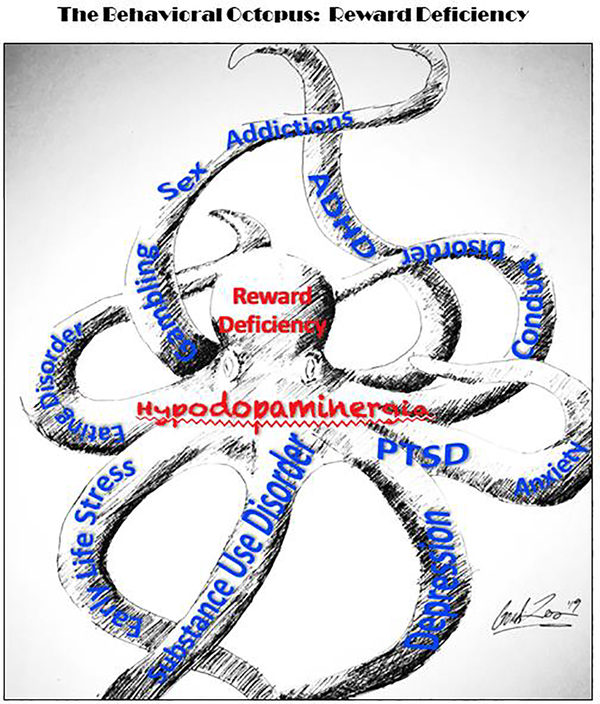
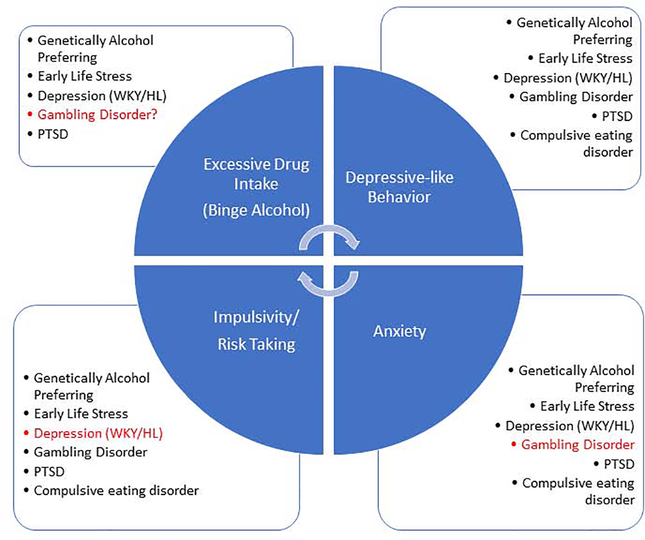
Individuals with mood disorders or with addiction, impulsivity and some personality disorders can share in common a dysfunction in how the brain perceives reward, where processing of natural endorphins or the response to exogenous dopamine stimulants is impaired. Reward Deficiency Syndrome (RDS) is a polygenic trait with implications that suggest cross-talk between different neurological systems that include the known reward pathway, neuroendocrine systems, and motivational systems. In this review we evaluate well-characterized animal models for their construct validity and as potential models for RDS. Animal models used to study substance use disorder, major depressive disorder (MDD), early life stress, immune dysregulation, attention deficit hyperactivity disorder (ADHD), post traumatic stress disorder (PTSD), compulsive gambling and compulsive eating disorders are discussed. These disorders recruit underlying reward deficiency mechanisms in multiple brain centers. Because of the widespread and remarkable array of associated/overlapping behavioral manifestations with a common root of hypodopaminergia, the basic endophenotype recognized as RDS is indeed likened to a behavioral octopus. We conclude this review with a look ahead on how these models can be used to investigate potential therapeutics that target the underlying common deficiency.
Keywords: APOSUS; Addiction; Alcohol use disorder; Alcohol-preferring P rat; Animal models of reward deficiency; Compulsive eating disorder; Dopamine; Early life stress; Gambling disorder; Helpless mouse (HL); Knockout rats; Maternal deprivation; PTSD; Reward; Roman; Wistar Kyoto (WKY) rat; mGluR2.
Copyright © 2020 Elsevier Ltd. All rights reserved.
Figures
References
-
- AISA B, TORDERA R, LASHERAS B, DEL RÍO J & RAMÍREZ MJ 2007. Cognitive impairment associated to HPA axis hyperactivity after maternal separation in rats. Psychoneuroendocrinology, 32, 256–66. - PubMed
-
- AKBARI HM, KRAMER HK, WHITAKER-AZMITIA PM, SPEAR LP & AZMITIA EC 1992. Prenatal cocaine exposure disrupts the development of the serotonergic system. Brain Res, 572, 57–63. - PubMed
-
- ALGUACIL LF & GONZÁLEZ-MARTÍN C 2015. Target identification and validation in brain reward dysfunction. Drug Discov Today, 20, 347–52. - PubMed
Publication types
MeSH terms
Grants and funding
LinkOut - more resources
Full Text Sources
Medical
