


Systematic review of mutations associated with resistance to the new and repurposed Mycobacterium tuberculosis drugs bedaquiline, clofazimine, linezolid, delamanid and pretomanid
- PMID: 32361756
- PMCID: PMC7825472
- DOI: 10.1093/jac/dkaa136
Systematic review of mutations associated with resistance to the new and repurposed Mycobacterium tuberculosis drugs bedaquiline, clofazimine, linezolid, delamanid and pretomanid
Abstract
Background: Improved genetic understanding of Mycobacterium tuberculosis (MTB) resistance to novel and repurposed anti-tubercular agents can aid the development of rapid molecular diagnostics.
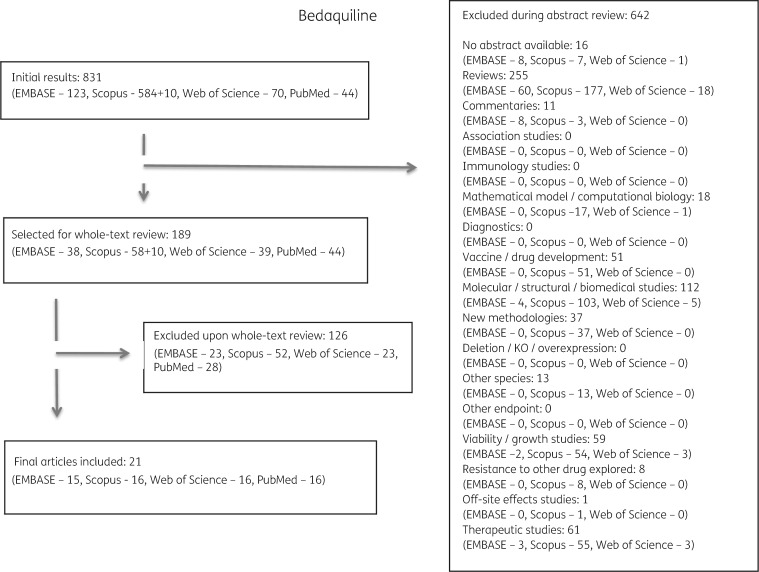
Methods: Adhering to PRISMA guidelines, in March 2018, we performed a systematic review of studies implicating mutations in resistance through sequencing and phenotyping before and/or after spontaneous resistance evolution, as well as allelic exchange experiments. We focused on the novel drugs bedaquiline, delamanid, pretomanid and the repurposed drugs clofazimine and linezolid. A database of 1373 diverse control MTB whole genomes, isolated from patients not exposed to these drugs, was used to further assess genotype-phenotype associations.
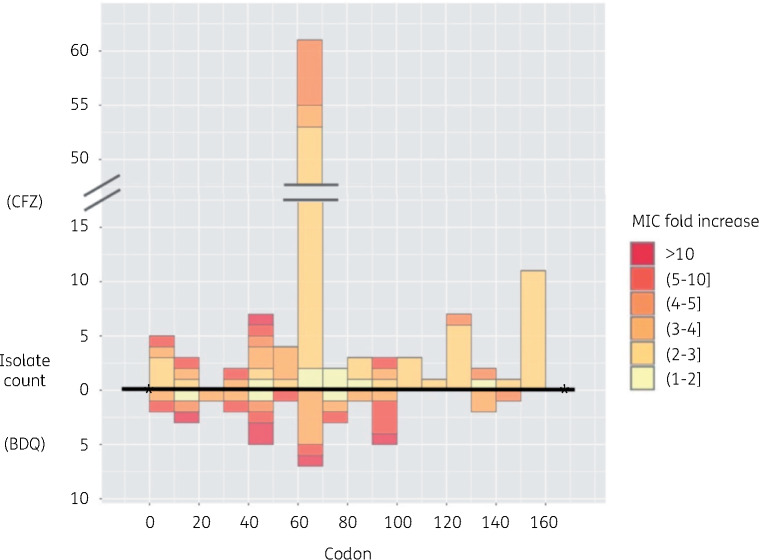
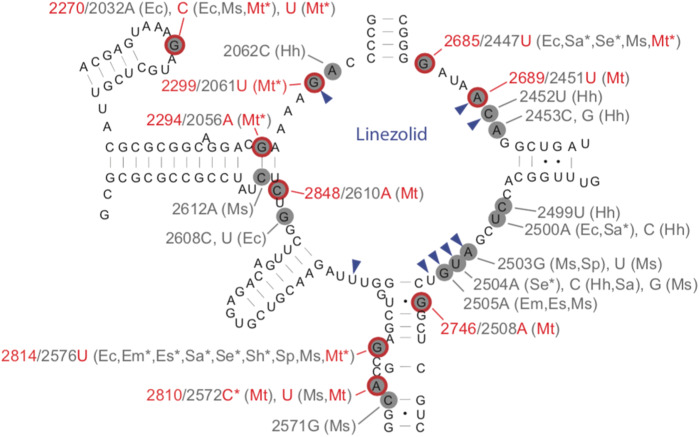
Results: Of 2112 papers, 54 met the inclusion criteria. These studies characterized 277 mutations in the genes atpE, mmpR, pepQ, Rv1979c, fgd1, fbiABC and ddn and their association with resistance to one or more of the five drugs. The most frequent mutations for bedaquiline, clofazimine, linezolid, delamanid and pretomanid resistance were atpE A63P, mmpR frameshifts at nucleotides 192-198, rplC C154R, ddn W88* and ddn S11*, respectively. Frameshifts in the mmpR homopolymer region nucleotides 192-198 were identified in 52/1373 (4%) of the control isolates without prior exposure to bedaquiline or clofazimine. Of isolates resistant to one or more of the five drugs, 59/519 (11%) lacked a mutation explaining phenotypic resistance.
Conclusions: This systematic review supports the use of molecular methods for linezolid resistance detection. Resistance mechanisms involving non-essential genes show a diversity of mutations that will challenge molecular diagnosis of bedaquiline and nitroimidazole resistance. Combined phenotypic and genotypic surveillance is needed for these drugs in the short term.
© The Author(s) 2020. Published by Oxford University Press on behalf of the British Society for Antimicrobial Chemotherapy. All rights reserved. For permissions, please email: journals.permissions@oup.com.
Figures
References
-
- WHO. Global Tuberculosis Report 2019. https://apps.who.int/iris/bitstream/handle/10665/329368/9789241565714-en....
-
- Diacon AH, Pym A, Grobusch M. et al. The diarylquinoline TMC207 for multidrug-resistant tuberculosis. N Engl J Med 2009; 360: 2397–405. - PubMed
-
- Gler MT, Skripconoka V, Sanchez-Garavito E. et al. Delamanid for multidrug-resistant pulmonary tuberculosis. N Engl J Med 2012; 366: 2151–60. - PubMed
-
- Köser CU, Maurer FP, Kranzer K.. “Those who cannot remember the past are condemned to repeat it”: drug-susceptibility testing for bedaquiline and delamanid. Int J Infect Dis 2019; 80S: S32–5. - PubMed
Publication types
MeSH terms
Substances
Grants and funding
LinkOut - more resources
Full Text Sources
Other Literature Sources
Medical
Miscellaneous
