


doi: 10.1289/EHP6628.
Epub 2020 May 4.
Vaper, Beware: The Unique Toxicological Profile of Electronic Cigarettes
- PMID: 32363917
- PMCID: PMC7263459
- DOI: 10.1289/EHP6628
Item in Clipboard
Vaper, Beware: The Unique Toxicological Profile of Electronic Cigarettes
Environ Health Perspect.
2020 May.
No abstract available
Figures


The percentage of high schoolers reporting recent e-cigarette use increased from 1.5% in 2011 to 27.5% in 2019. The rapid increase in youth vaping is one reason the FDA is cracking down on manufacturers targeting young consumers with kid-friendly marketing. Image: CC BY 4.0 (cropped original).
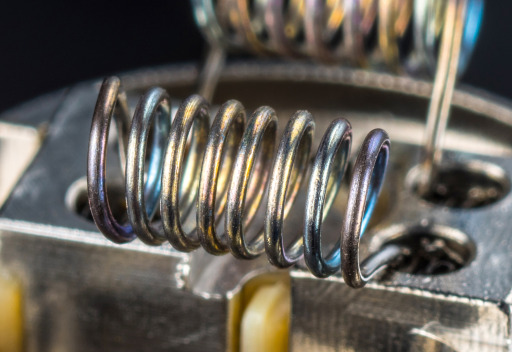
Brand-new heating coils emit more metal particles than older ones. But that is just one characteristic of individual devices that can affect total metal emissions. Image: © iStockphoto/gawriloff.

Manufacturers and vapers mix the solvents propylene glycol and vegetable glycerol (also known as vegetable glycerin or glycerine) in different proportions to achieve desired effects from e-liquids. These include the intensity of the flavors, the strength of the “throat hit” (or sensation from inhaling nicotine), and the size of the resulting vapor cloud. Image: CC0 Public Domain.
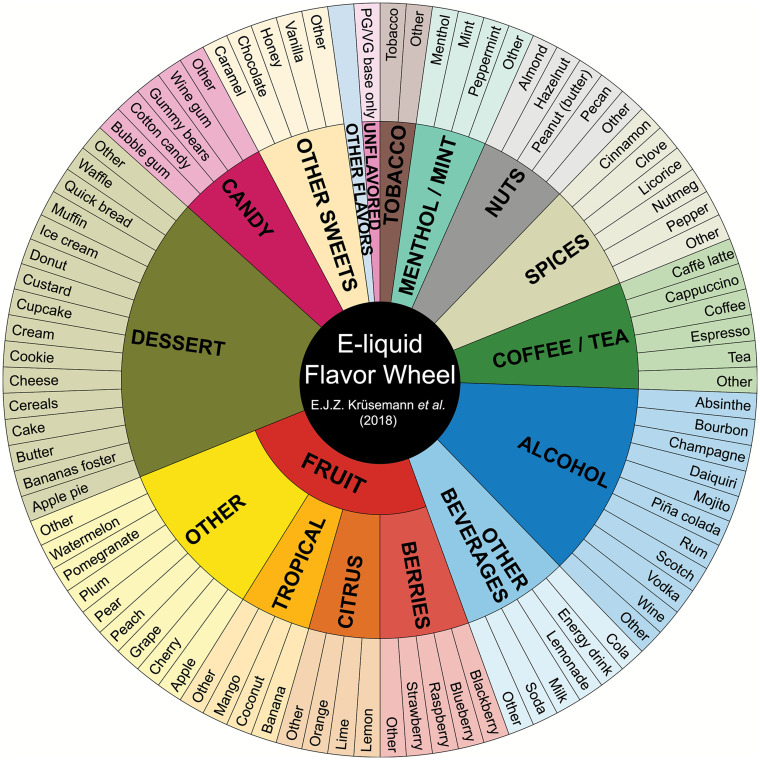
Studies of vapers’ e-cigarette preferences and habits have revealed a lack of consistency in naming of flavors. In 2018, researchers developed a “flavor wheel” consisting of 13 main categories and 90 subcategories. A common vocabulary for classifying flavors makes it easier to compare findings across studies. Image: © The Authors 2018. Published by Oxford University Press on behalf of the Society for Research on Nicotine and Tobacco. Originally published in: Krüsemann EJZ, Boesveldt S, de Graaf K, Talhout R. 2019. An e-liquid flavor wheel: a shared vocabulary based on systematically reviewing e-liquid flavor classifications in literature. Nicotine Tob Res 21(10):1310–1319, DOI: 10.1093/ntr/nty101.

Emerging evidence suggests that secondhand exposure to vaping aerosols may expose bystanders to potentially harmful chemicals. As of 2 January 2020, 22 U.S. states and territories had restricted the use of e-cigarettes in smoke-free environments. Image: © iStockphoto/mediaphotos.

E-cigarettes have long been touted as a healthier alternative to smoking. And it is true that vapers may avoid many of the toxic exposures associated with smoking. However, e-cigarettes come with potentially hazardous exposures of their own. Image: © Philip Brookes/Alamy Stock Photo.
References
-
- U.S. Food and Drug Administration. 2019. Fact or Fiction: What to Know About Smoking Cessation and Medications. [Website.] Updated 28 March 2019. https://www.fda.gov/consumers/consumer-updates/fact-or-fiction-what-know... [accessed 30 March 2020].
-
- Eaton DL, Kwan LY, Stratton K, eds. 2018. Chapter 1. Introduction In: Public Health Consequences of E-cigarettes: A Consensus Study of The National Academies of Sciences, Engineering, and Medicine. Washington, DC: National Academies Press, 23–41. https://www.nap.edu/read/24952/chapter/1 [accessed 30 March 2020].
-
- U.S. Centers for Disease Control and Prevention. 2020. Outbreak of Lung Injury Associated with the Use of E-Cigarette, or Vaping, Products. Updated 25 February 2020. https://www.cdc.gov/tobacco/basic_information/e-cigarettes/severe-lung-d... [accessed 30 March 2020].
Publication types
MeSH terms
Substances
LinkOut - more resources
Full Text Sources
Medical