. 2020 May 4;15(5):e0232629.
doi: 10.1371/journal.pone.0232629. eCollection 2020.

Effect of ovarian stimulation on the expression of piRNA pathway proteins

Affiliations

Effect of ovarian stimulation on the expression of piRNA pathway proteins

Ismail Sari et al. PLoS One. .

Abstract

PIWI-interacting RNAs (piRNAs) play an important role in gametogenesis, fertility and embryonic development. The current study investigated the effect of different doses of pregnant mare serum gonadotrophin/human chorionic gonadotrophin (PMSG/hCG) and repeated ovarian stimulation (OS) on the expression of the Mili, Miwi, Mael, Tdrd1, Tdrd9, qnd Mitopld genes, which have crucial roles in the biogenesis and function of piRNAs. Here, we found that after treatment with 7.5 I.U. PMSG/hCG and two repeated rounds of OS, both the mRNA and protein levels of Tdrd9, Tdrd1 and Mael showed the greatest decrease in the ovarian tissue, but the plasma E2 levels showed the strongest increases (p<0.05). However, we found that the Mitopld, Miwi and Mili gene levels were decreased significantly after treatment with 12.5 I.U. PMSG/hCG. Our results suggested that exogenous gonadotropin administration leads to a significant decrease in the expression of the Mili, Miwi, Mael, Tdrd1, Tdrd9 and Mitopld genes, which are critically important in the piRNA pathway, and the changes in the expression levels of Tdrd9, Tdrd1 and Mael may be associated with plasma E2 levels. New comprehensive studies are needed to reduce the potential effects of OS on the piRNA pathway, which silences transposable elements and maintains genome integrity, and to contribute to the safety of OS.


Conflict of interest statement

The authors declare that there is no conflict of interest.

Figures
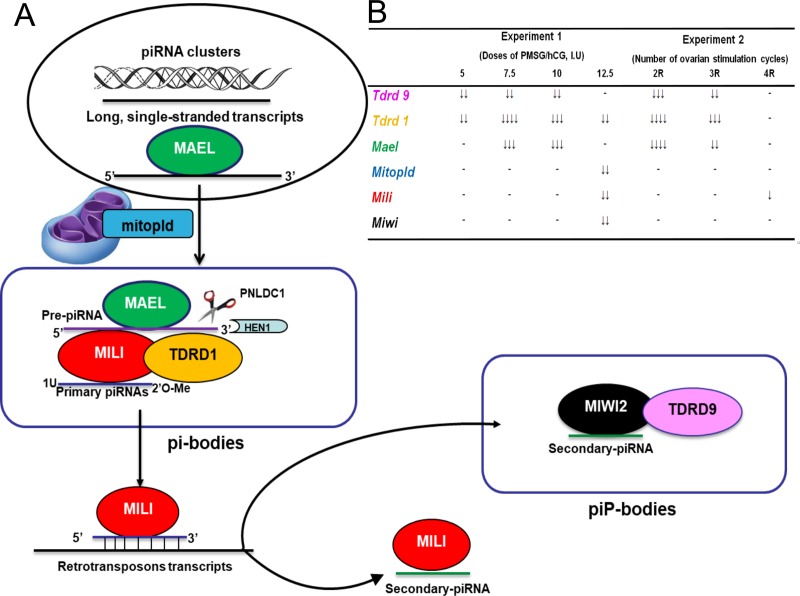
Fig 1
Fig 1. Schematic representation of the role of TDRD9, TDRD1, MAELLE, MITOPLD, MILI and MIWI proteins in the piRNA biogenesis and the effect of the ovarian stimulation on the gene expression.
(A) Schematic illustration of the role of investigated proteins in the primary and secondary (ping-pong cycle) piRNA biogenesis. In the primary pathway, long, single-stranded transcripts (black) produced from piRNA clusters are processed by the endonuclease activity of mitochondrial protein MITOPLD, generating the pre-piRNAs (purple) with uridine at the first nucleotide position (1U) and are loaded onto MILI, a Nuage protein [10, 13, 16]. At these stages, the nucleocytoplasmic shuttling protein MAEL binds piRNA precursors and delivers them to pi-bodies that contain MILI and its binding partner TDRD1 [13, 15]. The 3’ end of pre- piRNAs is trimmed by a nuclease, PNLDC1, and modified by the methyltransferase HEN1 to generate mature primary piRNAs (blue). The mature primary piRNAs guide MILI to slice their complementary target RNAs such as retrotransposons transcripts and these processes cause the production of a series of secondary piRNAs (green) that associate with MILI and also MIWI2 (ping-pong cycle) [13,16]. MIWI2 and its interaction partner TDRD9 are found in piP bodies and don’t have a slicer activity, but the MIWI2–piRNA complexes can regulate gene transcription by epigenetic mechanisms including histone modification and DNA methylation of target genes [12, 13]. (B) Effects of OS on the expression of Tdrd9, Tdrd1, Mael, Mitopld, Mili, and Miwi. 1–2 (↓), 2–4 (↓↓), 4–8 (↓↓↓), and 8–15 (↓↓↓↓) times significantly decrease in the expression levels of studied genes compared to control.
Fig 2
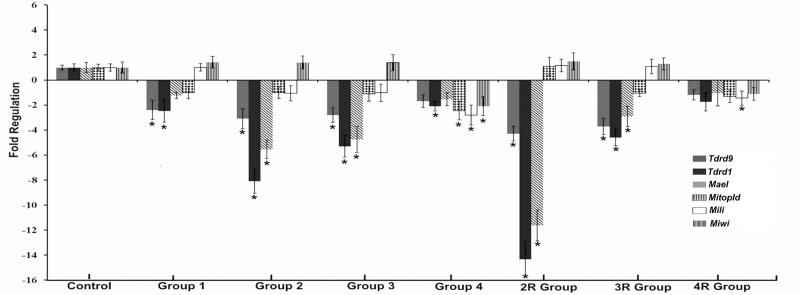
Fig 2. Effects of ovarian stimulation on Tdrd9, Tdrd1, Mael, Mitopld, Mili, and Miwi mRNA levels in ovarian tissue of the study groups.
Fold-Regulation (FR) represents fold-change results in a biologically meaningful way. Fold-change values greater than one indicates a positive- or an up-regulation, and the FR is equal to the fold-change. Fold-change values less than one indicate a negative or down-regulation, and the FR is the negative inverse of the fold-change. *p<0.05.
Fig 3
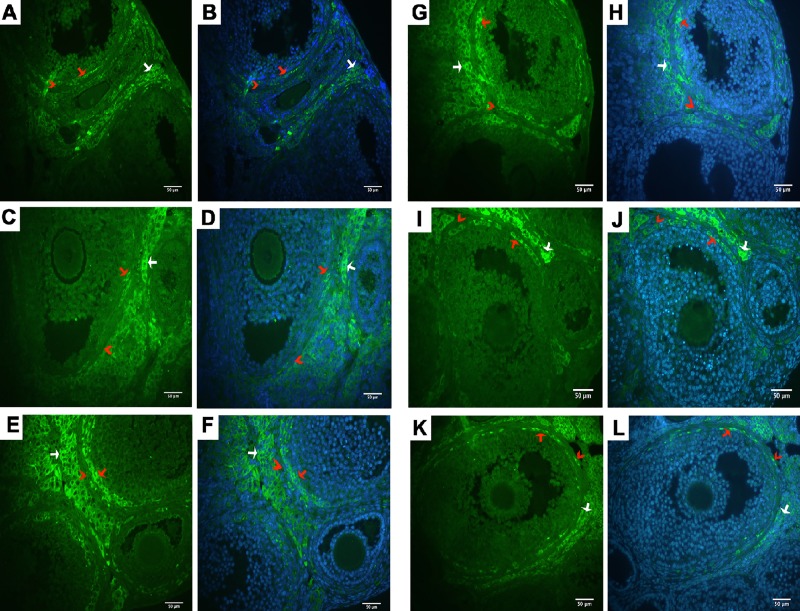
Fig 3. Immunofluorescence analysis of TDRD9, TDRD1, MAEL, MITOPLD, MILI, and MIWI in the ovarian tissue sections of the control group.
Representative immunofluorescence images of TDRD9 (A-B), TDRD1 (C-D), MAEL (E-F), MITOPLD (G-H), MILI (I-J), and MIWI (K-L) (400X magnification). Red arrow, theca interna; Red arrow heads, theca externa; white arrow, stromal cells. MILI, MIWI, MAEL, TDRD1, TDRD9 and MITOPLD stained with FITC. Blue = DAPI nuclear counterstain, green = FITC.
Fig 4
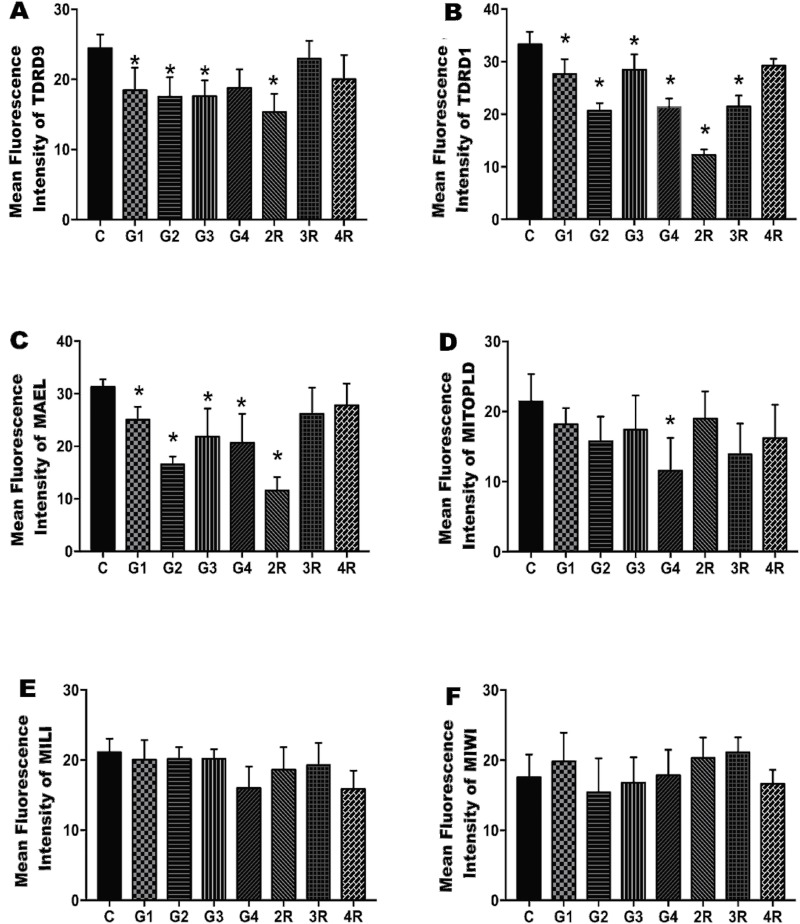
Fig 4. The intensity of immunoexpression of TDRD9, TDRD1, MAEL, MITOPLD, MILI, and MIWI in the ovarian tissue sections of the study groups.
Comparison of the expression of TDRD9 (A), TDRD1 (B), MAEL (C), MITOPLD (D), MILI (E), and MIWI (F) in the ovarian tissue between the control and the study groups. Data are presented as the mean ± SD. C, Control; G, Group.*p<0.05.

References

    1. Santos MA, Kuijk EW, Macklon NS. The impact of ovarian stimulation for IVF on the developing embryo. Reproduction. 2010; 139: 23–34. 10.1530/REP-09-0187 - DOI - PubMed
    1. Sato A, Otsu E, Negishi H, Utsunomiya T, Arima T. Aberrant DNA methylation of imprintedloci in superovulated oocytes. Human reproduction. 2006; 22: 26–35. 10.1093/humrep/del316 - DOI - PubMed
    1. Goldman B. Reproductive medicine: the first cut. Nature. 2007; 445: 479–480. 10.1038/445479a - DOI - PubMed
    1. Baart EB, Martini E, van den Berg I, Macklon NS, Galjaar RH, Fauser BCJM, et al. Preimplantation genetic screening reveals a high incidence of aneuploidy and mosaicism in embryos from young women undergoing IVF. Human Reproduction. 2005; 21: 223–233. 10.1093/humrep/dei291 - DOI - PubMed
    1. Timofeeva AV, Chagovets VV, Drapkina YS, Makarova NP, Kalinina EA, Sukhikh GT. Cell-Free, Embryo-Specific sncRNA as a Molecular Biological Bridge between Patient Fertility and IVF Efficiency. International journal of molecular sciences. 2019; 20: 2912. - PMC - PubMed

Publication types

MeSH terms