Review
. 2020 Apr 29;25(9):2070.
doi: 10.3390/molecules25092070.

Structure-Activity-Relationship and Mechanistic Insights for Anti-HIV Natural Products

Affiliations
Review

Structure-Activity-Relationship and Mechanistic Insights for Anti-HIV Natural Products

Ramandeep Kaur et al. Molecules. .

Abstract

Acquired Immunodeficiency Syndrome (AIDS), which chiefly originatesfroma retrovirus named Human Immunodeficiency Virus (HIV), has impacted about 70 million people worldwide. Even though several advances have been made in the field of antiretroviral combination therapy, HIV is still responsible for a considerable number of deaths in Africa. The current antiretroviral therapies have achieved success in providing instant HIV suppression but with countless undesirable adverse effects. Presently, the biodiversity of the plant kingdom is being explored by several researchers for the discovery of potent anti-HIV drugs with different mechanisms of action. The primary challenge is to afford a treatment that is free from any sort of risk of drug resistance and serious side effects. Hence, there is a strong demand to evaluate drugs derived from plants as well as their derivatives. Several plants, such as Andrographis paniculata, Dioscorea bulbifera, Aegle marmelos, Wistaria floribunda, Lindera chunii, Xanthoceras sorbifolia and others have displayed significant anti-HIV activity. Here, weattempt to summarize the main results, which focus on the structures of most potent plant-based natural products having anti-HIV activity along with their mechanisms of action and IC50 values, structure-activity-relationships and important key findings.

Keywords: AIDS; MOAs; anti-HIV; natural products.


Conflict of interest statement

The authors declare no conflict of interest.

Figures

Figure 1
Figure 1
Structure of human immunodeficiency virus (HIV) virus [10]. Image was originally published within Open Access license.
Figure 2
Figure 2
The HIV replication cycle [13]. Image was originally published within Open Access license.
Figure 3
Figure 3
Structures of fusion inhibitors.
Figure 4
Figure 4
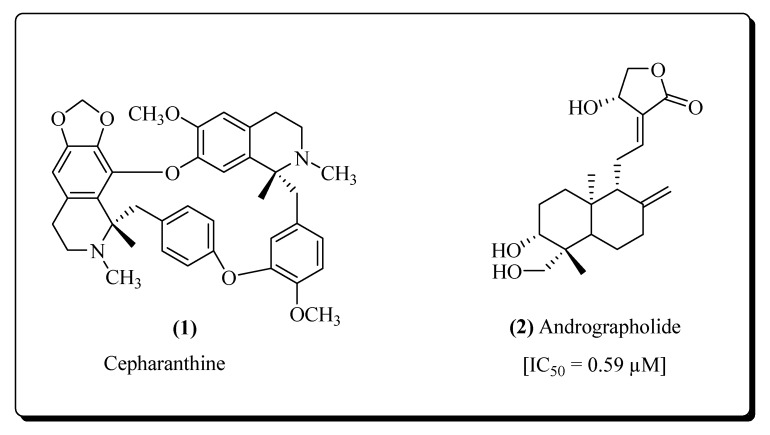
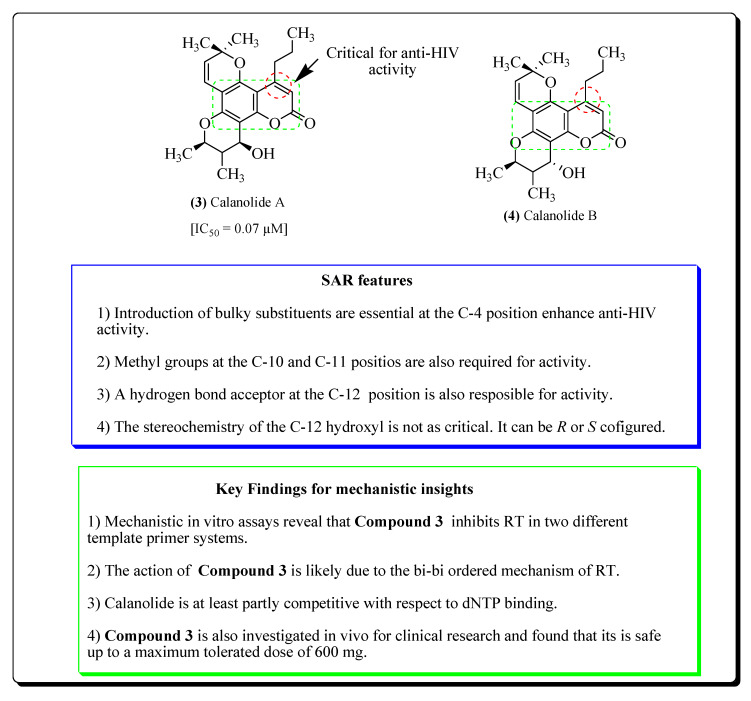
Structure-activity-relationships and important key findings of some potent reverse transcriptase (RT) inhibitors.
Figure 5
Figure 5
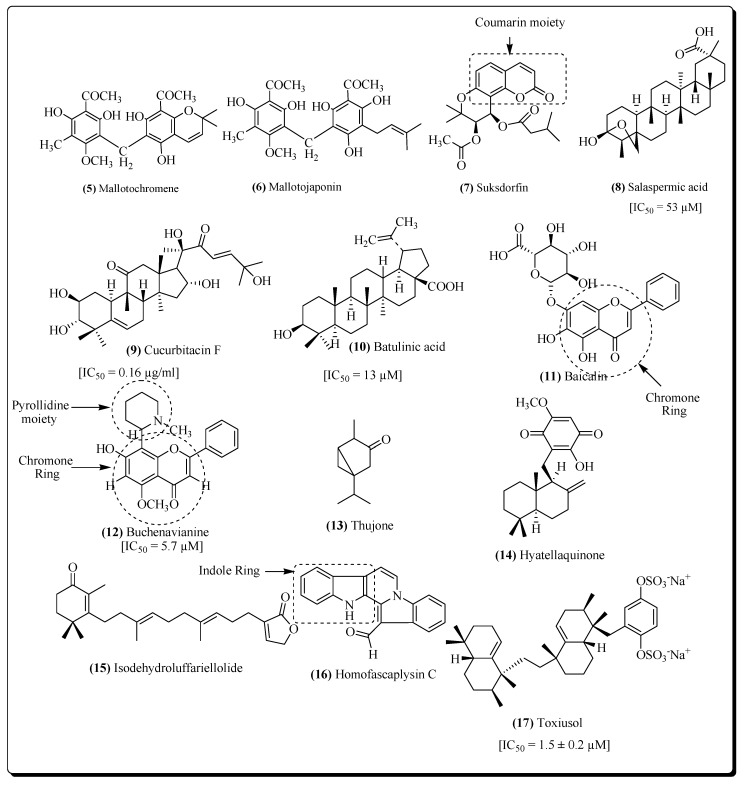
Structure of some potent reverse transcriptase inhibitors.
Figure 6
Figure 6
Structure-activity-relationships of naturally occurring integrase inhibitors.
Figure 7
Figure 7
Compounds exhibiting protease inhibitory activity.
Figure 8
Figure 8
Plant-based Immunomodulators.
Figure 9
Figure 9
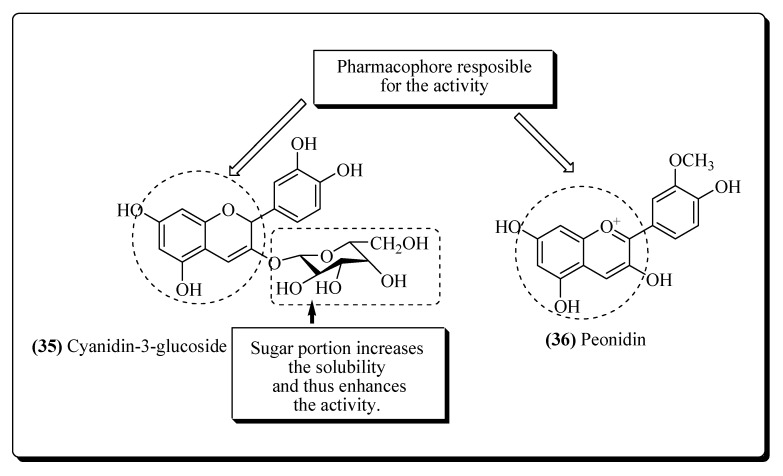
Plant-based antioxidants compounds possessing anti-HIV potential.
Figure 10
Figure 10
Alkaloidal compounds possessing anti-HIV activity.
Figure 11
Figure 11
More alkaloidal compounds possessing anti-HIV activity.
Figure 12
Figure 12
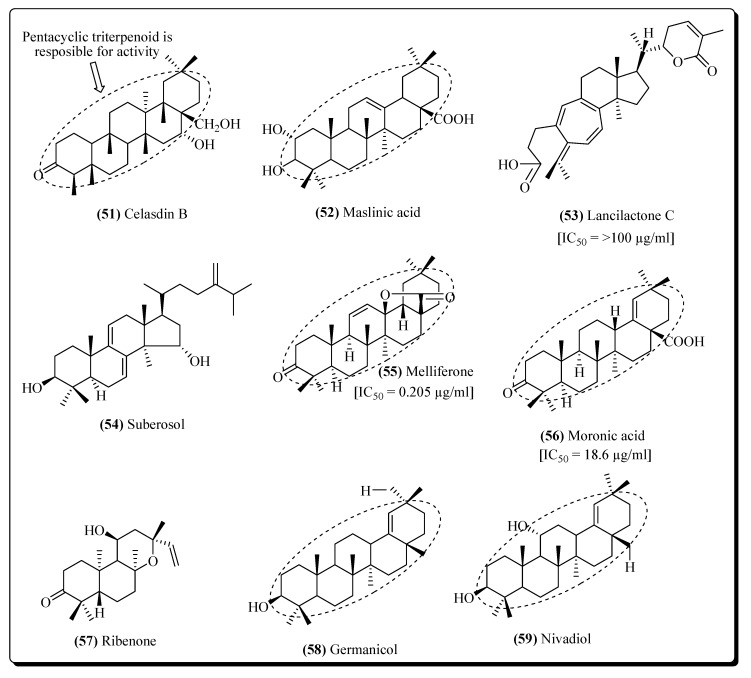
Potent terpenoids against HIV.
Figure 13
Figure 13
More potent terpenoids against HIV.
Figure 14
Figure 14
Flavanoids with anti-HIV properties.
Figure 15
Figure 15
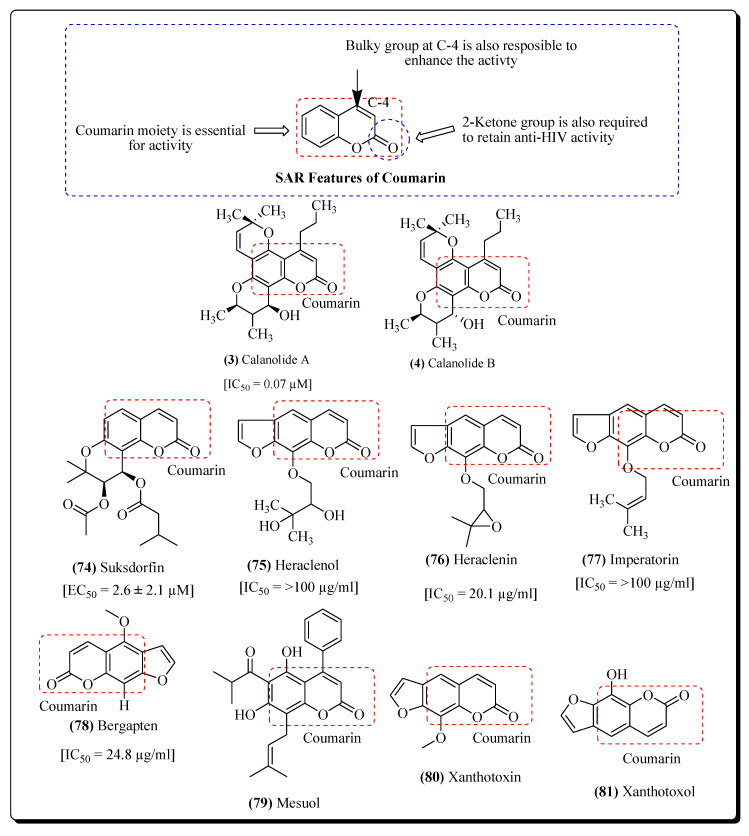
Coumarins with significant Anti-HIV potential.
Figure 16
Figure 16
Tannins with anti-HIV properties.
Figure 17
Figure 17
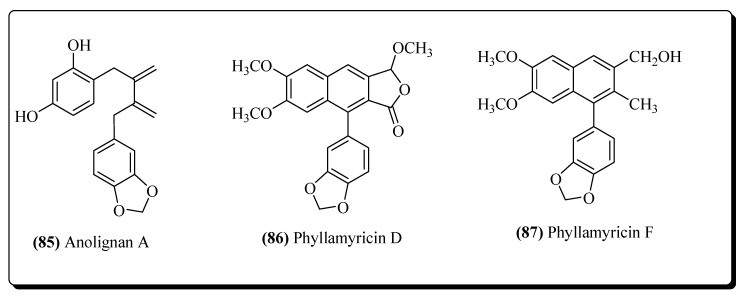
Lignans possessing anti-HIV activities.
Figure 18
Figure 18
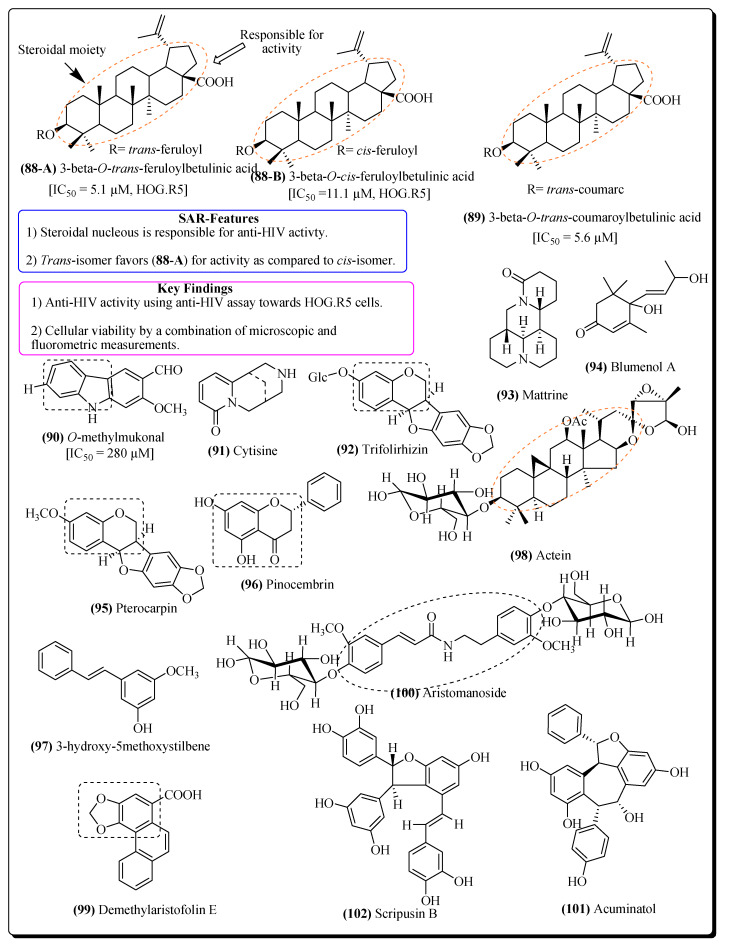
Other plant-based compounds with anti-HIV activities.

References

    1. Sabde S., Bodiwala H.S., Karmase A., Deshpande P.J., Kaur A., Ahmed N., Chauthe S.K., Brahmbhatt K.G., Phadke R.U., Mitra D., et al. Anti-HIV activity of Indian medicinal plants. J. Nat. Med. 2011;65:662–669. doi: 10.1007/s11418-011-0513-2. - DOI - PubMed
    1. Salehi B., Kumar N.V.A., Sener B., Sharifi-Rad M., Kılıç M., Mahady G.B., Vlaisavljevic S., Iriti M., Kobarfard F., Setzer W.N., et al. Medicinal plants used in the treatment of human immunodeficiency virus. Int. J. Mol. Sci. 2018;19:1459. doi: 10.3390/ijms19051459. - DOI - PMC - PubMed
    1. Reynolds C., de Koning C.B., Pelly S.C., Otterlo W.A.L., Bode M.L. In search of a treatment for HIV—Current therapies and the role of non-nucleoside reverse transcriptase inhibitors (NNRTIs) Chem. Soc. Rev. 2012;41:4657–4670. doi: 10.1039/c2cs35058k. - DOI - PubMed
    1. Prasad S., Tyagi A.K. Curcumin and its analogues: A potential natural compound against HIV 1 infection and AIDS. Food Funct. 2015;6:3412–3419. doi: 10.1039/C5FO00485C. - DOI - PubMed
    1. Kharsany A.B., Karim Q.A. HIV infection and AIDS in sub-saharan Africa: Current status, challenges and opportunities. Open AIDS J. 2016;10:34–48. doi: 10.2174/1874613601610010034. - DOI - PMC - PubMed

MeSH terms