


The Dark Side of Orchid Symbiosis: Can Tulasnella calospora Decompose Host Tissues?
- PMID: 32365577
- PMCID: PMC7247694
- DOI: 10.3390/ijms21093139
The Dark Side of Orchid Symbiosis: Can Tulasnella calospora Decompose Host Tissues?
Abstract
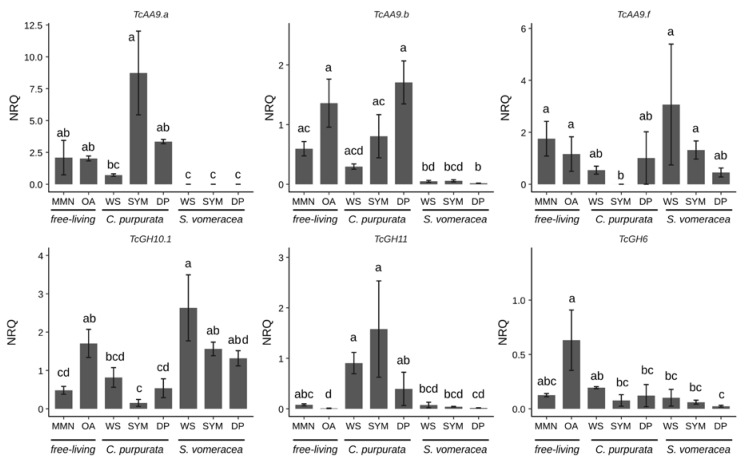
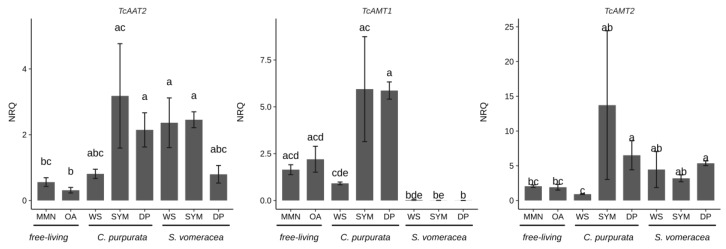
Photosynthetic orchids associate with mycorrhizal fungi that can be mostly ascribed to the "rhizoctonia" species complex. Rhizoctonias' phylogenetic diversity covers a variety of ecological/nutritional strategies that include, beside the symbiosis establishment with host plants, endophytic and pathogenic associations with non-orchid plants or saprotrophic soil colonization. In addition, orchid mycorrhizal fungi (OMF) that establish a symbiotic relationship with an orchid host can later proliferate in browning and rotting orchid tissues. Environmental triggers and molecular mechanisms governing the switch leading to either a saprotrophic or a mycorrhizal behavior in OMF remain unclear. As the sequenced OMF genomes feature a wide range of genes putatively involved in the degradation of plant cell wall (PCW) components, we tested if these transitions may be correlated with a change in the expression of some PCW degrading enzymes. Regulation of several genes encoding PCW degrading enzymes was evaluated during saprotrophic growth of the OMF Tulasnella calospora on different substrates and under successful and unsuccessful mycorrhizal symbioses. Fungal gene expression in planta was investigated in two orchid species, the terrestrial Mediterranean Serapias vomeracea and the epiphytic tropical Cattleya purpurata. Although we only tested a subset of the CAZyme genes identified in the T. calospora genome, and we cannot exclude therefore a role for different CAZyme families or members inside a family, the results showed that the degradative potential of T. calospora is finely regulated during saprotrophic growth and in symbiosis, often with a different regulation in the two orchid species. These data pose novel questions about the role of fungal PCW degrading enzymes in the development of unsuccessful and successful interactions.
Keywords: CAZymes; gene expression; orchid mycorrhiza; orchid symbiosis; saprotrophic growth.
Conflict of interest statement
The authors declare no conflict of interest.
Figures
References
-
- Brundrett M.C. Understanding the roles of multifunctional mycorrhizal and endophytic fungi. In: Schulz B.J.E., Boyle C.J.C., Sieber T.N., editors. Microbial Root Endophytes. Springer; Berlin/Heidelberg, Germany: 2006. pp. 281–298.
-
- Dearnaley J.D.W., Martos F., Selosse M.-A. Orchid mycorrhizas: Molecular ecology, physiology, evolution and conservation aspects. In: Hock B., editor. Fungal Associations. Springer; Berlin/Heidelberg, Germany: 2012. pp. 207–230.
-
- Veldre V., Abarenkov K., Bahram M., Martos F., Selosse M.A., Tamm H., Kõljalg U., Tedersoo L. Evolution of nutritional modes of Ceratobasidiaceae (Cantharellales, Basidiomycota) as revealed from publicly available ITS sequences. Fungal Ecol. 2013;6:256–268. doi: 10.1016/j.funeco.2013.03.004. - DOI
MeSH terms
Supplementary concepts
LinkOut - more resources
Full Text Sources
Other Literature Sources
Research Materials
