


Adherence to the guidelines for surgical antimicrobial prophylaxis in a Saudi tertiary care hospital
- PMID: 32368210
- PMCID: PMC7184216
- DOI: 10.1016/j.jtumed.2020.01.005
Adherence to the guidelines for surgical antimicrobial prophylaxis in a Saudi tertiary care hospital
Abstract
Objective: The study evaluated the adherence to the guidelines for surgical antimicrobial prophylaxis in a Saudi tertiary care hospital.
Methods: The medical records of 707 patients from the surgical units over a selected 3-month period were selected. The data were reviewed and statistically analysed.
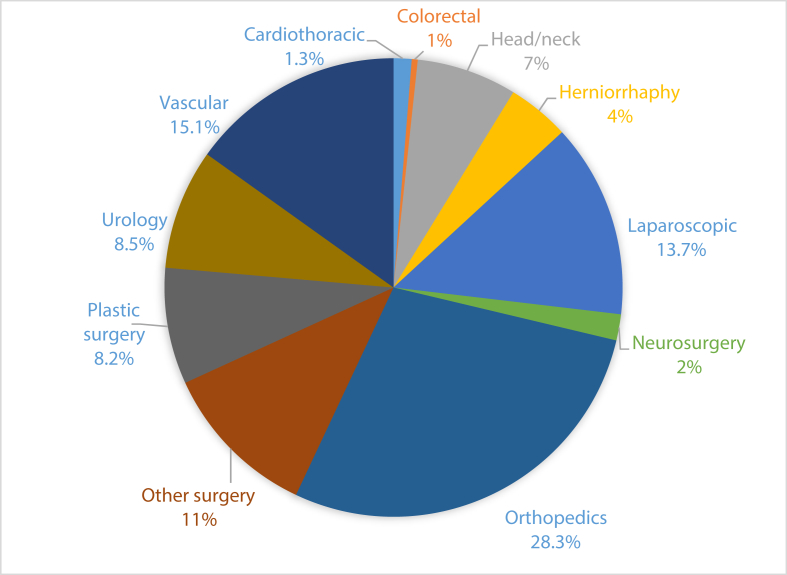
Results: Of the 707 respondents, 51.2% were women and most were older than 50 years. The most common surgical procedures involved orthopaedics (28.3%), followed by vascular surgery (15.1%). One hundred and thirty-eight (19.5%) patients received antibiotics according to the guidelines for surgical prophylaxis. More than half of the patients (399/56.4%) received antibiotics for more than 24 h and 129 (18.2%) received antibiotics for less than 24 h. Single dose antibiotic therapy was used in 179 (25.3%) patients. Two hundred and ninety-seven (42%) patients underwent clean surgery, 284 (40%) clean-contaminated and 128 (18%) contaminated surgery. A significant difference was evident between the antibiotics administered according to the recommended guidelines and the duration of antibiotic therapy (p = 0.001), duration (p = 0.001) and the type of surgical procedure (p = 0.00).
Conclusion: The findings of this study suggest that healthcare professionals do not strictly adhere to the guidelines for surgical antibiotic prophylaxis. Physicians are therefore encouraged to follow the recommendations appropriately and to regularly implement surgical antimicrobial prophylaxis for patient safety.
أهداف البحث: تهدف هذه الدراسة لتقييم الالتزام بالقواعد الإرشادية في استخدام المضادات الحيوية الوقائية قبل العمليات الجراحية في أحد مستشفيات الرعاية المتقدمة (الثالثة) في المدينة المنورة بالمملكة العربية السعودية.
طرق البحث: تم في هذا الدراسة جمع بيانات جميع المرضى (٧٠٧ مريضا) الذين أجريت لهم عمليات جراحية مختلفة في أحد مستشفيات الرعاية الثالثة بالمدينة المنورة، وذلك خلال فترة الدراسة، التي استمرت لمدة ثلاثة أشهر.
النتائج: من بين ٧٠٧ مريضا شملتهم الدراسة، كان ٥١.٢٪ من الإناث ومعظمهم أكبر من ٥٠ سنة. كانت أكثر العمليات الجراحية شيوعا هي جراحات العظام (٢٨.٣٪)، وجراحات الأوعية الدموية (١٥.١٪). تلقى ١٣٨ (١٩.٥٪) من المرضى المضادات الحيوية وفقا للقواعد الإرشادية. فيما يتعلق بمدة استخدام المضادات الحيوية، تلقى أكثر من نصف المرضى (٣٩٩، ٥٦.٤٪) المضادات الحيوية لأكثر من ٢٤ ساعة. بالإضافة إلى ذلك، تلقى ١٧٩ (٢٥.٣ ٪) جرعة واحدة، في حين أن ١٢٩ (١٨.٢٪) فقط تلقى المضادات الحيوية لمدة تقل عن ٢٤ ساعة. فيما يتعلق بتصنيف الجروح الجراحية، خضع٢٩٧ مريض لعمليات جراحية نظيفة (٤٢٪)، و٢٨٤ مريضا (٤٠٪) لعمليات جراحية نظيفة-ملوثة، و١٢٨ (١٨٪) لعمليات جراحية ملوثة. وجد أن هناك اختلاف واضح بين استخدام المضادات الحيوية بناء على القواعد الإرشادية ومدة استخدام المضادات الحيوية، والإطار الزمني، ونوع العملية الجراحية.
الاستنتاجات: تشير نتائج الدراسة إلى أن ممارسي الرعاية الصحية أخفقوا في الالتزام الصارم بالسياسات الخاصة باستخدام المضادات الحيوية الوقائية في العمليات الجراحية. لذلك يلزم تشجيع الأطباء على اتباع التوصيات والحرص على الاستمرار في تطبيق القواعد الإرشادية عند استخدام المضادات الحيوية الوقائية في العمليات الجراحية.
Keywords: Antimicrobial prophylaxis; Guidelines; KSA; Orthopaedics; Surgery.
© 2020 The Authors.
References
-
- Kim E.S., Park S.W., Lee C.S., Kwak Y.G., Moon C., Kim B.N. Impact of a national hospital evaluation program using clinical performance indicators on the use of surgical antibiotic prophylaxis in Korea. Int J Infect Dis. 2012;16(3):e187–e192. - PubMed
-
- Bratzler D.W., Houck P.M., Surgical Infection Prevention Guideline Writers Workgroup Antimicrobial prophylaxis for surgery: an advisory statement from the national surgical infection prevention project. Am J Surg. 2005;189(4):395–404. - PubMed
-
- Page C.P., Bohnen J.M., Fletcher J.R., McManus A.T., Solomkin J.S., Wittmann D.H. Antimicrobial prophylaxis for surgical wounds: guidelines for clinical care. Arch Surg. 1993;128(1):79–88. - PubMed
LinkOut - more resources
Full Text Sources
