


Accelerated weight gain, prematurity, and the risk of childhood obesity: A meta-analysis and systematic review
- PMID: 32369502
- PMCID: PMC7199955
- DOI: 10.1371/journal.pone.0232238
Accelerated weight gain, prematurity, and the risk of childhood obesity: A meta-analysis and systematic review
Erratum in
-
Correction: Accelerated weight gain, prematurity, and the risk of childhood obesity: A meta-analysis and systematic review.PLoS One. 2024 Feb 5;19(2):e0298556. doi: 10.1371/journal.pone.0298556. eCollection 2024. PLoS One. 2024. PMID: 38315715 Free PMC article.
Abstract
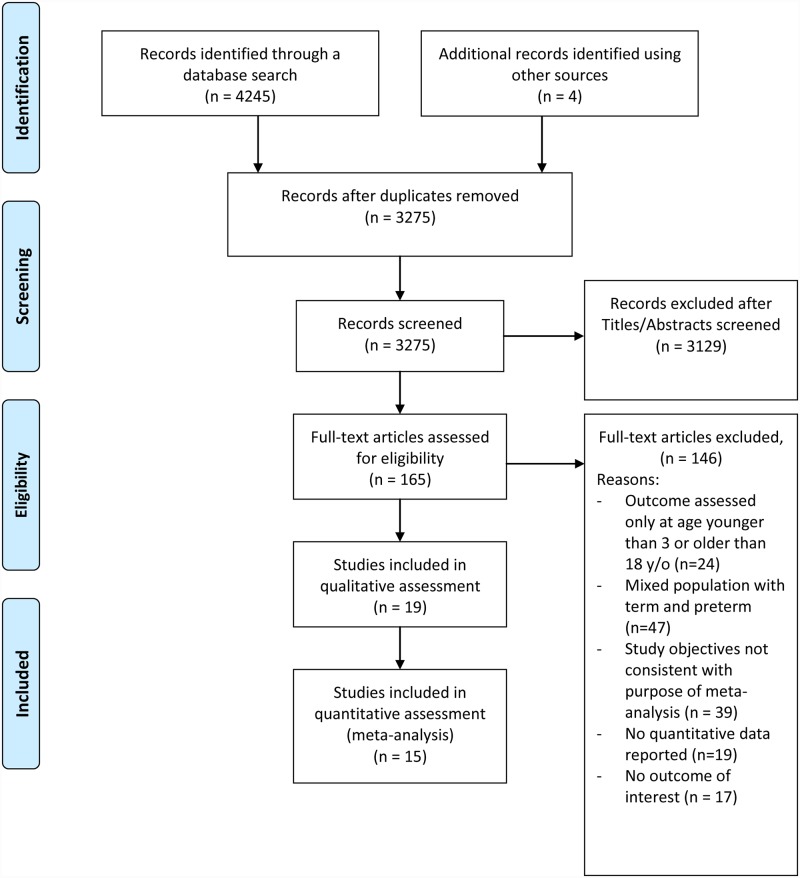
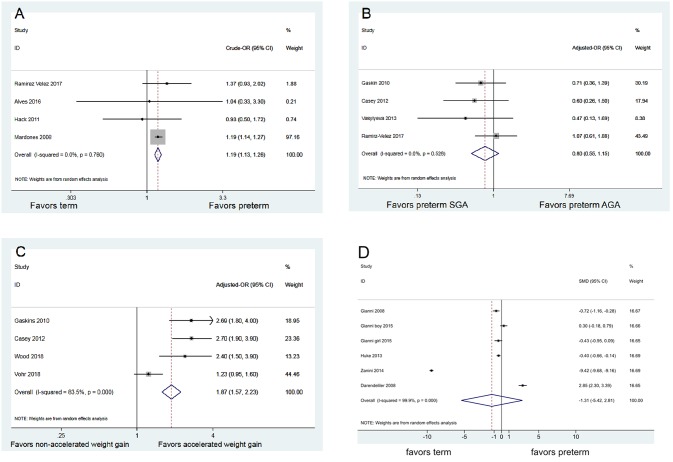
The purpose of this systematic review and meta-analysis of the literature was to analyze and evaluate the impact of prematurity and accelerated weight gain on the risk of childhood and adolescent obesity. CINAHL, Embase, PubMed, and Web of Science databases were searched until December 2019 which yielded 19 studies with a total of 169,439 children enrolled were systematically reviewed. The results revealed that preterm infants had a greater likelihood of childhood obesity (defined as BMI ≥95th percentile for age-sex), than term infants (OR = 1.19, 95% CI [1.13, 1.26]). However, no difference of childhood obesity was found between "small for gestational age"(SGA) and "appropriate for gestational age"(AGA) among preterms. Accelerated weight gain (defined as weight gain velocity during first two years after birth) significantly increased the likelihood of subsequent childhood obesity among preterms (aOR = 1.87, 95% CI [1.57, 2.231]). In conclusion, accelerated weight gain at infancy among preterm children may be a critical contributor to obesity in later life. Establishing optimal growth trajectories and timely referral to health care providers may be of clinical importance.
Conflict of interest statement
The authors have declared that no competing interests exist.
Figures
References
-
- Lobstein T. Prevalence And Trends Across The World In Frelut M.L. (Ed.), The ECOG’s eBook on Child and Adolescent Obesity. 2015.
-
- Daniels SR. Complications of obesity in children and adolescents. Int J Obes (Lond). 2009;33 Suppl 1:S60–5. Epub 2009/04/14. - PubMed
Publication types
MeSH terms
LinkOut - more resources
Full Text Sources
Medical
Miscellaneous
