


Epidemiology and Clinical Characteristics of Primary Amebic Meningoencephalitis Caused by Naegleria fowleri: A Global Review
- PMID: 32369575
- PMCID: PMC8739754
- DOI: 10.1093/cid/ciaa520
Epidemiology and Clinical Characteristics of Primary Amebic Meningoencephalitis Caused by Naegleria fowleri: A Global Review
Abstract
Background: Primary amebic meningoencephalitis (PAM) is a rapidly progressive and often fatal condition caused by the free-living ameba Naegleria fowleri. To estimate the global occurrence, characterize the epidemiology, and describe the clinical features of PAM, we report a series of PAM cases published in the international literature and reported to the Centers for Disease Control and Prevention (CDC).
Methods: We performed a literature search of PAM case reports published through 2018. Additionally, we included cases reported through the CDC's Free-Living Ameba surveillance or diagnosed via CDC's Free-Living and Intestinal Amebas Laboratory. Cases were classified as confirmed, probable, or suspect on the basis of confirmatory testing, presentation, exposure, and disease course.
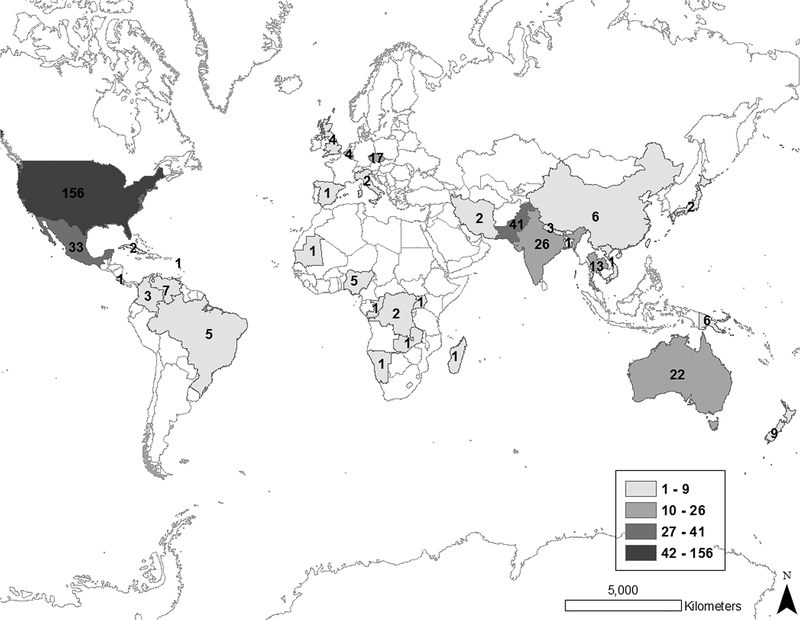
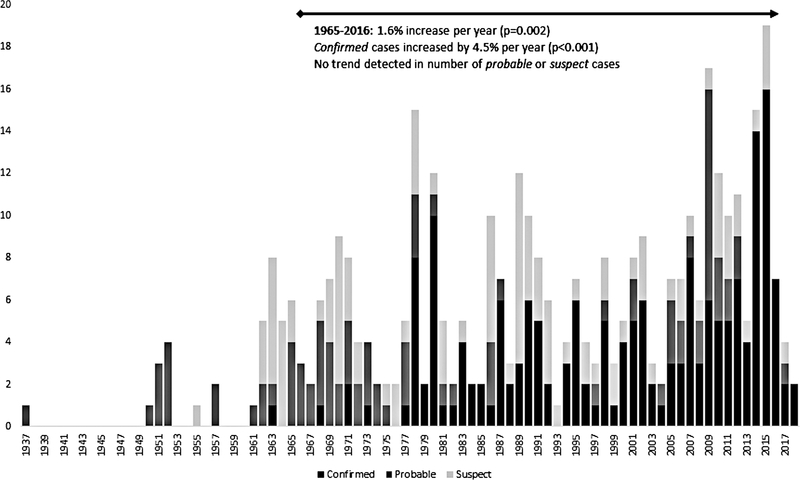
Results: A total of 381 PAM cases were identified. Seven reported survivors were classified as confirmed. The most commonly reported exposure associated with PAM was swimming/diving, and the most common class of water source was lakes/ponds/reservoirs. Patients were predominantly male (75%), with a median age of 14 years. Confirmed and probable cases were similar in their survival, course of illness, and cerebrospinal fluid (CSF) findings.
Conclusions: PAM is a rare but deadly disease with worldwide occurrence. Improved clinician awareness, resulting in earlier diagnosis and treatment, may contribute to increased survival among PAM patients. The case definition of probable used in this study appears to capture cases of PAM, as evidenced by similarities in outcomes, clinical course, and CSF profile to confirmed cases. In the absence of confirmatory testing, clinicians could use this case definition to identify cases of PAM.
Keywords: Naegleria fowleri; free-living ameba; primary amebic meningoencephalitis.
Published by Oxford University Press for the Infectious Diseases Society of America 2020.
Conflict of interest statement
Figures
References
-
- Visvesvara GS, Moura H, Schuster FL. Pathogenic and opportunistic free-living amoebae: Acanthamoeba spp., Balamuthia mandrillaris, Naegleria fowleri, and Sappinia diploidea. FEMS Immunol Med Microbiol 2007; 50:1–26. - PubMed
-
- Ma P, Visvesvara GS, Martinez AJ, Theodore FH, Daggett PM, Sawyer TK. Naegleria and Acanthamoeba infections: review. Rev Infect Dis 1990; 12:490–513. - PubMed
-
- John DT. Primary amebic meningoencephalitis and the biology of Naegleria fowleri. Annu Rev Microbiol 1982; 36:101–23. - PubMed
-
- Visvesvara GS. Amebic meningoencephalitides and keratitis: challenges in diagnosis and treatment. Curr Opin Infect Dis 2010; 23:590–4. - PubMed
MeSH terms
Grants and funding
LinkOut - more resources
Full Text Sources
Other Literature Sources
Miscellaneous
