


Patents on Endophytic Fungi Related to Secondary Metabolites and Biotransformation Applications
- PMID: 32370098
- PMCID: PMC7344749
- DOI: 10.3390/jof6020058
Patents on Endophytic Fungi Related to Secondary Metabolites and Biotransformation Applications
Abstract
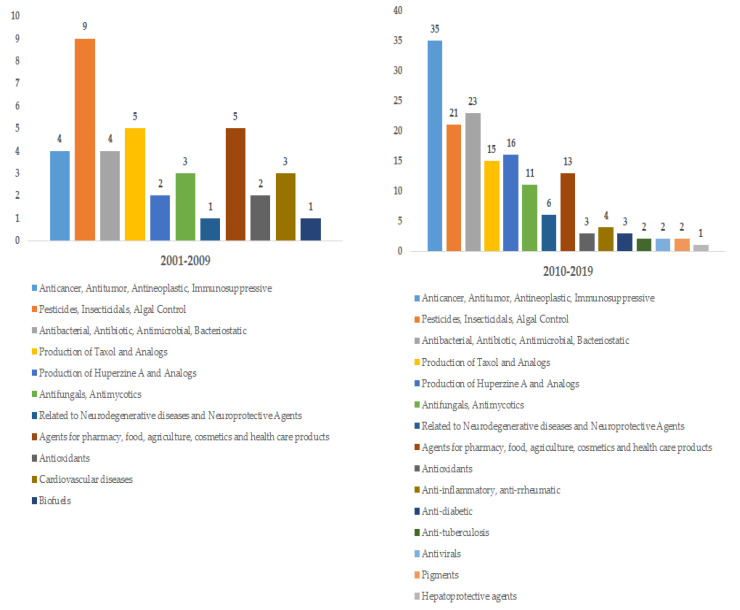
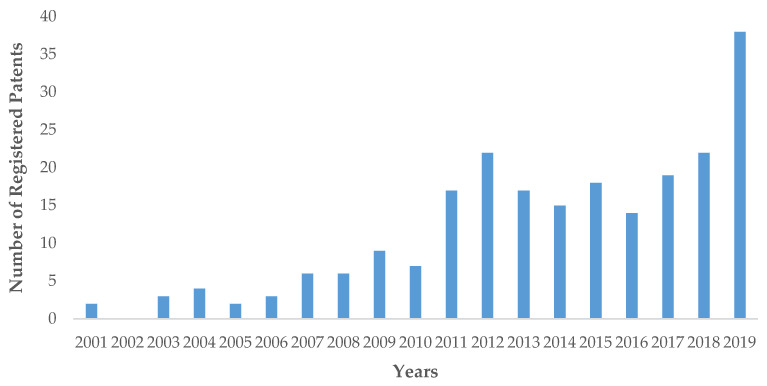
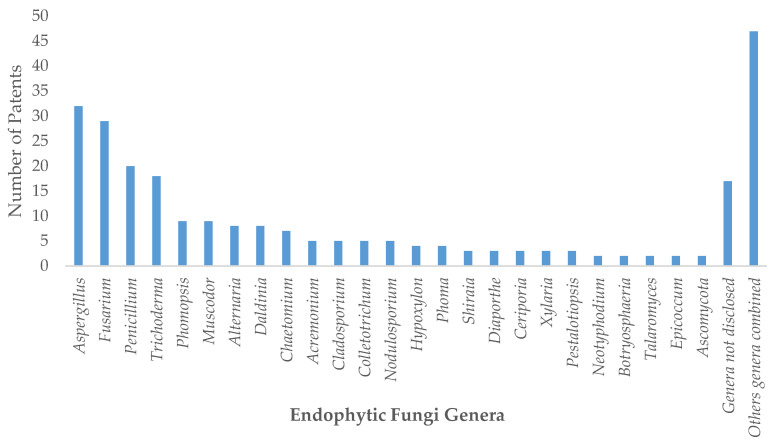
Endophytic fungi are an important group of microorganisms and one of the least studied. They enhance their host's resistance against abiotic stress, disease, insects, pathogens and mammalian herbivores by producing secondary metabolites with a wide spectrum of biological activity. Therefore, they could be an alternative source of secondary metabolites for applications in medicine, pharmacy and agriculture. In this review, we analyzed patents related to the production of secondary metabolites and biotransformation processes through endophytic fungi and their fields of application. We examined 245 patents (224 related to secondary metabolite production and 21 for biotransformation). The most patented fungi in the development of these applications belong to the Aspergillus, Fusarium, Trichoderma, Penicillium, and Phomopsis genera and cover uses in the biomedicine, agriculture, food, and biotechnology industries.
Keywords: biological activity; biotransformation; endophytic fungi; patents; secondary metabolites.
Conflict of interest statement
The authors declare no conflicts of interest. The funders had no role in the design of the study; in the collection, analyses, or interpretation of data; in the writing of the manuscript, or in the decision to publish the results.
Figures
References
Publication types
LinkOut - more resources
Full Text Sources
