


Effects of Arginine Supplementation on Athletic Performance Based on Energy Metabolism: A Systematic Review and Meta-Analysis
- PMID: 32370176
- PMCID: PMC7282262
- DOI: 10.3390/nu12051300
Effects of Arginine Supplementation on Athletic Performance Based on Energy Metabolism: A Systematic Review and Meta-Analysis
Abstract
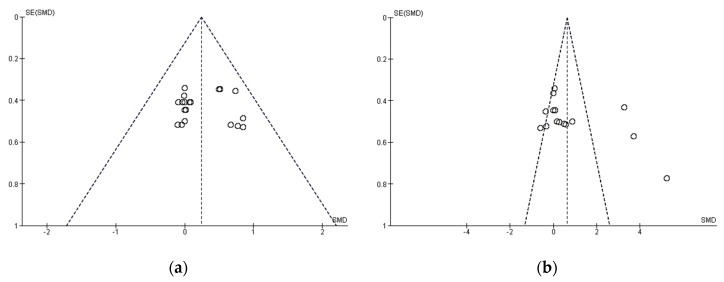
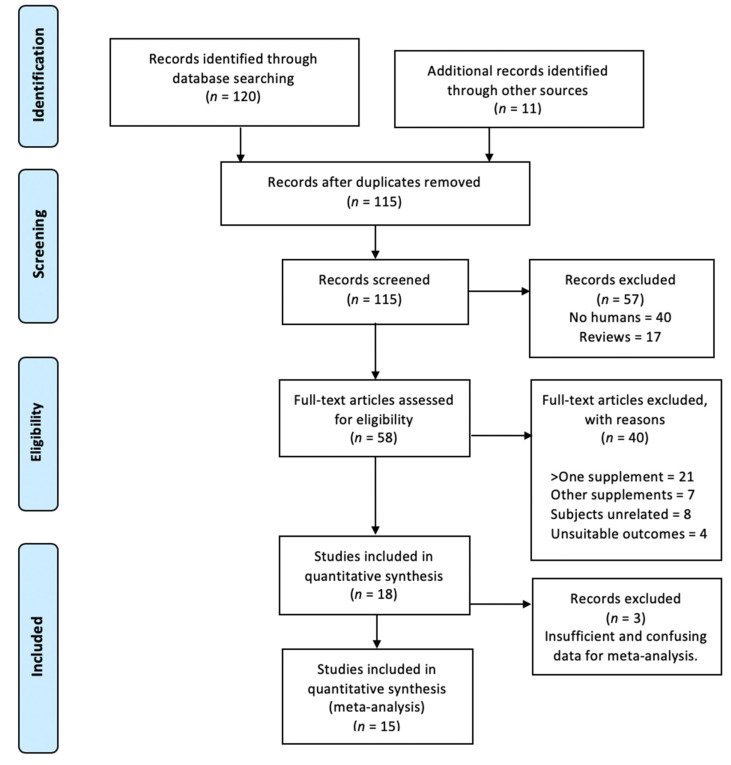
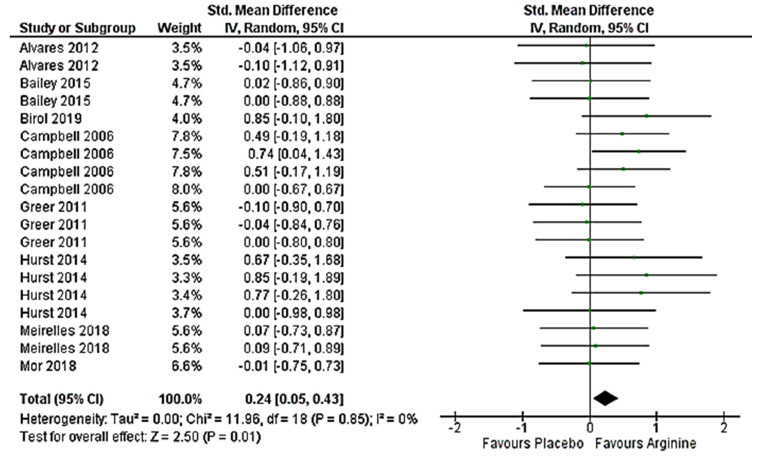
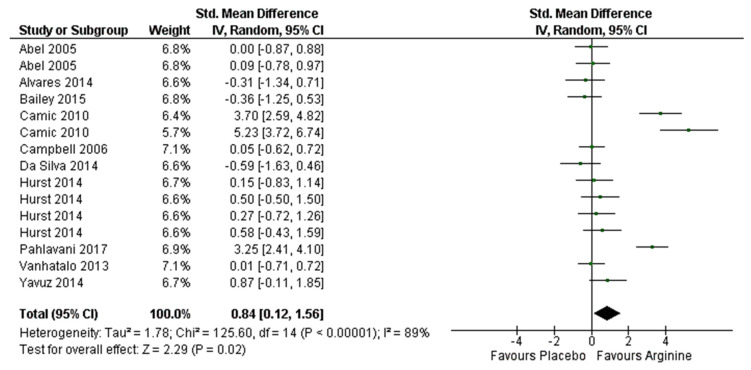
Nitric oxide related ergogenic aids such as arginine (Arg) have shown to impact positively on sport performance through several physiological and metabolic mechanisms. However, research results have shown to be controversial. The great differences regarding required metabolic pathways and physiological demands between aerobic and anaerobic sport disciplines could be the reasons. The aim of this systematic review and meta-analysis was to evaluate the effects of Arg supplementation on aerobic (≤VO2max) and anaerobic (>VO2max) performance. Likewise, to show the effective dose and timing of this supplementation. A structured search was carried out in accordance with PRISMA® (Preferred Reporting Items for Systematic Reviews and Meta-Analyses) statement and PICOS guidelines in PubMed/MEDLINE, Web of Science (WOS), and Scopus databases from inception to January 2020. Eighteen studies were included which compare Arg supplementation with placebo in an identical situation and testing its effects on aerobic and anaerobic performance tests. Trials analyzing supplementation with other supplements were removed and there was not athlete's level, gender, ethnicity, or age filters. The performed meta-analysis included 15 studies and random effects model and pooled standardized mean differences (SMD) were used according to Hedges' g. Results revealed that Arg supplementation could improve aerobic (SMD, 0.84; 95% CI, 0.12 to 1.56; magnitude of SMD (MSMD), large; I2, 89%; p = 0.02) and anaerobic (SMD, 0.24; 95% CI, 0.05 to 0.43; MSMD, small; I2, 0%; p = 0.01) performance tests. In conclusion, acute Arg supplementation protocols to improve aerobic and anaerobic performance should be adjusted to 0.15 g/kg of body weight ingested between 60-90 min before. Moreover, chronic Arg supplementation should include 1.5-2 g/day for 4-7 weeks in order to improve aerobic performance, and 10-12 g/day for 8 weeks to enhance anaerobic performance.
Keywords: aerobic; aminoacids; anaerobic; ergogenic aids; nitric oxide; physical performance.
Conflict of interest statement
The authors declare no conflict of interests.
Figures
References
-
- Australian Institute of Sport ABCD Classification System. Australian Institute of Sport. [(accessed on 18 April 2020)]; 2017 [2018; 2018] Disponible en. Available online: https://ais.gov.au/nutrition/supplements#group_a.
-
- Maughan R.J., Burke L.M., Dvorak J., Larson-Meyer D.E., Peeling P., Phillips S.M., Rawson E.S., Walsh N.P., Garthe I., Geyer H., et al. IOC consensus statement: Dietary supplements and the high-performance athlete. Br. J. Sports Med. 2018;52:439–455. doi: 10.1136/bjsports-2018-099027. - DOI - PMC - PubMed
Publication types
MeSH terms
Substances
LinkOut - more resources
Full Text Sources
Other Literature Sources
Medical
