


Interpretation of Drug Interaction Using Systemic and Local Tissue Exposure Changes
- PMID: 32370191
- PMCID: PMC7284846
- DOI: 10.3390/pharmaceutics12050417
Interpretation of Drug Interaction Using Systemic and Local Tissue Exposure Changes
Abstract
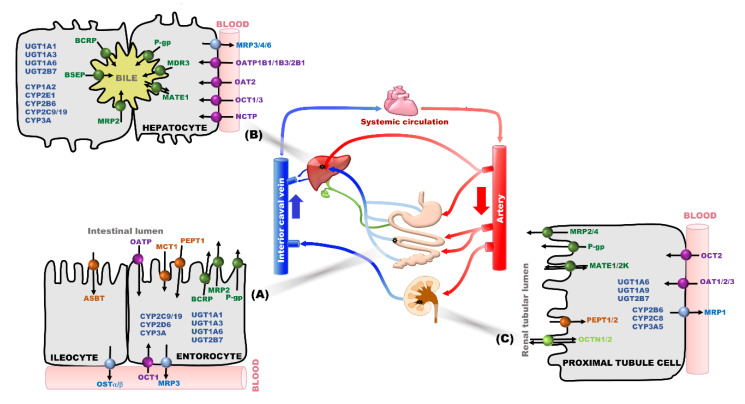
Systemic exposure of a drug is generally associated with its pharmacodynamic (PD) effect (e.g., efficacy and toxicity). In this regard, the change in area under the plasma concentration-time curve (AUC) of a drug, representing its systemic exposure, has been mainly considered in evaluation of drug-drug interactions (DDIs). Besides the systemic exposure, the drug concentration in the tissues has emerged as a factor to alter the PD effects. In this review, the status of systemic exposure, and/or tissue exposure changes in DDIs, were discussed based on the recent reports dealing with transporters and/or metabolic enzymes mediating DDIs. Particularly, the tissue concentration in the intestine, liver and kidney were referred to as important factors of PK-based DDIs.
Keywords: drug interaction; pharmacokinetics; systemic exposure; tissue-specific.
Conflict of interest statement
The authors declare no conflict of interest.
Figures
References
-
- Wiggins B.S., Saseen J.J., Page R.L., II, Reed B.N., Sneed K., Kostis J.B., Lanfear D., Virani S., Morris P.B. Recommendations for management of clinically significant drug-drug interactions with statins and select agents used in patients with cardiovascular disease. Circulations. 2016;134:e468–e495. - PubMed
-
- Huang S.M., Strong J.M., Zhang L., Reynolds K.S., Nallani S., Temple R., Abraham S., Habet S.A., Baweja R.K., Burchart G.J., et al. New era in drug interaction evaluations: US Food and Drug Administration update on CYP enzymes, transporters, and guideline process. J. Clin. Pharmacol. 2008;48:662–670. doi: 10.1177/0091270007312153. - DOI - PubMed
-
- Yu J., Zhou Z., Tay-Sontheimer J., Levy R.H., Ragueneau-Majlessi I. Risk of clinically relevant pharmacokinetic-based drug-drug interactions with drugs approved by the U.S. Food and Drug Administration between 2013 and 2016. Drug Metab. Dispos. 2018;46:835–845. doi: 10.1124/dmd.117.078691. - DOI - PubMed
-
- Ito K., Iwatsubo T., Kanamitsu S., Ueda K., Suzuki H., Sugiyama Y. Prediction of pharmacokinetic alterations caused by drug-drug interactions: Metabolic interaction in the liver. Pharmacol. Rev. 1998;50:387–411. - PubMed
Publication types
Grants and funding
LinkOut - more resources
Full Text Sources
