


Functional health and white matter hyperintensities as effect modifiers of blood pressure-lowering on cognitive function and vascular events in older Secondary Prevention of Small Subcortical Strokes trial participants
- PMID: 32371759
- PMCID: PMC8302036
- DOI: 10.1097/HJH.0000000000002440
Functional health and white matter hyperintensities as effect modifiers of blood pressure-lowering on cognitive function and vascular events in older Secondary Prevention of Small Subcortical Strokes trial participants
Abstract
Objective: To determine whether cerebral small vessel disease or disability modify the effect of SBP treatment on cognitive and vascular outcomes in older patients with recent lacunar stroke.
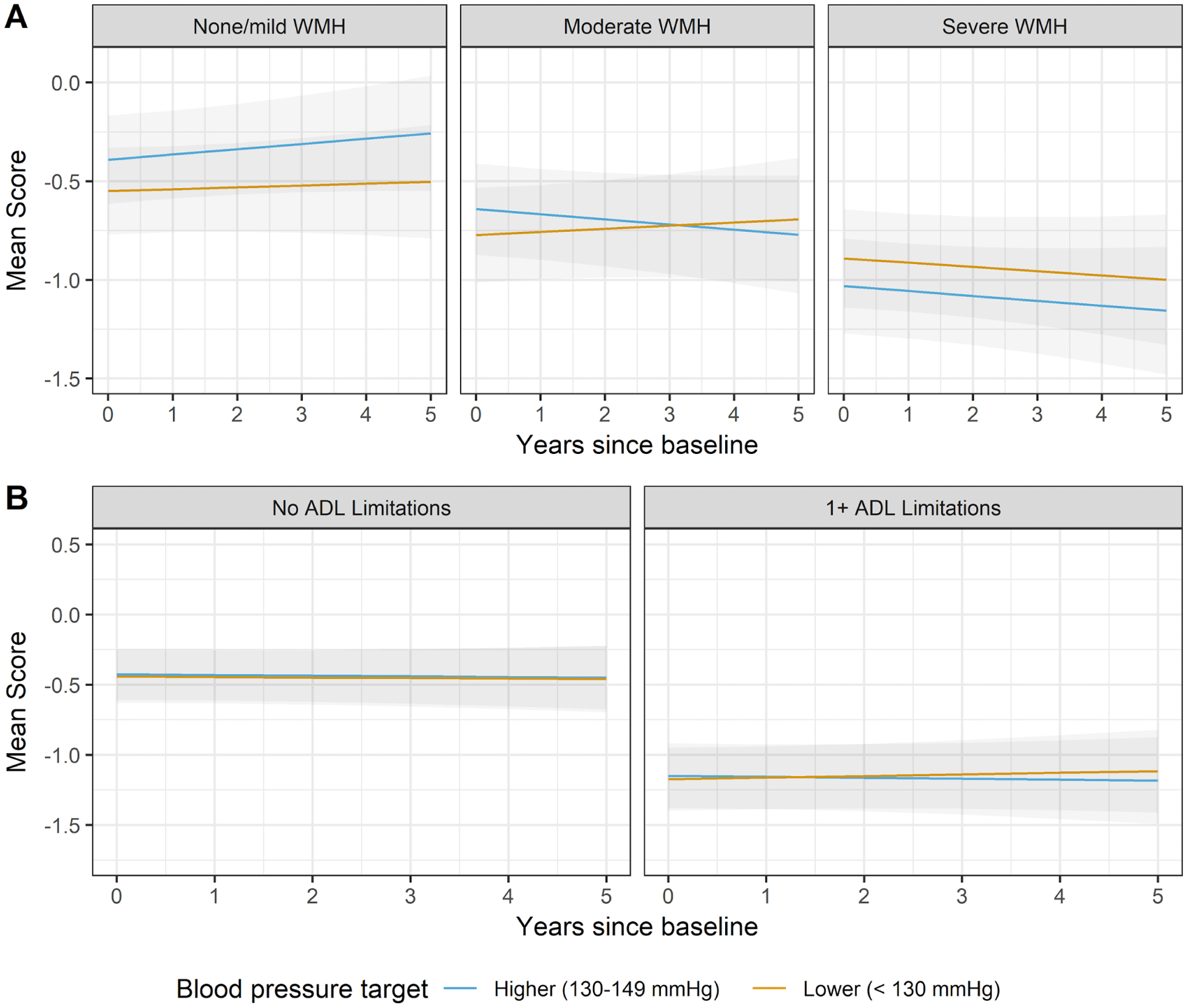
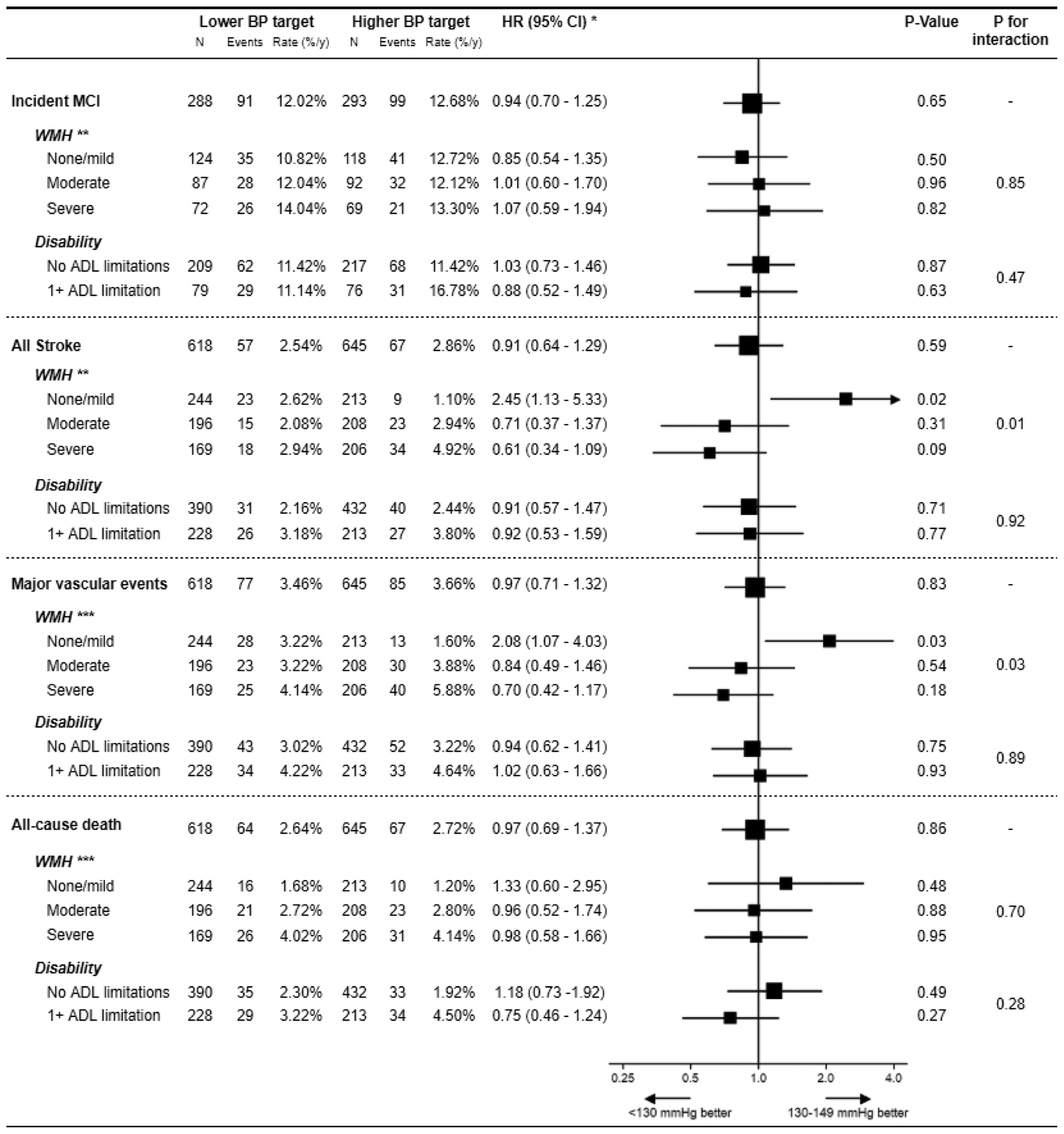
Methods: Participants aged at least 65 years of the Secondary Prevention of Small Subcortical Strokes Trial were randomized to a higher (130-149 mmHg) or lower (<130 mmHg) SBP target. The primary outcome was change in cognitive function (Cognitive Abilities Screening Instrument); secondary outcomes were incident mild cognitive impairment, stroke, major vascular events (all-stroke, myocardial infarction), and all-cause death. Results were stratified by severity of white matter hyperintensities (WMH; none/mild, moderate, severe) on baseline MRI, and by disability (no vs. at least one limitation in activities of daily living).
Results: One thousand, two hundred and sixty-three participants (mean age 73.8 ± 5.9 years, 40% women) were included. Participants with severe WMH or disability had worse cognitive function at baseline and after a mean follow-up of 3.9 years. No significant interactions existed between treatment group and effect modifiers (WMH, disability) for change in cognitive function (P for interaction 0.42 and 0.66, respectively). A lower SBP target appeared more beneficial among those with worse WMH burden for vascular outcomes (P for interaction = 0.01 for stroke and 0.03 for major vascular events).
Conclusion: There was no difference in the effect of lowering SBP to less than 130 mmHg on cognitive function by cerebral small vessel disease or disability among older adults with a history of lacunar stroke. Those with evidence of small vessel disease may derive greater benefit from lower SBP on prevention of subsequent vascular events.
Trial registration: Clinicaltrials.gov Identifier: NCT00059306.
Conflict of interest statement
Figures
References
-
- Kernan WN, Ovbiagele B, Black HR, et al. Guidelines for the Prevention of Stroke in Patients With Stroke and Transient Ischemic Attack: A Guideline for Healthcare Professionals From the American Heart Association/American Stroke Association. Stroke. 2014;45(7):2160–2236. doi: 10.1161/STR.0000000000000024 - DOI - PubMed
