


Comparative transcriptome analysis of the protective effects of Korean Red Ginseng against the influence of bisphenol A in the liver and uterus of ovariectomized mice
- PMID: 32372874
- PMCID: PMC7195581
- DOI: 10.1016/j.jgr.2020.01.008
Comparative transcriptome analysis of the protective effects of Korean Red Ginseng against the influence of bisphenol A in the liver and uterus of ovariectomized mice
Abstract
Background: Bisphenol A (BPA), known as an endocrine disruptor, is widely used in the world. BPA is reported to cause inflammation-related diseases. Korean Red Ginseng (KRG) has been used safely in human for a long time for the treatment of diverse diseases. KRG has been reported of its mitigating effect on menopausal symptoms and suppress adipose inflammation. Here, we investigate the protective effect of orally administered KRG on the impacts of BPA in the liver and uterus of menopausal mice model.
Methods: The transcriptome analysis for the effects of BPA on mice liver was evaluated by Gene Expression Omnibus (GEO) database-based data (GSE26728). In vivo assay to evaluate the protective effect of KRG on BPA impact in ovariectomized (OVX) mice were designed and analyzed by RNA sequencing.
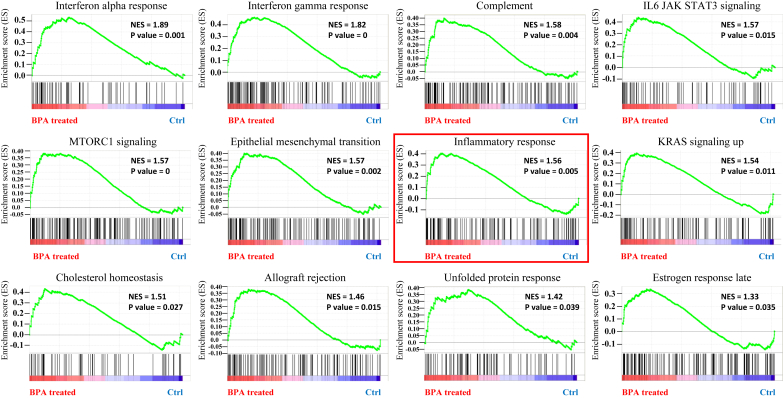
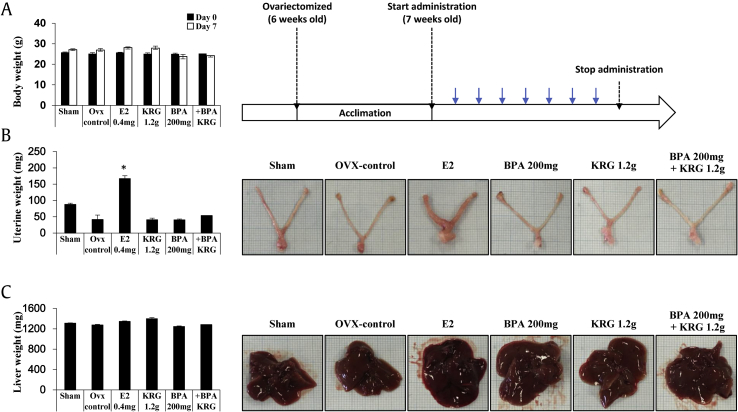
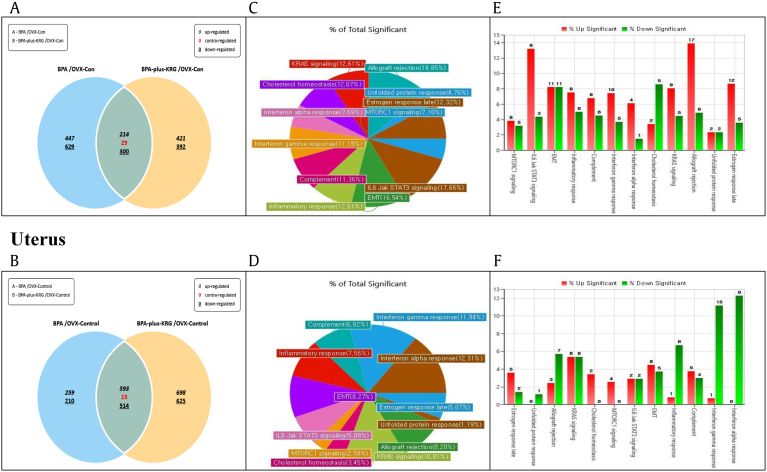
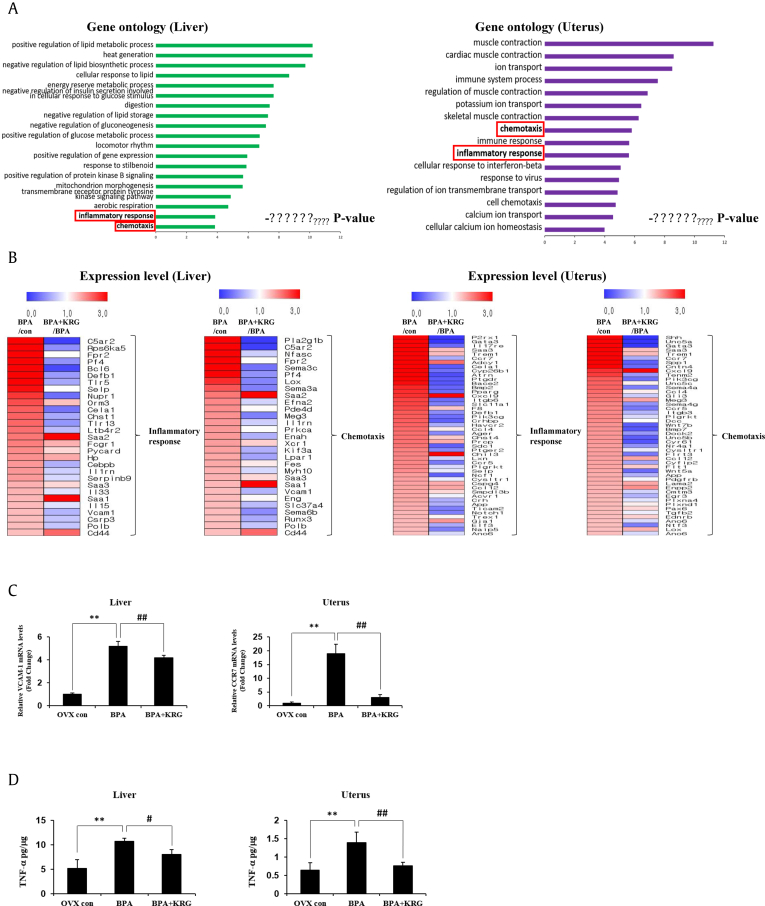
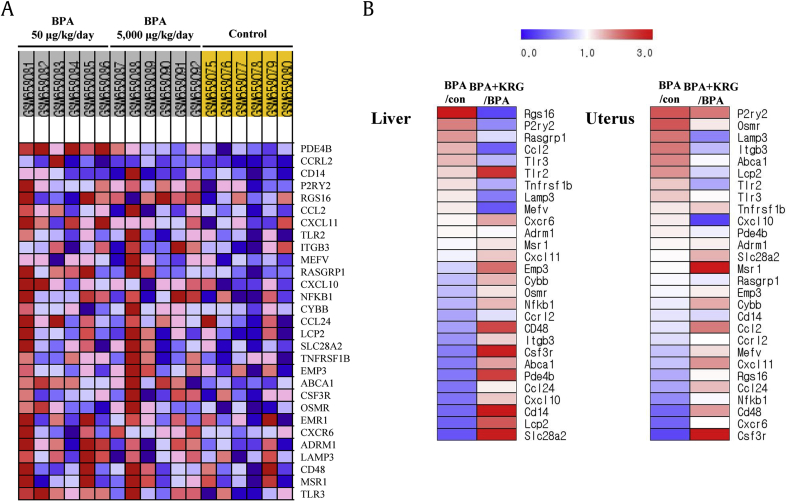
Results: We first demonstrated that BPA induced 12 kinds of gene set in the liver of normal mice. The administration of BPA and KRG did not change body, liver, and uterine weight in OVX mice. KRG downregulated BPA-induced inflammatory response and chemotaxis-related gene expression. Several gene set enrichment analysis (GSEA)-derived inflammatory response genes increased by BPA were inhibited by KRG in OVX mice.
Conclusion: Our data suggest that BPA has commonly influenced inflammatory response effects on both normal and OVX mice. KRG protects against BPA impact of inflammatory response and chemotaxis in OVX mouse models. Our comparative analysis will provide new insight into the efficacy of KRG on endocrine disrupting chemicals and OVX mouse.
Keywords: Bisphenol A; Korean Red Ginseng; Transcriptome analysis.
© 2020 The Korean Society of Ginseng. Publishing services by Elsevier B.V.
Conflict of interest statement
All authors declare that they have no conflicts of interest.
Figures
References
-
- Murata M., Kang J.H. Bisphenol A (BPA) and cell signaling pathways. Biotechnology Advances. 2018;36(1):311–327. - PubMed
-
- Vermeirssen E.L., Dietschweiler C., Werner I., Burkhardt M. Corrosion protection products as a source of bisphenol A and toxicity to the aquatic environment. Water Research. 2017;123:586–593. - PubMed
-
- Vitku J., Kolatorova L., Franekova L., Blahos J., Simkova M., Duskova M., Skodova T., Starka L. Endocrine disruptors of the bisphenol and paraben families and bone metabolism. Physiological Research. 2018;67 - PubMed
-
- Skledar D.G., Mašič L.P. Bisphenol A and its analogs: do their metabolites have endocrine activity? Environmental Toxicology and Pharmacology. 2016;47:182–199. - PubMed
-
- Park C., Lee J., Kong B., Park J., Song H., Choi K., Guon T., Lee Y. The effects of bisphenol A, benzyl butyl phthalate, and di (2-ethylhexyl) phthalate on estrogen receptor alpha in estrogen receptor-positive cells under hypoxia. Environmental Pollution. 2019;248:774–781. - PubMed
LinkOut - more resources
Full Text Sources
Molecular Biology Databases
