


Comparison of Linear Poly Ethylene Imine (LPEI) and Poly L-Lysine (PLL) in Fabrication of CHOK1 Cell-Loaded Multilayer Alginate Microcapsules
- PMID: 32373499
- PMCID: PMC7191236
- DOI: 10.34172/apb.2020.035
Comparison of Linear Poly Ethylene Imine (LPEI) and Poly L-Lysine (PLL) in Fabrication of CHOK1 Cell-Loaded Multilayer Alginate Microcapsules
Abstract
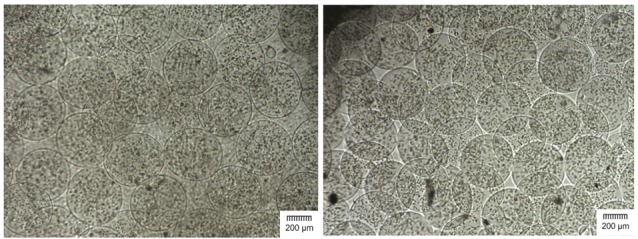
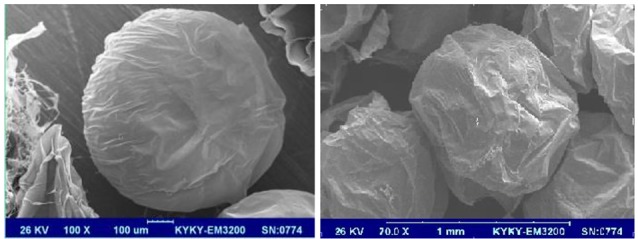
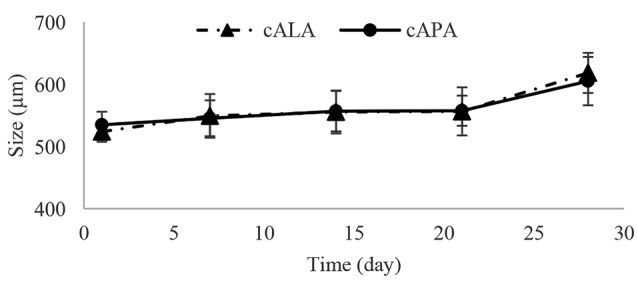
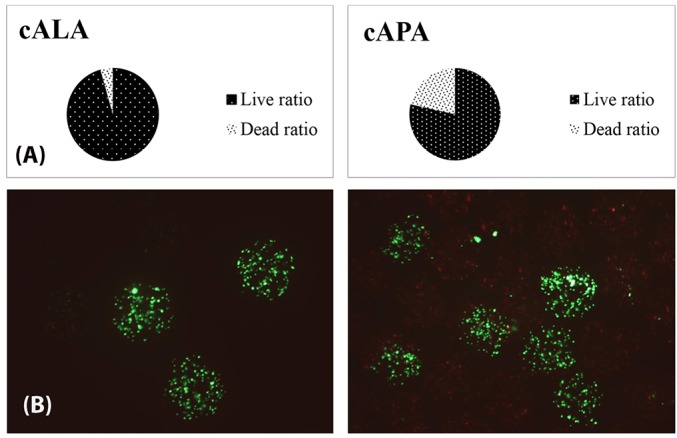
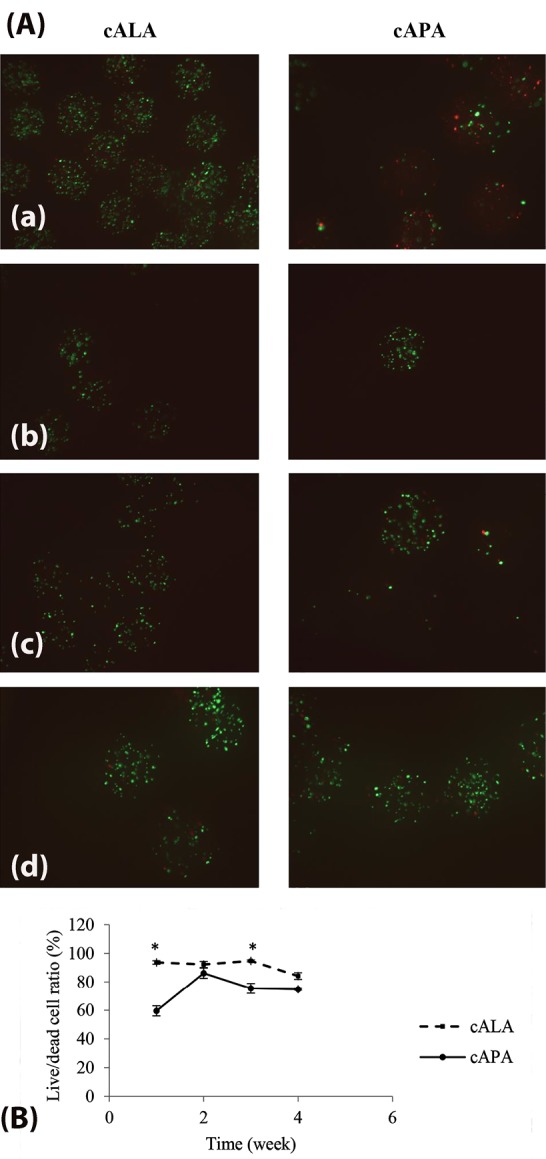
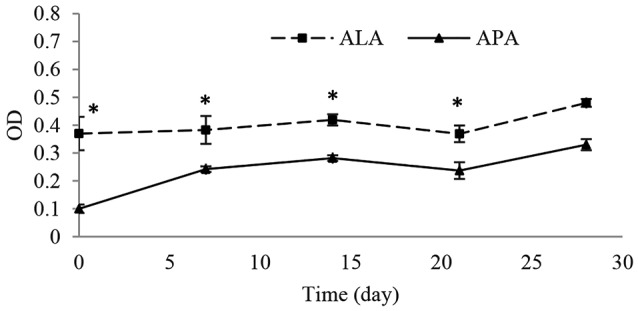
Purpose: Poly l-lysine (PLL) has been introduced as a strengthening covering layer for alginate microcapsules which are the most convenient way for cell encapsulation. Some disadvantages of PLL such as high price and low biocompatibility have prompted scientists to find better alternatives. Linear poly ethylene imine (LPEI), thanks to its highly similar structure to PLL, could be considered as a proper cost-effective alternative. In this study LPEI and PLL were compared as covering layers of cell-loaded alginate-LPEI-alginate (cALA) and alginate-PLL-alginate (cAPA) microcapsules. Methods: In addition to the physico-mechanical properties, the encapsulation efficiency, cell survival post encapsulation, cell viability, and cellular metabolic activity within the microcapsules were evaluated using trypan blue, live/dead cell staining, and MTT test, respectively. Results: Physico-mechanical evaluation of the microcapsules revealed that the cell microencapsulation process did not affect their shape, size, and mechanical stability. Although the encapsulation efficiency for cALA and cAPA was not different (P >0.05), cell survival post encapsulation was higher in cALA than in cAPA (P<0.05) which could be the reason for the higher cell viability and also cellular metabolic activity within these microcapsules in comparison to cAPA. Conclusion: Here, based on these results, ALA could be introduced as a preferable alternative to APA for cell encapsulation.
Keywords: Alginic acid; CHOK1; Cell microencapsulation; Poly ethylene imine; Poly l-lysine.
© 2020 The Authors.
Figures
References
LinkOut - more resources
Full Text Sources