. 2020 May 6;15(5):e0232626.
doi: 10.1371/journal.pone.0232626. eCollection 2020.

Elicitation with Bacillus QV15 reveals a pivotal role of F3H on flavonoid metabolism improving adaptation to biotic stress in blackberry

Affiliations

Elicitation with Bacillus QV15 reveals a pivotal role of F3H on flavonoid metabolism improving adaptation to biotic stress in blackberry

Enrique Gutiérrez-Albanchez et al. PLoS One. .

Abstract

The aim of this study is to determine the involvement of the flavonol-anthocyanin pathway on plant adaptation to biotic stress using the B.amyloliquefaciens QV15 to trigger blackberry metabolism and identify target genes to improve plant fitness and fruit quality. To achieve this goal, field-grown blackberries were root-inoculated with QV15 along its growth cycle. At fruiting, a transcriptomic analysis by RNA-Seq was performed on leaves and fruits of treated and non-treated field-grown blackberries after a sustained mildew outbreak; expression of the regulating and core genes of the Flavonol-Anthocyanin pathway were analysed by qPCR and metabolomic profiles by UHPLC/ESI-qTOF-MS; plant protection was found to be up to 88%. Overexpression of step-controlling genes in leaves and fruits, associated to lower concentration of flavonols and anthocyanins in QV15-treated plants, together with a higher protection suggest a phytoanticipin role for flavonols in blackberry; kempferol-3-O-rutinoside concentration was strikingly high. Overexpression of RuF3H (Flavonol-3-hidroxylase) suggests a pivotal role in the coordination of committing steps in this pathway, controlling carbon flux towards the different sinks. Furthermore, this C demand is supported by an activation of the photosynthetic machinery, and boosted by a coordinated control of ROS into a sub-lethal range, and associated to enhanced protection to biotic stress.


Conflict of interest statement

No authors have competing interests.

Figures
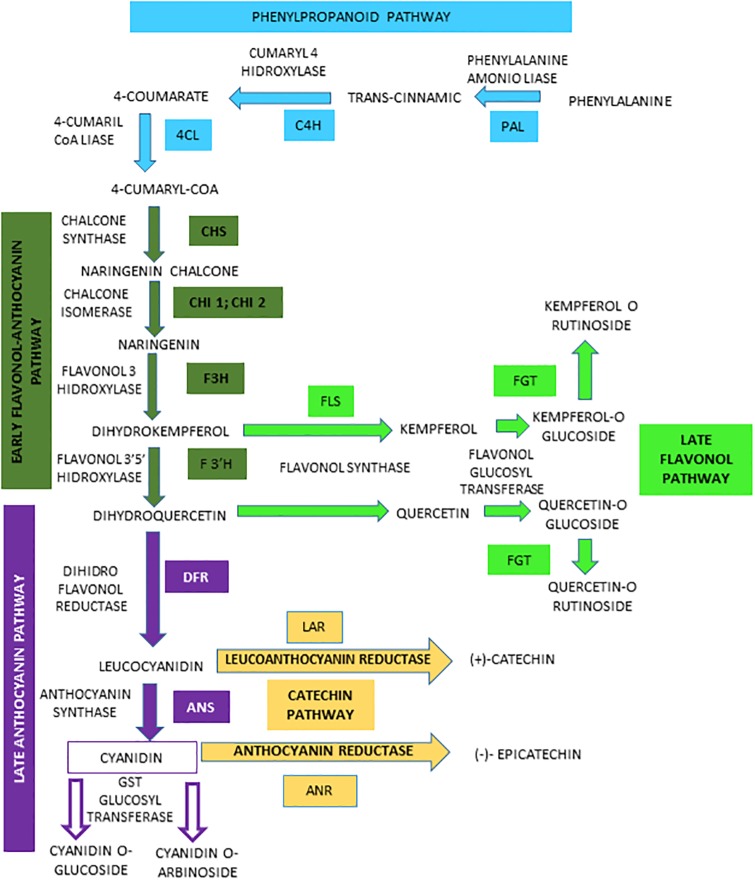
Fig 1
Fig 1. Biosynthesis of anthocyanins, flavonols and catechins via the flavonoid pathway in Rubus cv. Loch Ness.
Phenylalanine ammonio-lyase (RuPAL1 and RuPAL2), Cinammate-4-hydroxylase (RuC4H), 4-coumaryl-CoA ligase (Ru4CL), Chalcone synthase (RuCHS), Chalcone Isomerase1 (RuCHI1), Chalcone Isomerase2 (RuCHI2), Flavonol-3-hydroxylase (RuF3H), Flavonoid 3´5´hydroxylase (RuF3´5´H), Flavonoid 3´hydroxylase (RuF3´H), Flavonol synthase (RuFLS), Leucoanthocyanidin reductase (RuLAR), Anthocyanidin reductase (RuANR), Dehydroflavonol reductase (RuDFR), Anthocyanidin synthase (RuANS), Flavonol and Anthocyanidin Glycosiltransferases (RuFGT and RuAGT).
Fig 2
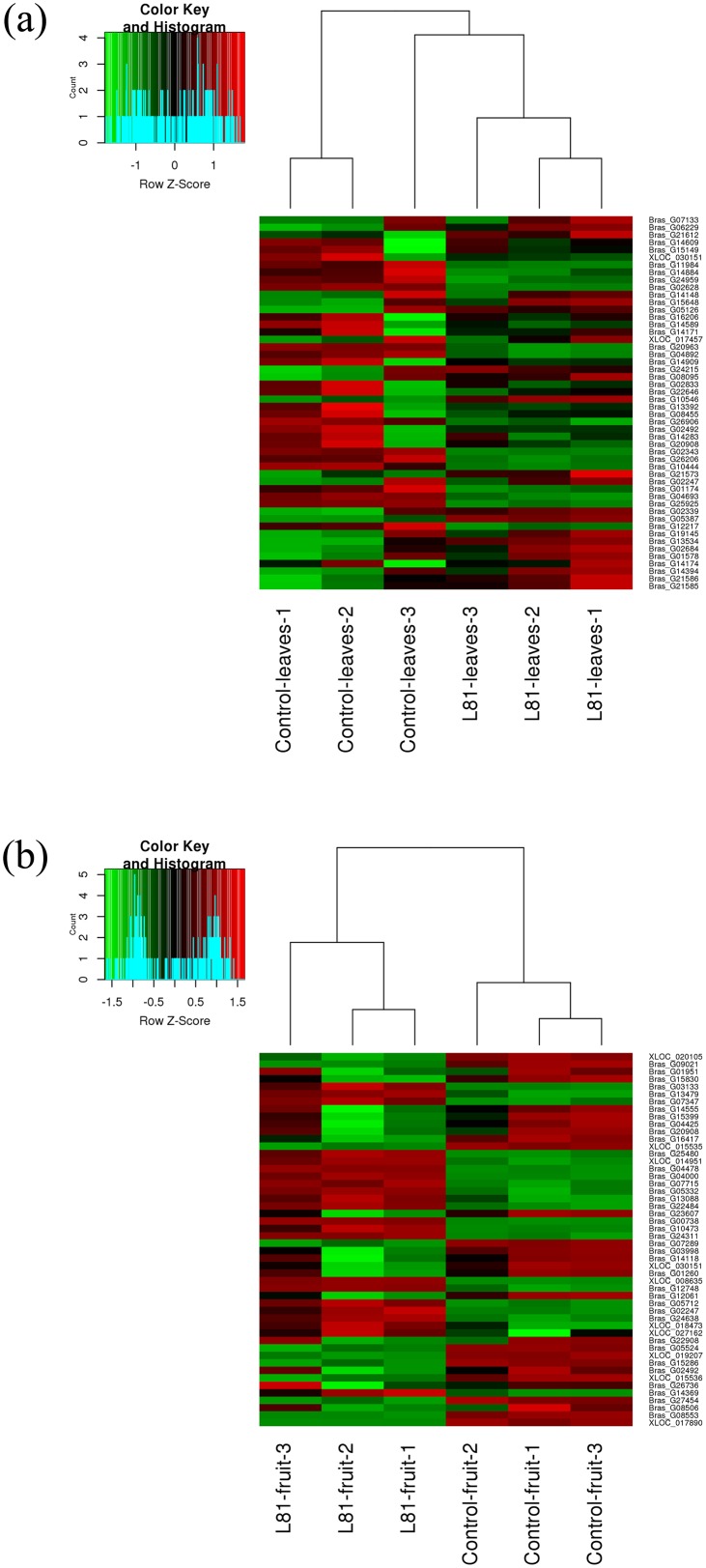
Fig 2. Heat Map and unsupervised hierarchical clustering by sample; top 50 genes with the largest coefficient of variation based on FPKM counts, a) in leaves b) in fruits.
Fig 3
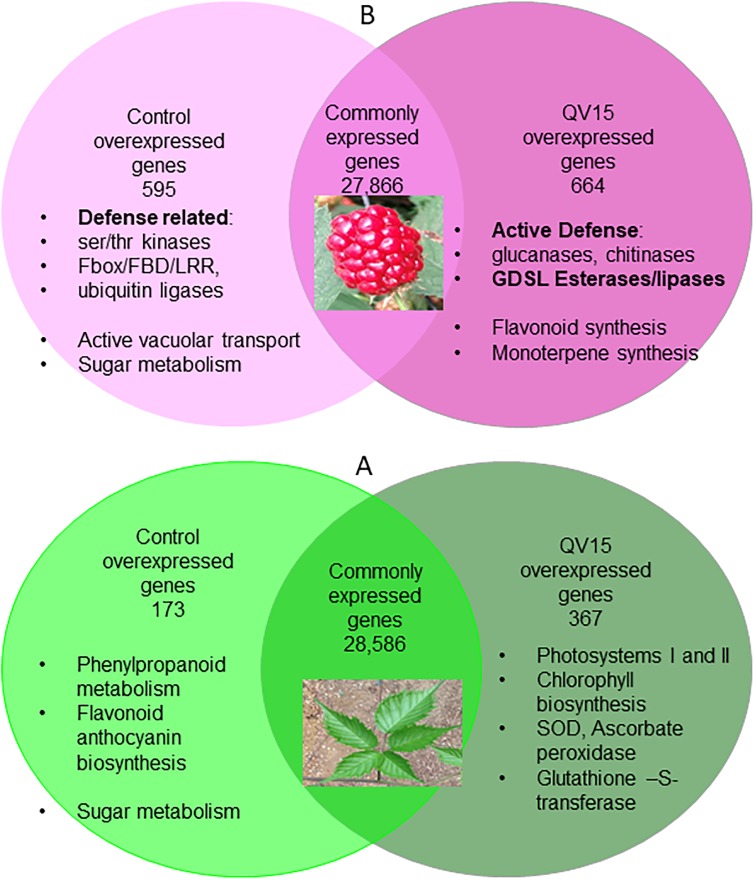
Fig 3. Venn diagram of overexpressed and common genes in blackberry leaves (a) and fruits (b) from control and QV15-treated plants.
Fig 4
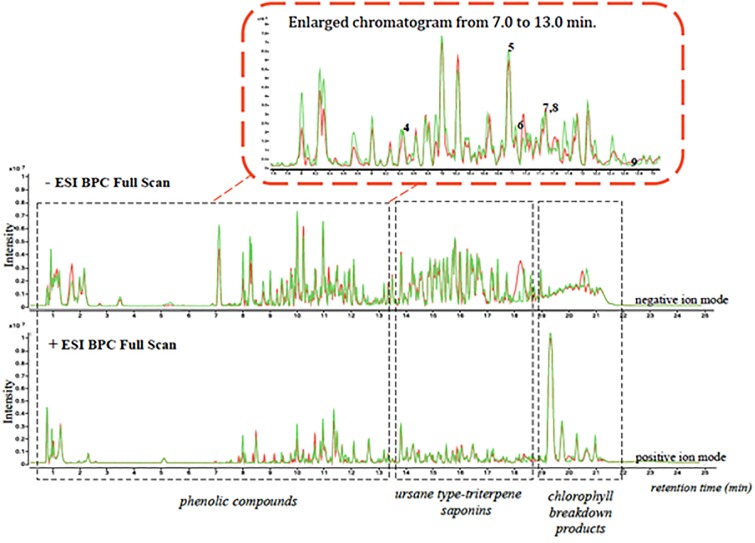
Fig 4. Overlaid chromatograms (positive and negative ion mode) obtained from LC/MS/TOFF analysis of the methanolic extract of blackberry leaf samples.
Control samples are represented in Green while QV15 samples appear in red.
Fig 5
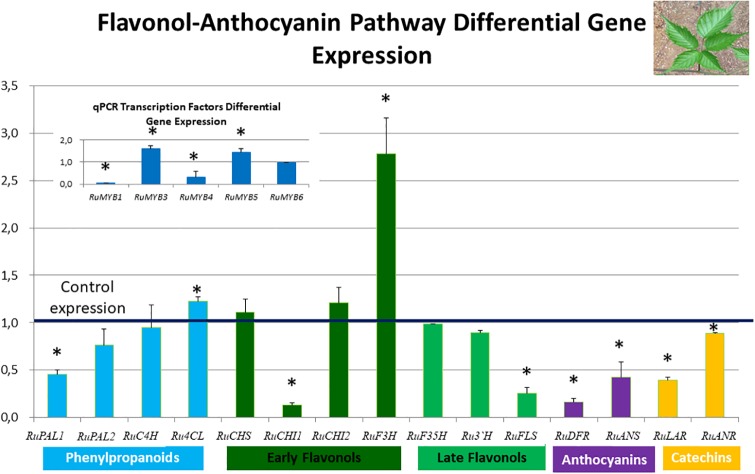
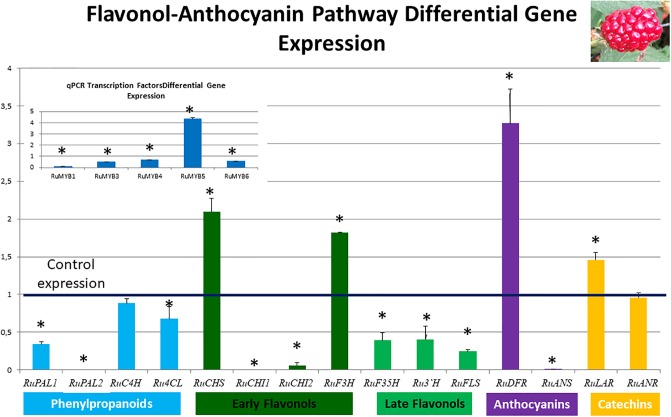
Fig 5. Flavonol-anthocyanin pathway gene expression analyzed by RT-qPCR in leaves.
The line set at value of 1 represents gene expression in controls, so values over one indicate overexpression in QV15 treated plants and values below one indicate overexpression in controls. Phenylalanine ammonio-lyase (RuPAL1 and RuPAL2), Cinammate 4 hydroxylase (RuC4H), 4-coumaryl-CoA ligase (Ru4CL), Chalcone synthase (RuCHS), Chalcone Isomerase1 (RuCHI1), Chalcone Isomerase2 (RuCHI2), Flavonol-3-hydroxylase (RuF3H), Flavonoid 3´5´hydroxylase (RuF3´5´H), Flavonoid 3´hydroxylase (RuF3´H), Flavonol synthase (RuFLS), Leucoanthocyanidin reductase (RuLAR), Anthocyanidin reductase (RuANR), Dehydroflavonol reductase (RuDFR), Anthocyanidin synthase (RuANS). Insert: Flavonol-anthocyanin pathway regulatory genes. Asterisks indicate significant differences, according to Fisher test (p<0.05).
Fig 6
Fig 6. Flavonol-anthocyanin pathway gene expression analyzed by RT-qPCR in fruits.
The line set at value of 1 represents gene expression in controls, so values over one indicate overexpression in QV15 treated plants and values below one indicate overexpression in controls Phenylalanine ammonio-lyase (RuPAL1 and RuPAL2), Cinammate 4 hydroxylase (RuC4H), 4-coumaryl-CoA ligase (Ru4CL), Chalcone synthase (RuCHS), Chalcone Isomerase1 (RuCHI1), Chalcone Isomerase2 (RuCHI2), Flavonol-3-hydroxylase (RuF3H), Flavonoid 3´5´hydroxylase (RuF3´5´H), Flavonoid 3´hydroxylase (RuF3´H), Flavonol synthase (RuFLS), Leucoanthocyanidin reductase (RuLAR), Anthocyanidin reductase (RuANR), Dehydroflavonol reductase (RuDFR), Anthocyanidin synthase (RuANS). Insert: Flavonol-anthocyanin pathway regulatory genes. Asterisks indicate significant differences, according to Fisher test (p<0.05).

References

    1. Thabti IW, Elfalleh N, Tlili M, Ziadi MG, Campos, Ferchichi A. Phenols, flavonoids and antioxidant and antibacterial activity of leaves and stem bark of Morus species. Intl J Food Prop. 2014;17(4):842–854. 10.1080/10942912.2012.660722 - DOI
    1. Xi HF, Ma L, Wang LN, Li SH, Wang LJ. Differential response of the biosynthesis of resveratrols and flavonoids to UV-C irradiation in grape leaves. New Zeal J Crop Hortic Sci. 2015; 43(3):163–172. 10.1080/01140671.2014.989862 - DOI
    1. Gutierrez E., García‐Villaraco Velasco A, Lucas JA, Gutierrez‐Mañero FJ, Ramos‐Solano B. The flavonol-anthocyanin pathway in blackberry and arabidopsis: State of the art. In: Gonçalo C. Justino ed. Flavonoids—from biosynthesis to human health, InTech; 2017. p 129–150
    1. Brunetti C, Di Ferdinando M, Fini A, Pollastri S, Tattini M. Flavonoids as antioxidants and developmental regulators: Relative significance in plants and humans. Intl J Molec Sci. 2013;14 (2): 3540–3555 10.3390/ijms14023540 - DOI - PMC - PubMed
    1. Cassidy A. Berry anthocyanin intake and cardiovascular health. Molec Aspects Med. 2017. 10.1016/j.mam.2017.05.002 - DOI - PubMed

Publication types

MeSH terms