


Incidence and predictors of extrapulmonary tuberculosis among people living with Human Immunodeficiency Virus in Addis Ababa, Ethiopia: A retrospective cohort study
- PMID: 32374773
- PMCID: PMC7202654
- DOI: 10.1371/journal.pone.0232426
Incidence and predictors of extrapulmonary tuberculosis among people living with Human Immunodeficiency Virus in Addis Ababa, Ethiopia: A retrospective cohort study
Abstract
Background: Extrapulmonary tuberculosis is an emerging public health problem among HIV positives compared to the general population. This study aimed to assess the incidence and predictors of extrapulmonary tuberculosis among people living with HIV in selected health facilities in Addis Ababa, Ethiopia, from 01 January 2013 up to 31 December 2018.
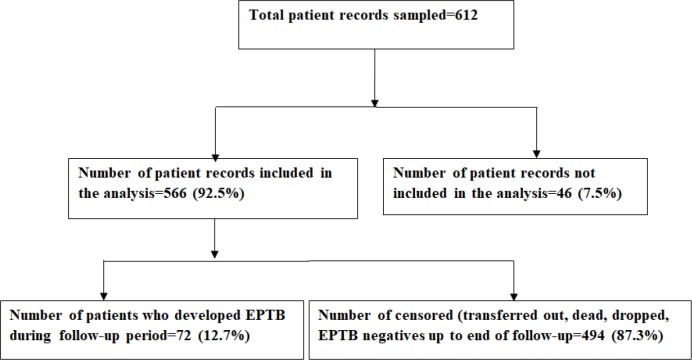
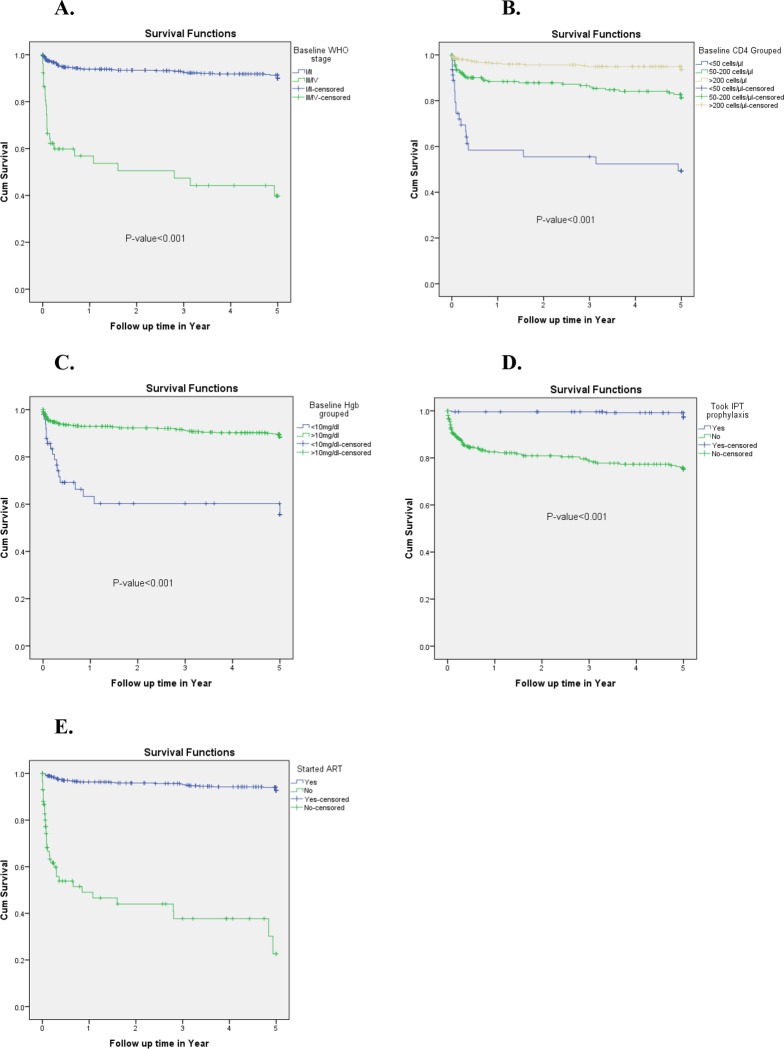
Methods: A retrospective cohort study design was employed based on data collected from 566 HIV positive individuals. Data were entered using EpiInfo version 7.1 and analyzed by SPSS version 20. The incidence rate was determined per 100 person-years. Kaplan-Meier estimates used to estimate survivor and the hazard function, whereas log-rank tests used to compare survival curves and hazard across different categories. Cox proportional hazard model was used to identify the predictors and 95%CI of the hazard ratio were computed. P-value<0.05 in the multivariable analysis was considered statistically significant.
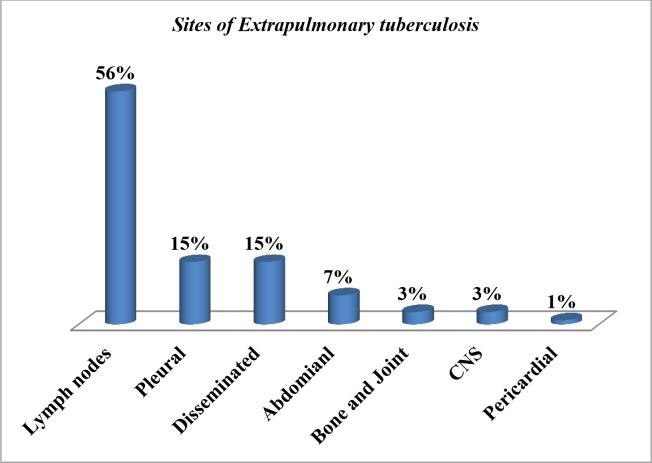
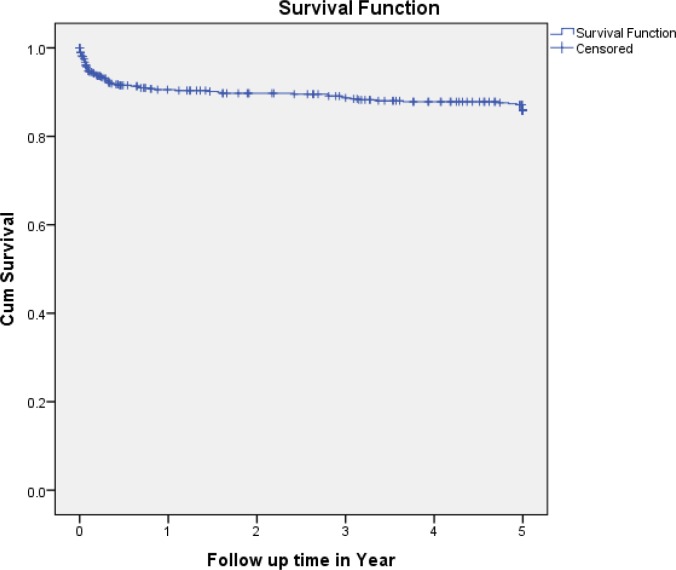
Results: Five hundred sixty-six HIV positive individuals were followed for 2140.08 person-years. Among them, 72 developed extrapulmonary tuberculosis that gives an incidence rate of 3.36/100 person-years (95%CI = 2.68-4.22). The most frequent forms of extrapulmonary tuberculosis were; lymph node tuberculosis (56%, 41) followed equally by pleural tuberculosis (15%, 11) and disseminated tuberculosis (15%, 11). The majority (70.83%) of the cases occurred within the first year of follow-up. In multivariable Cox regression analysis, baseline WHO stage III/IV (AHR = 2.720, 95%CI = 1.575-4.697), baseline CD4 count<50cells/μl (AHR = 4.073, 95%CI = 2.064-8.040), baseline CD4 count 50-200 cells/μl (AHR = 2.360, 95%CI = 1.314-4.239) and baseline Hgb<10 mg/dl (AHR = 1.979, 95%CI = 1.091-3.591) were the independent risk factors. While isoniazid prophylaxis (AHR = 0.232, 95%CI = 0.095-0.565) and taking antiretroviral drugs (AHR = 0.134, 95%CI = 0.075-0.238) had a protective benefit.
Conclusion: Extrapulmonary tuberculosis co-infection was common among HIV positive individuals, and mostly occurred in those with advanced immune suppression. The risk decreases in those taking antiretroviral therapy and took isoniazid preventive treatment. Screening of HIV positives for extrapulmonary tuberculosis throughout their follow-up would be important.
Conflict of interest statement
The authors have declared that no competing interests exist.
Figures
References
-
- WHO: Global Tuberculosis Report. Geneva, Switzerland: World Health Organization; 2018.
-
- Kassa A, Teka A, Shewaamare A, Jerened D. Incidence of tuberculosis and early mortality in a large cohort of HIV infected patients receiving antiretroviral therapy in a tertiary hospital in Addis Ababa, Ethiopia. Transactions of the Royal Society of Tropical Medicine and Hygiene. 2012, 106: 363–370. 10.1016/j.trstmh.2012.03.002 - DOI - PubMed
-
- Ayalaw SG, Alene KA, Adane AA. Incidence and Predictors of Tuberculosis among HIV Positive Children at University of Gondar Referral Hospital, Northwest Ethiopia: A Retrospective Follow-Up Study. Hindawi Publishing Corporation International Scholarly Research Notices. 2015, Article ID 307810, 6 pageslarly research notices. 2015;2015:307810 10.1155/2015/307810 . Pubmed Central PMCID: 4897326. - DOI - PMC - PubMed
MeSH terms
LinkOut - more resources
Full Text Sources
Medical
Research Materials
