


Leptin signaling and the intervertebral disc: Sex dependent effects of leptin receptor deficiency and Western diet on the spine in a type 2 diabetes mouse model
- PMID: 32374776
- PMCID: PMC7202633
- DOI: 10.1371/journal.pone.0227527
Leptin signaling and the intervertebral disc: Sex dependent effects of leptin receptor deficiency and Western diet on the spine in a type 2 diabetes mouse model
Abstract
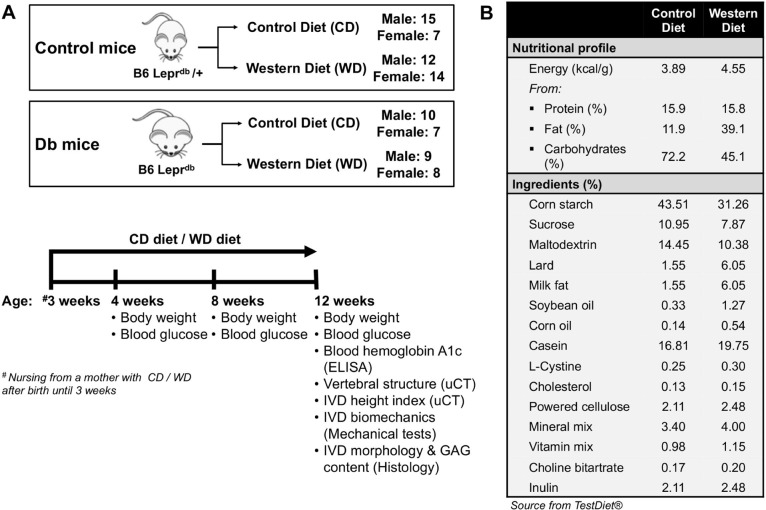
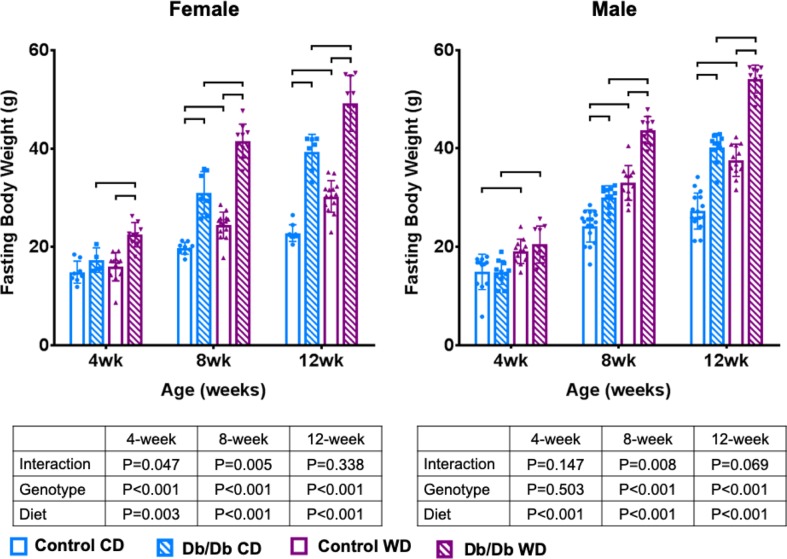
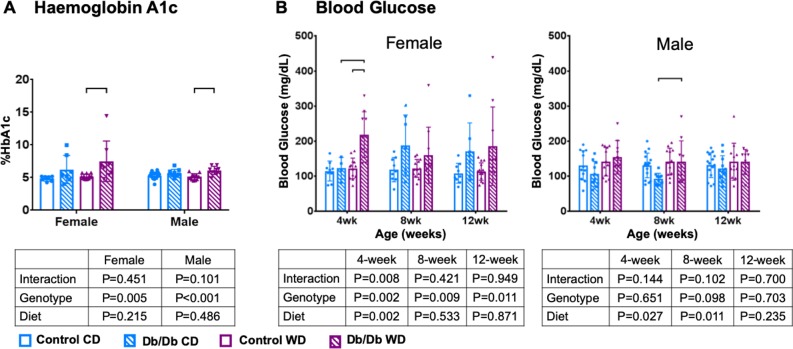
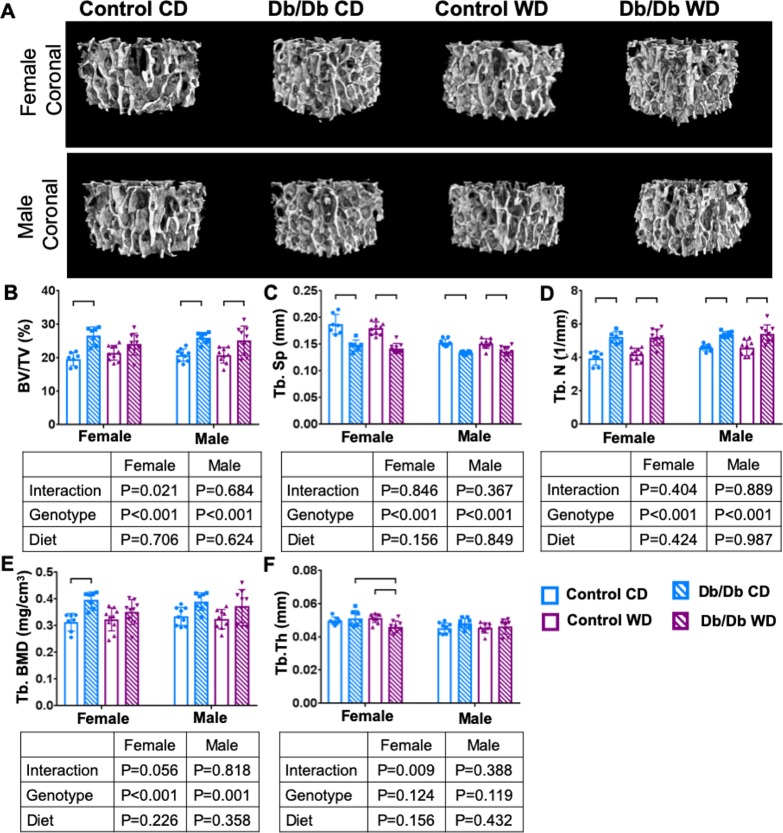
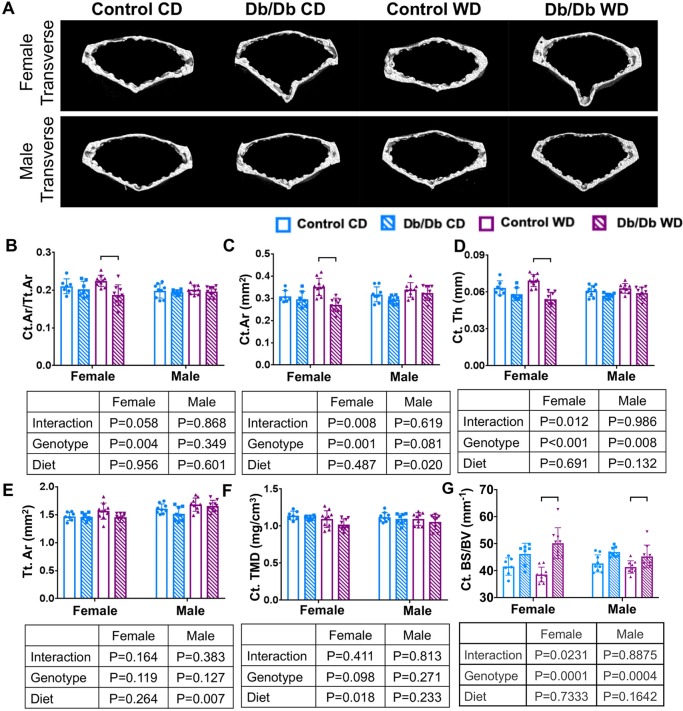
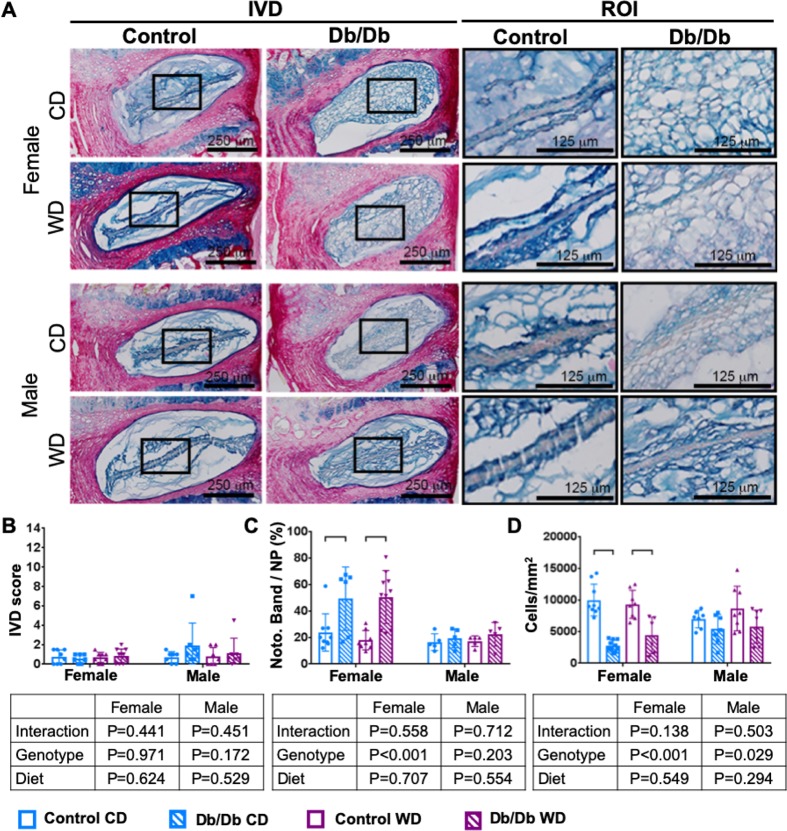
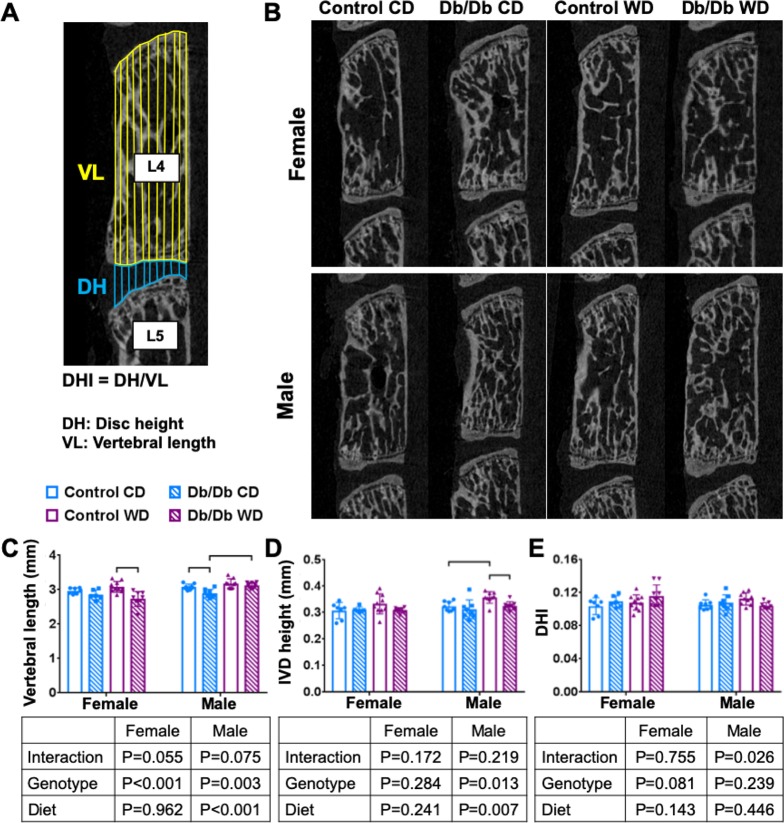
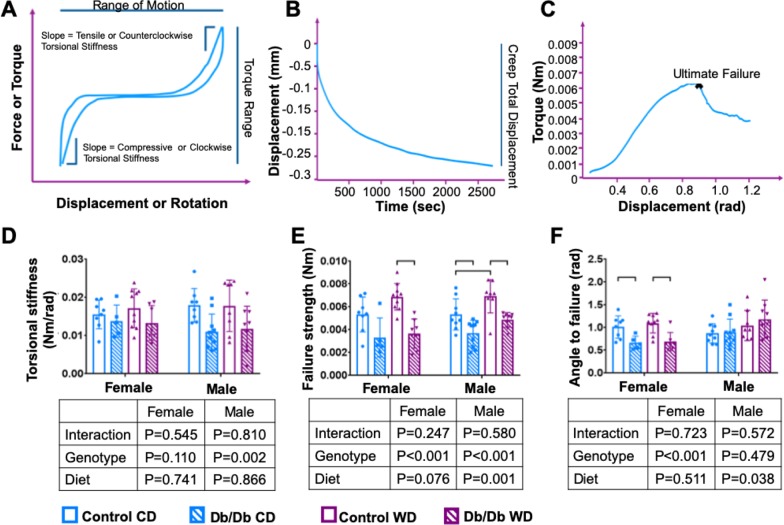
Type 2 diabetes and obesity are associated with back pain in juveniles and adults and are implicated in intervertebral disc (IVD) degeneration. Hypercaloric Western diets are associated with both obesity and type 2 diabetes. The objective of this study was to determine if obesity and type 2 diabetes result in spinal pathology in a sex-specific manner using in vivo diabetic and dietary mouse models. Leptin is an appetite-regulating hormone, and its deficiency leads to polyphagia, resulting in obesity and diabetes. Leptin is also associated with IVD degeneration, and increased expression of its receptor was identified in degenerated IVDs. We used young, leptin receptor deficient (Db/Db) mice to mimic the effect of diet and diabetes on adolescents. Db/Db and Control mice were fed either Western or Control diets, and were sacrificed at 3 months of age. Db/Db mice were obese, while only female mice developed diabetes. Female Db/Db mice displayed altered IVD morphology, with increased intradiscal notochordal band area, suggesting delayed IVD cell proliferation and differentiation, rather than IVD degeneration. Motion segments from Db/Db mice exhibited increased failure risk with decreased torsional failure strength. Db/Db mice also had inferior bone quality, which was most prominent in females. We conclude that obesity and diabetes due to impaired leptin signaling contribute to pathological changes in vertebrae, as well as an immature IVD phenotype, particularly of females, suggesting a sex-dependent role of leptin in the spine.
Conflict of interest statement
The authors have declared that no competing interests exist.
Figures
References
-
- Vos T, Allen C, Arora M (2016) Global, regional, and national incidence, prevalence, and years lived with disability for 310 diseases and injuries, 1990–2015: a systematic analysis for the Global Burden of Disease Study 2015. The Lancet 388: 1545–1602. 10.1016/S0140-6736(16)31678-6 - DOI - PMC - PubMed
-
- Hales CM, Carroll MD, Fryar CD, Ogden CL (2017) Prevalence of Obesity Among Adults and Youth: United States, 2015–2016. NCHS Data Brief: 1–8. - PubMed
Publication types
MeSH terms
Substances
Grants and funding
LinkOut - more resources
Full Text Sources
Medical
Miscellaneous
