


Mechanisms underlying of antiretroviral drugs in different cellular reservoirs with a focus on macrophages
- PMID: 32375558
- PMCID: PMC7219522
- DOI: 10.1080/21505594.2020.1760443
Mechanisms underlying of antiretroviral drugs in different cellular reservoirs with a focus on macrophages
Abstract
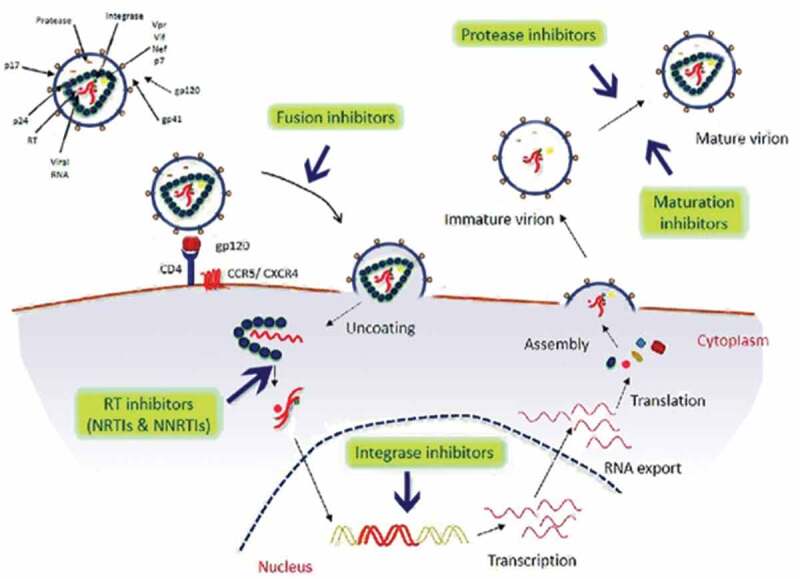
Ongoing with current combinations of antiretroviral drugs for the treatment of Human Immunodeficiency Virus (HIV) infection can successfully maintain long-term suppression of HIV-1 replication in plasma. Still, none of these therapies is capable of extinguishing the virus from the long-lived cellular reservoir, including monocyte-derived macrophages (MDM), that means the principal obstacle to HIV cure. MDM are widely distributed in all tissues and organs, including central system nervous (CNS) where they represent the most frequent HIV-infected cells that means the principal obstacle to HIV cure. Current FDA-approved antiretroviral drugs target viral reverse transcriptase, protease, integrase, and entry processes (coreceptor or fusion blockade). It is desirable to continue to develop new antiretrovirals directed against alternative targets in the virus lifecycle in order to further optimize therapeutic options, overcome resistance to existing medications, and potentially contribute to the elimination of viral reservoirs.This review provides a comprehensive overview of the activity of antiretroviral drugs (classical and upcoming) in monocytes-derived macrophages (MDM). Defining the antiviral activity of these drugs in this important cellular HIV-1 reservoir provides crucial hints about their efficacy in HIV-1 infected patients.
Keywords: HIV-1; antiretroviral drugs target; macrophages; virus reservoir.
Figures
References
-
- Flexner C. HIV drug development: the next 25 years. Nat Rev Drug Discov. 2007. December;6(12):959–966. Review. - PubMed
-
- Herbein G, Coaquette A, Perez-Bercoff D, et al. Macrophage activation and HIV infection: can the Trojan horse turn into a fortress? Curr Mol Med. 2002. December 2;8:723–738. Review. - PubMed
Publication types
MeSH terms
Substances
LinkOut - more resources
Full Text Sources
