


Local and scientific knowledge in the school context: characterization and content of published works
- PMID: 32375893
- PMCID: PMC7201971
- DOI: 10.1186/s13002-020-00373-5
Local and scientific knowledge in the school context: characterization and content of published works
Abstract
Background: Bridging the gap between local and scientific knowledge can have useful implications in the teaching-learning process because it can create environments conducive to the valorization of sociocultural diversity in schools. The present review aims to analyze the profile and contributions of scientific publications dealing with articulations between local and scientific knowledge in basic formal education.
Method: Combined searches of 14 terms related to ethnoscience and 20 terms of education were conducted in English, Portuguese, and Spanish using the databases of Web of Science, Scopus, Science Direct, and Scielo. The recovered works were filtered, organized in a spreadsheet, and analyzed for publication characteristics (year, author, periodicals, countries of origin of the authors, and countries surveyed) and contents of the studies (epistemological bases, techniques of application, and record of the articulation of local and scientific knowledge).
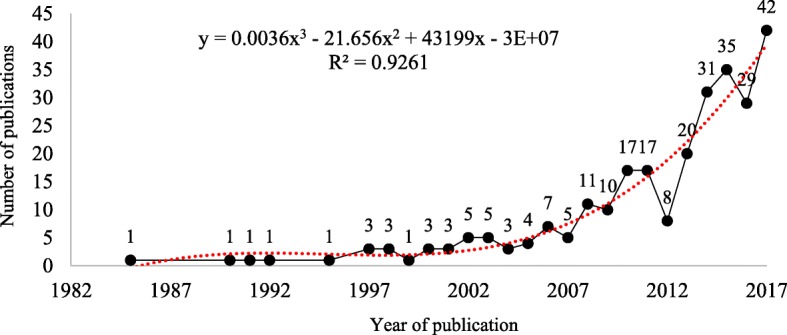
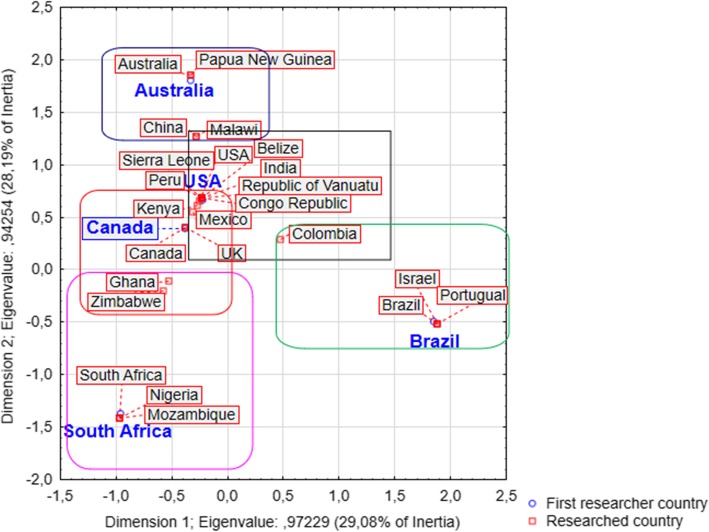
Results: The research field that establishes these articulations is growing, with 81% of the works being written in the English language. A total of 494 researchers were recorded. The USA, South Africa, Brazil, Canada, and Australia were the countries of origin of the first author for the majority (64%) of the works considered. Multiculturalism, Vygotskian theory of learning, postcolonial theory, constructivism, critical pedagogy, and the argumentation theory were the main theoretical bases of half of the recovered works in which some explicit theoretical orientation could be found. Teacher training and interviews stood out as important tools in the application and record of links between local and scientific knowledge, respectively.
Conclusions: Interdisciplinary approaches were common in the conception and application of pedagogical activities reported in the recovered works. Articulations between local and scientific knowledge are effective for culturally-sensitive scientific education, especially (but not exclusively) in schools directly related to traditional communities. There was a tendency to emphasize the teacher as a fundamental agent in the search for education that establishes these articulations. The authors of the analyzed works frequently indicated a need for greater proximity of the community to school spaces.
Keywords: Contextualized education; Database searches; Ethnobiology; Multiculturalism; Scientometrics; Teaching-learning.
Conflict of interest statement
The authors declare that they have no competing interests.
Figures
References
-
- Albuquerque UP, Alves ÂGC. O que é etnobiologia? In: Albuquerque UP, editor. Introdução à etnobologia. Recife: NUPPEA; 2014. pp. 17–22.
-
- Alves ÂGC, Souto FJB. Etnoecologia ou Etnoecologias? Encarando a diversidade conceitual. In: ALVES, A. G. C. SOUTO, F. J. B.; PERONI N (Org), editor. Etnoecologia em Perspect natureza, Cult e Conserv. Recife: Nupeea; 2010. p. 17–39.
-
- AMGA W. Insights and applications local soil knowledge: a tool for sustainable land management. Soc Nat Resour. 1999;12:151–161. doi: 10.1080/089419299279812. - DOI
-
- Alves AGC, Albuquerque UP. “Ethno what?” Terminological problems in etnhoscience with a special emphasis on the Brazilian context. Recent Dev case Stud Ethnobot. 2010;.
-
- Baptista GCS. Importância da demarcação de saberes no ensino de Ciências para sociedades tradicionais. Ciência Educ. 2010;16:679–694. doi: 10.1590/S1516-73132010000300012. - DOI
MeSH terms
LinkOut - more resources
Full Text Sources
Miscellaneous
