


Improving function in people with hip-related pain: a systematic review and meta-analysis of physiotherapist-led interventions for hip-related pain
- PMID: 32376673
- PMCID: PMC7677471
- DOI: 10.1136/bjsports-2019-101690
Improving function in people with hip-related pain: a systematic review and meta-analysis of physiotherapist-led interventions for hip-related pain
Abstract
Objective: To report the effectiveness of physiotherapist-led interventions in improving pain and function in young and middle-aged adults with hip-related pain.
Design: Systematic review and meta-analysis.
Data sources: A comprehensive, reproducible search strategy was performed on five databases in May 2019. Reference lists and grey literature were also searched.
Eligibility criteria for selecting studies: Population: people aged ≥18 years with hip-related pain (with or without a diagnosis of femoroacetabular impingement syndrome).
Intervention(s): physiotherapist-led interventions for hip pain. Comparators: sham treatment, no treatment or other treatment (eg, hip arthroscopic surgery).
Outcomes: primary outcomes included patient-reported hip pain and function. Secondary outcomes included physical function measures.
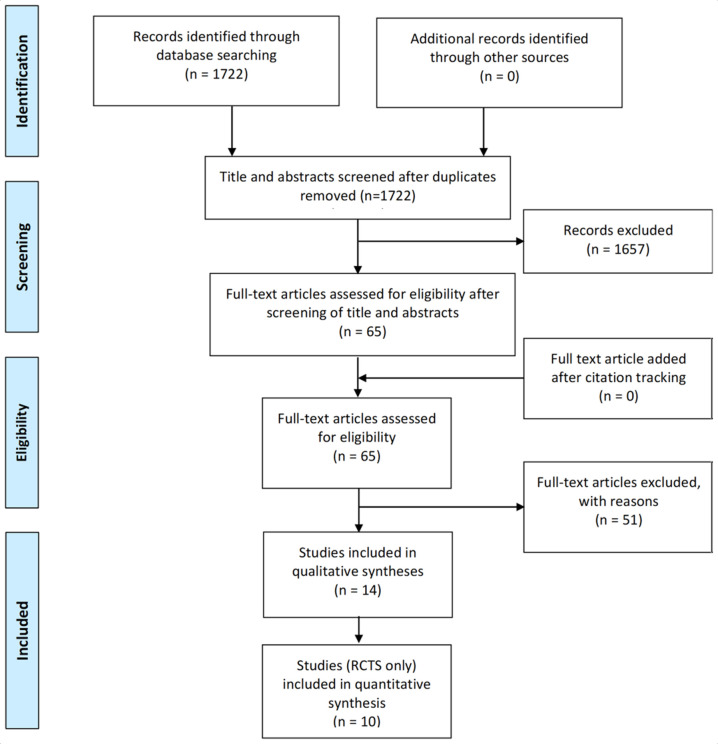
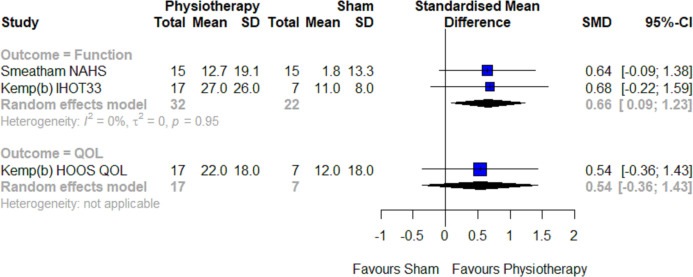
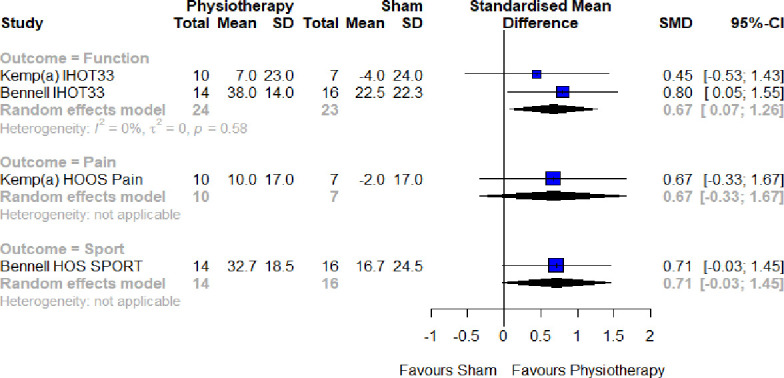
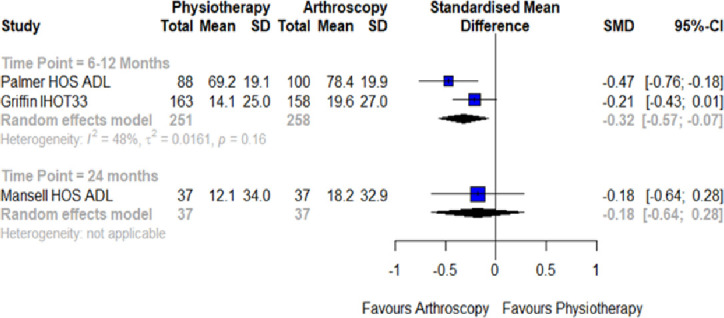
Results: 1722 papers were identified. After exclusion criteria were applied, 14 studies were included for analysis. They had varied risk of bias. There were no full-scale placebo-controlled randomised controlled trials (RCTs) of physiotherapist-led treatment. Pooled effects ranged from moderate effects (0.67 (95% CI 0.07 to 1.26)) favouring physiotherapist-led intervention over no treatment post-arthroscopy, to weak effects (-0.32 (95% CI 0.57 to 0.07)) favouring hip arthroscopy over physiotherapist-led treatment.
Conclusion: Physiotherapist-led interventions might improve pain and function in young and middle-aged adults with hip-related pain, however full-scale high-quality RCT studies are required.
Prospero registration number: CRD42018089088.
Keywords: arthroscopy; exercise; hip; physiotherapy; rehabilitation.
© Author(s) (or their employer(s)) 2020. Re-use permitted under CC BY-NC. No commercial re-use. See rights and permissions. Published by BMJ.
Conflict of interest statement
Competing interests: None declared.
Figures
References
-
- Kierkegaard S, Langeskov-Christensen M, Lund B, et al. Pain, activities of daily living and sport function at different time points after hip arthroscopy in patients with femoroacetabular impingement: a systematic review with meta-analysis. Br J Sports Med 2017;51:572–9. 10.1136/bjsports-2016-096618 - DOI - PubMed
Publication types
MeSH terms
LinkOut - more resources
Full Text Sources
Medical
