


Innate lymphoid cells control signaling circuits to regulate tissue-specific immunity
- PMID: 32376911
- PMCID: PMC7264134
- DOI: 10.1038/s41422-020-0323-8
Innate lymphoid cells control signaling circuits to regulate tissue-specific immunity
Abstract
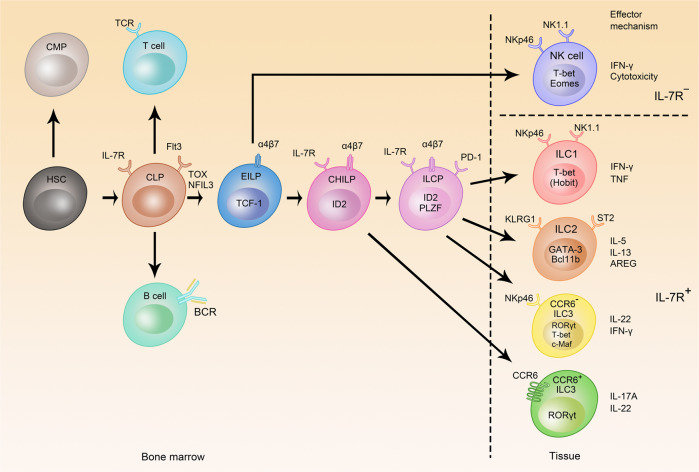
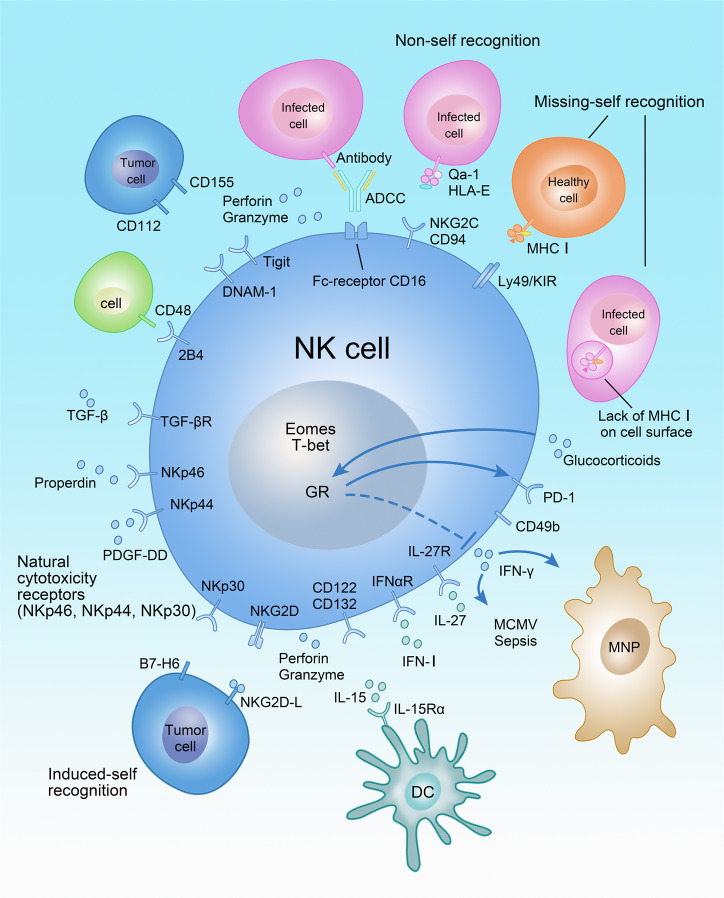
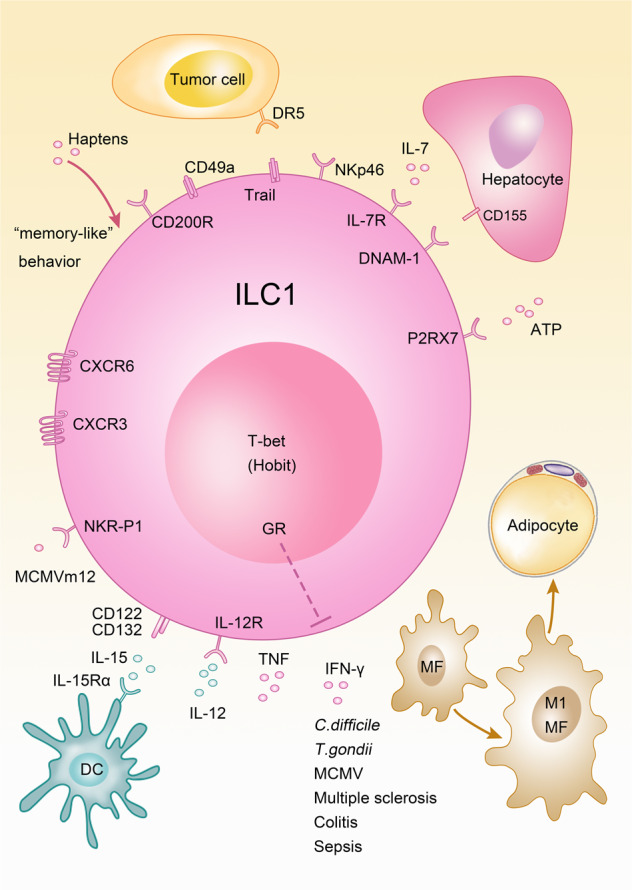
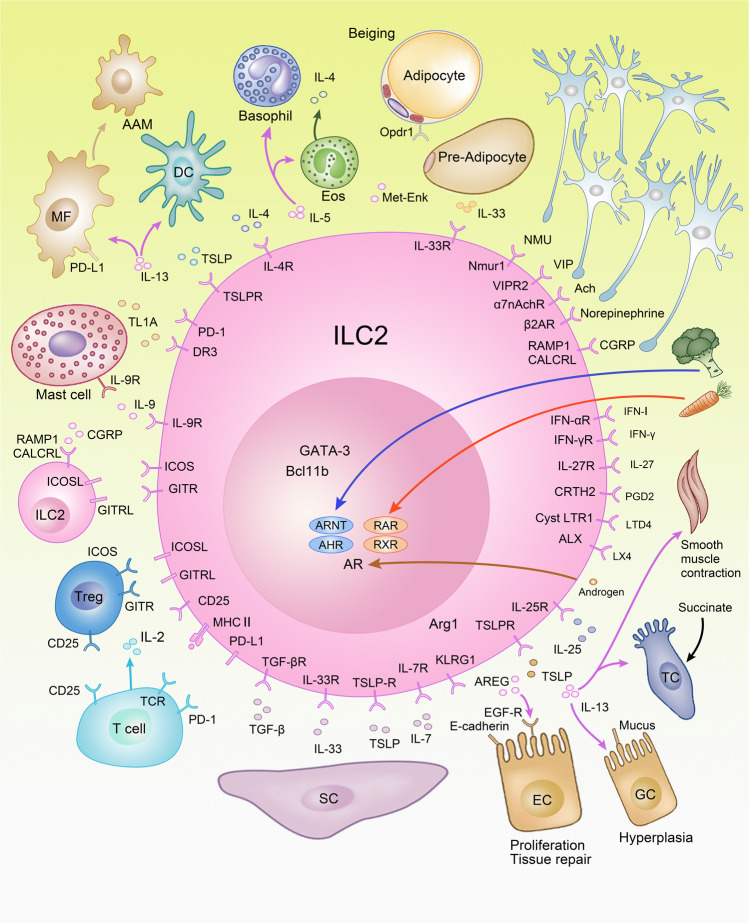
The multifaceted organization of the immune system involves not only patrolling lymphocytes that constantly monitor antigen-presenting cells in secondary lymphoid organs but also immune cells that establish permanent tissue-residency. The integration in the respective tissue and the adaption to the organ milieu enable tissue-resident cells to establish signaling circuits with parenchymal cells to coordinate immune responses and maintain tissue homeostasis. Innate lymphoid cells (ILCs) are tissue-resident innate immune cells that have a similar functional diversity to T cells including lineage-specifying transcription factors that drive certain effector programs. Since their formal discovery 10 years ago, it has become clear that ILCs are present in almost every tissue but strongly enriched at barrier surfaces, where they regulate immunity to infection, chronic inflammation, and tissue maintenance. In this context, recent research has identified ILCs as key in orchestrating tissue homeostasis through their ability to sustain bidirectional interactions with epithelial cells, neurons, stromal cells, adipocytes, and many other tissue-resident cells. In this review, we provide a comprehensive discussion of recent studies that define the development and heterogeneity of ILC populations and their impact on innate and adaptive immunity. Further, we discuss emerging research on the influence of the nervous system, circadian rhythm, and developmental plasticity on ILC function. Uncovering the signaling circuits that control development and function of ILCs will provide an integrated view on how immune responses in tissues are synchronized with functional relevance far beyond the classical view of the role of the immune system in discrimination between self/non-self and host defense.
Conflict of interest statement
D.A. has contributed to scientific advisory boards at Pfizer, Takeda, FARE, and the KRF in the last twelve months. C.S.N.K. has no competing interests to declare.
Figures
References
-
- Spits H, et al. Innate lymphoid cells—a proposal for uniform nomenclature. Nat. Rev. Immunol. 2013;13:145–149. - PubMed
-
- Klose CS, Artis D. Innate lymphoid cells as regulators of immunity, inflammation and tissue homeostasis. Nat. Immunol. 2016;17:765–774. - PubMed
-
- Ricardo-Gonzalez Roberto R., Van Dyken Steven J., Schneider Christoph, Lee Jinwoo, Nussbaum Jesse C., Liang Hong-Erh, Vaka Dedeepya, Eckalbar Walter L., Molofsky Ari B., Erle David J., Locksley Richard M. Tissue signals imprint ILC2 identity with anticipatory function. Nature Immunology. 2018;19(10):1093–1099. - PMC - PubMed
-
- Vivier E, et al. Innate lymphoid cells: 10 years on. Cell. 2018;174:1054–1066. - PubMed
Publication types
MeSH terms
Grants and funding
LinkOut - more resources
Full Text Sources
Other Literature Sources
