


Sustainability of Coronavirus on Different Surfaces
- PMID: 32377058
- PMCID: PMC7201236
- DOI: 10.1016/j.jceh.2020.04.020
Sustainability of Coronavirus on Different Surfaces
Abstract
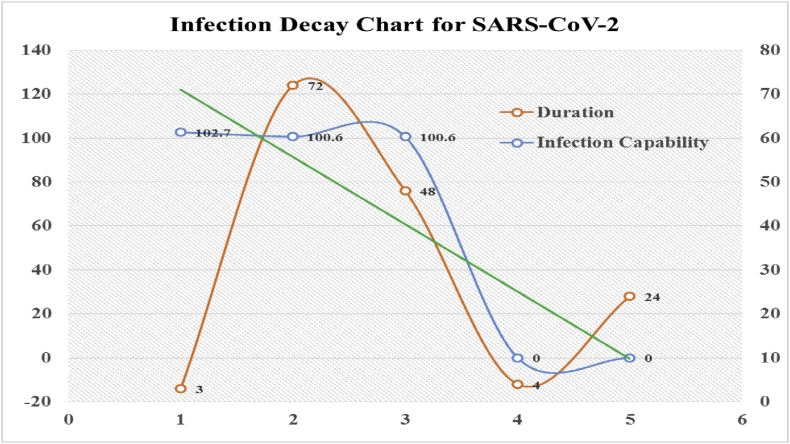
Coronavirus disease 2019 (COVID-19) is the name of the disease supposedly manifested in December 2019 from Wuhan, from the virus named SARS-CoV-2. Now, this disease has spread to almost all other parts of the world. COVID-19 pandemic has various reasons for its dramatic worldwide increase. Here, we have studied coronavirus sustainability on various surfaces. Various disinfectants and their roles are discussed from the available literature. The infection capabilities of SARS-CoV-1 and SARS-CoV-2 for different materials and finally studies on infection decay for SARS-CoV-1 and SARS-CoV-2 are discussed.
Keywords: COVID-19; SARS-CoV-1; SARS-CoV-2; surfaces TCID; sustainability.
© 2020 Indian National Association for Study of the Liver. Published by Elsevier B.V. All rights reserved.
Conflict of interest statement
The authors have none to declare.
Figures

References
-
- Carroll D., Daszak P., Wolfe N.D. The global Virome Project. Science. 2018;359:872–874. - PubMed
-
- Lau S.K., Li K.S., Huang Y. Ecoepidemiology and complete genome comparison of different strains of severe acute respiratory syndrome-related Rhinolophus bat coronavirus in China reveal bats as a reservoir for acute, self-limiting infection that allows recombination events. J Virol. 2010;84:2808–2819. - PMC - PubMed
-
- Li W., Shi Z., Yu M. Bats are natural reservoirs of SARS-like coronaviruses. Science. 2005;310:676–679. - PubMed
Publication types
LinkOut - more resources
Full Text Sources
Other Literature Sources
Miscellaneous
