


Motherhood after cancer: fertility and utilisation of fertility-preservation methods
- PMID: 32377787
- PMCID: PMC7246243
- DOI: 10.1007/s00404-020-05563-w
Motherhood after cancer: fertility and utilisation of fertility-preservation methods
Abstract
Purpose: Due to modern and individualised treatments, women at reproductive age have a high survival rate after cancer therapy. What are pregnancy and birth rates of women after cancer and how often do they use cryopreserved ovarian tissue or gametes?
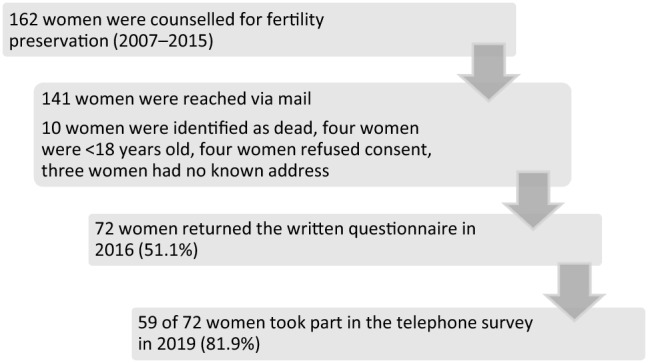
Methods: From 2007 to 2015, 162 women aged 26.7 ± 6.9 years were counselled for fertility preservation at a single University Fertility Centre. A questionnaire study was performed in average 3 and 6 years after the diagnosis of cancer. The women were asked about their fertility, partnership, family planning, and pregnancy history. 72 women (51%) answered a written questionnaire in 2016. 59 women were reached again by phone in 2019 (82%).
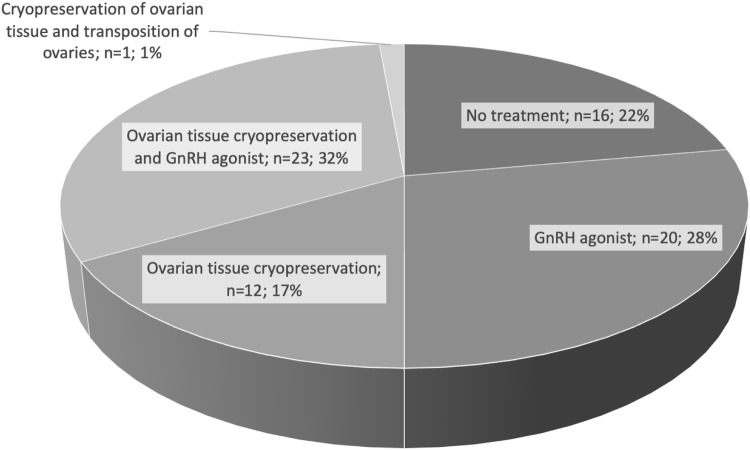
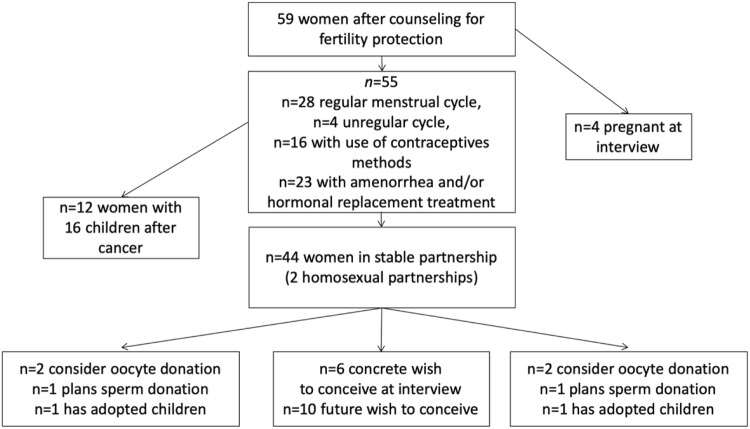
Results: The preferred method of fertility preservation was ovarian tissue cryopreservation (n = 36, 50%); none of the women had ovarian hyperstimulation in order to cryopreserve oocytes. About 3 years after treatment, 37 women of 72 women (51%) of the women with a mean age of 29.9 years had a strong wish to conceive. 21/72 (29%) had actively tried to conceive after successful cancer treatment; eight women (11%) were already pregnant or had children. Six years after cancer diagnosis 16/59 (27%) women had ongoing anticancer treatment. 12/59 (20%) were pregnant or had children, while 39% (23/59) had no menstrual cycle. Only one woman used her cryopreserved ovarian tissue, but did not become pregnant.
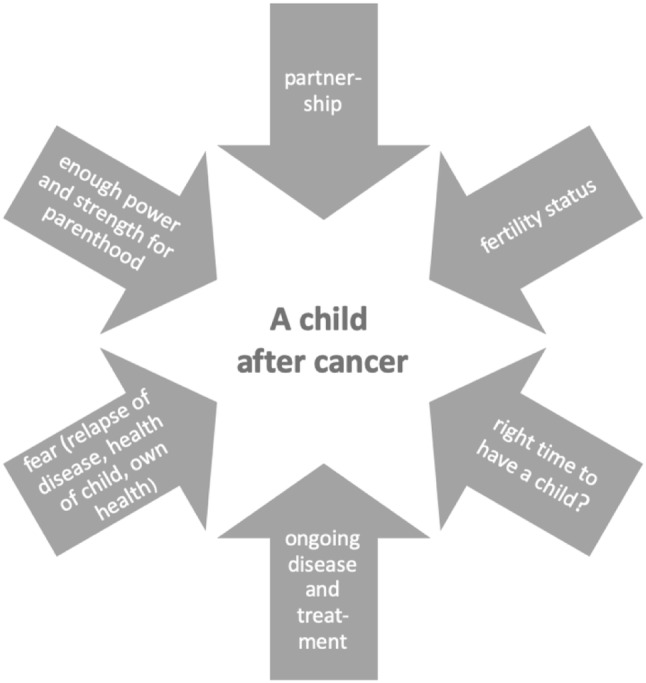
Conclusion: After cancer and gonadotoxic treatment, women's desire to have a child is substantial. In this study, the rate of spontaneous pregnancies and births was 20% 6 years after gonadotoxic therapies. Not every woman, however, has the opportunity to conceive: factors impairing fertility include ongoing cancer treatment or persistent disease, no partner, no menstrual cycle, as well as other reasons for infertility.
Keywords: Cancer; Fertility preservation; Follow-up; GnRH agonists; Ovarian cryopreservation.
Conflict of interest statement
Potential conflicts of interest: A. Germeyer—Director of the board of Fertiprotekt e.V. No potential conflicts of interest with direct of potential influence or bias on the work: M. Goeckenjan, A. Freis, K. Glaß, J. Schaar, I. Trinkaus, S. Torka, and P. Wimberger.
Figures
References
-
- Website of the German network for fertility preservation. https://fertiprotekt.com/fertiprotektnetwork. Accessed 18 Nov 2019
-
- German guideline for fertility preservation for women with oncologic diseases. https://www.awmf.org/uploads/tx_szleitlinien/015-082l_S2k_Fertilitaetser.... Accessed 18 Nov 2019
-
- Schüring AN, Fehm T, Behringer K, Goeckenjan M, Wimberger P, Henes M, Henes J, Fey MF, von Wolff M. Practical recommendations for fertility preservation in women by the FertiPROTEKT network Part I Indications for fertility preservation. Arch Gynecol Obstet. 2018 doi: 10.1007/s00404-017-4594-3. - DOI - PMC - PubMed
-
- Boettcher B, Goeckenjan M (2018) In: Ethics and Oncology: New issues of therapy, treatment, care, and, research. Arnason, Bobbert (Ed). Freiburg, Verlag Karl Alber Ann Arbor, Michigan ProQuest
MeSH terms
LinkOut - more resources
Full Text Sources
Medical
