Review
. 2020 May 6;102(9):830-840.
doi: 10.2106/JBJS.19.01128.

Artificial Intelligence and Orthopaedics: An Introduction for Clinicians

Affiliations
Review

Artificial Intelligence and Orthopaedics: An Introduction for Clinicians

Thomas G Myers et al. J Bone Joint Surg Am. .

Abstract

  1. Artificial intelligence (AI) provides machines with the ability to perform tasks using algorithms governed by pattern recognition and self-correction on large amounts of data to narrow options in order to avoid errors.

  2. The 4 things necessary for AI in medicine include big data sets, powerful computers, cloud computing, and open source algorithmic development.

  3. The use of AI in health care continues to expand, and its impact on orthopaedic surgery can already be found in diverse areas such as image recognition, risk prediction, patient-specific payment models, and clinical decision-making.

  4. Just as the business of medicine was once considered outside the domain of the orthopaedic surgeon, emerging technologies such as AI warrant ownership, leverage, and application by the orthopaedic surgeon to improve the care that we provide to the patients we serve.

  5. AI could provide solutions to factors contributing to physician burnout and medical mistakes. However, challenges regarding the ethical deployment, regulation, and the clinical superiority of AI over traditional statistics and decision-making remain to be resolved.


Figures
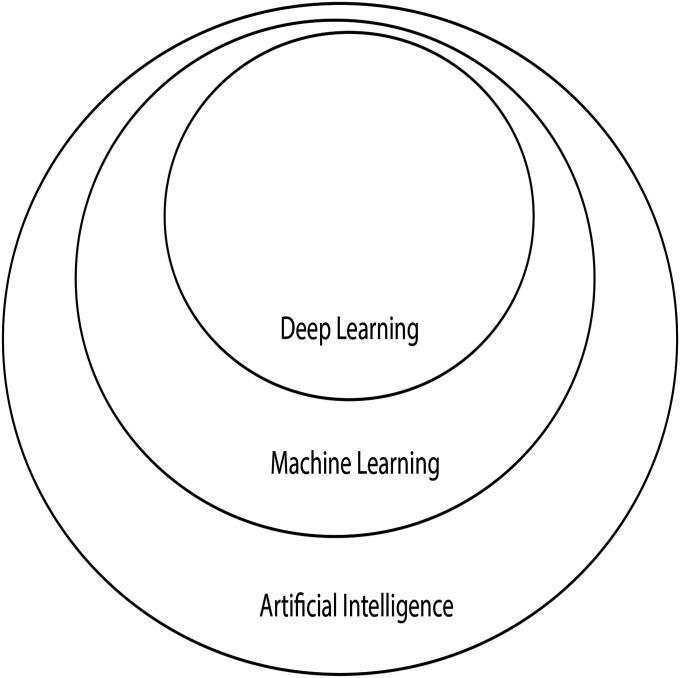
Fig. 1
Fig. 1
The relationship of AI, ML, and DL. (Reproduced, with modification, from: Chollet F. Deep learning with Python. Shelter Island, NY: Manning Publications; 2018. Reproduced with permission.)
Fig. 2
Fig. 2
Illustration of the process involved with statistics or traditional programming (Fig. 2-A) and ML (Fig. 2-B). (Reproduced, with modification, from: Chollet F. Deep learning with Python. Shelter Island, NY: Manning Publications; 2018. Reproduced with permission.)
Fig. 3
Fig. 3
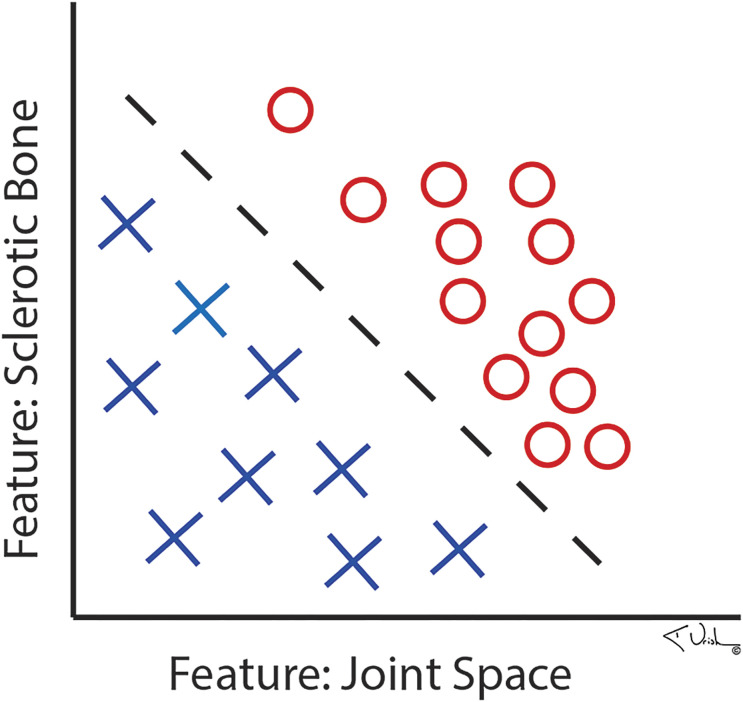
Illustration showing how a computer would diagnose arthritis. (Reproduced, with permission, from: Kenneth Urish, MD, PhD.)
Fig. 4
Fig. 4
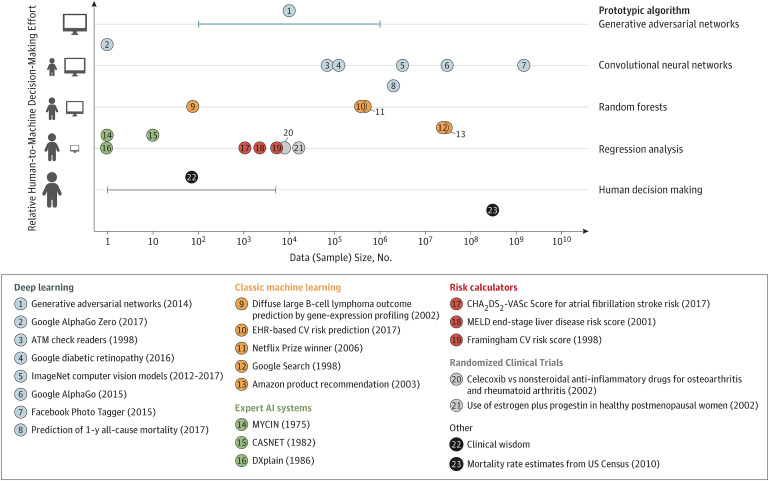
Chart showing the relationship between the degree of human relative to ML involvement and the magnitude of the data sets required to sufficiently train existing ML algorithmic examples. ATM = automated teller machine, EHR = electronic health records, CV = cardiovascular, and MELD = model for end-stage liver disease. (Reproduced, with permission, from: Beam AL, Kohane IS. Big data and machine learning in health care. JAMA. 2018 Apr 3;319[13]:1317-18. Copyright © 2018 American Medical Association. All rights reserved.)
Fig. 5
Fig. 5
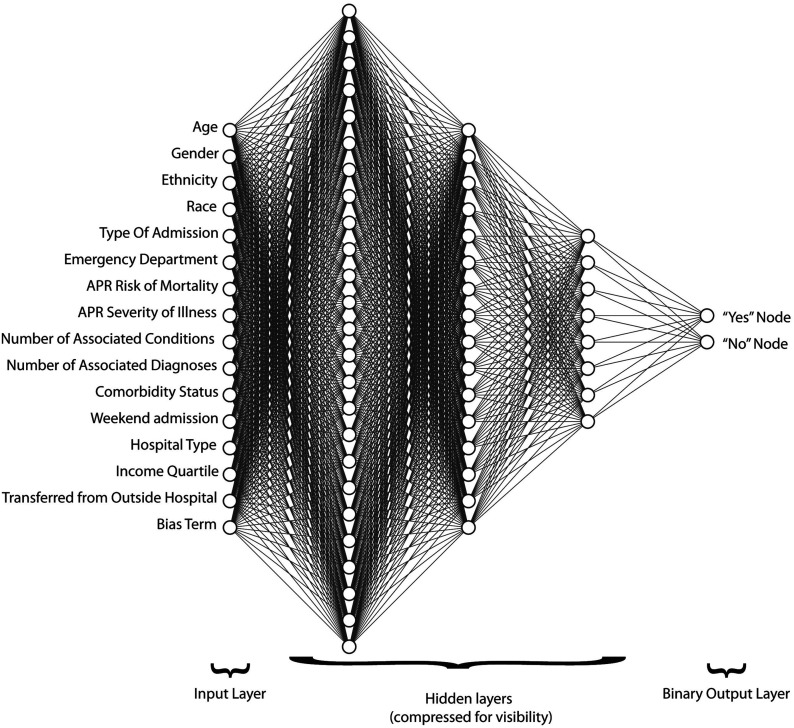
Example of input, hidden, and output layers in an ANN used to predict value-based metrics prior to elective primary total hip or knee arthroplasty. APR = all patient refined. (Reproduced, with permission, from: Ramkumar PN, Karnuta JM, Navarro SM, Haeberle HS, Iorio R, Mont MA, Patterson BM, Krebs VE. Preoperative prediction of value metrics and a patient-specific payment model for primary total hip arthroplasty: development and validation of a deep learning model. J Arthroplasty. 2019 Oct;34[10]:2228-34.e1.)
Fig. 6
Fig. 6
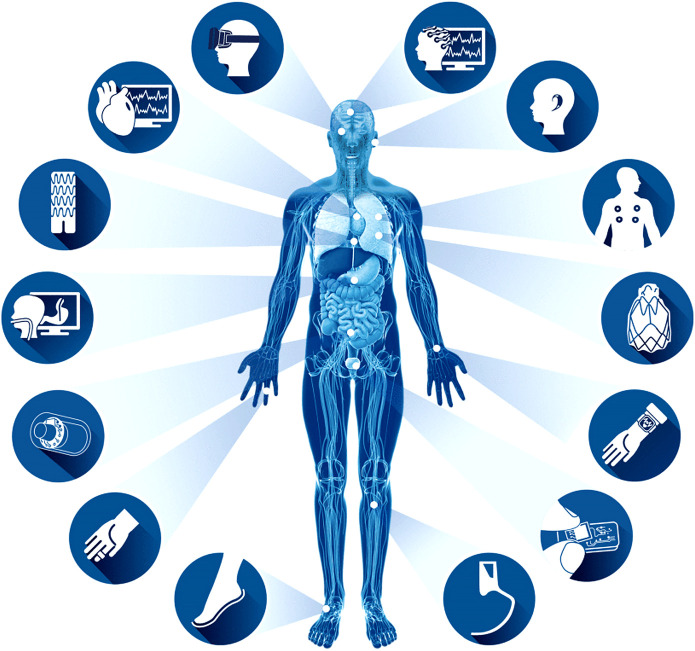
Remote patient monitoring. Data for health monitoring applications can be captured using a wide array of pervasive sensors that are worn on the body, implanted, or captured through ambient sensors, e.g., inertial motion sensors, electrocardiogram patches, smart watches, electroencephalograms, and prosthetics. (Republished with permission of IEEE, from: Ravi D, Wong C, Deligianni F, Berthelot M, Andreu-Perez J, Lo B, Yang GZ. Deep learning for health informatics. IEEE J Biomed Health Inform. 2017 Jan;21[1]:4-21; permission conveyed through Copyright Clearance Center, Inc.)
Fig. 7
Fig. 7
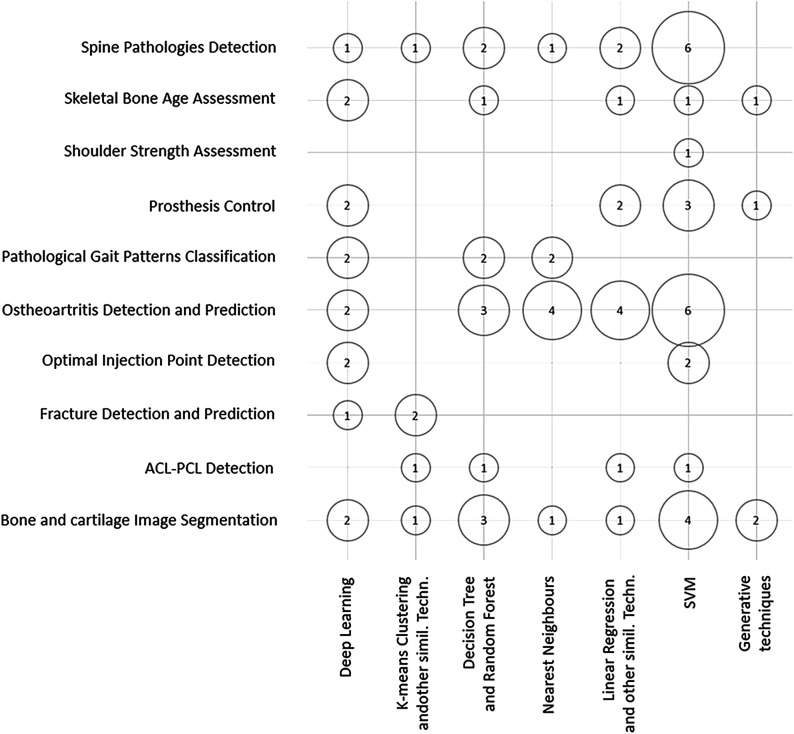
Bubble chart showing orthopaedic studies by ML techniques and ML techniques by input data. ACL-PCL = anterior cruciate ligament-posterior cruciate ligament, and SVM = support vector machine. (Reproduced, under Creative Commons license Attribution 4.0 International [CC BY 4.0], from: Cabitza F, Locoro A, Banfi G. Machine learning in orthopaedics: a literature review. Front Bioeng Biotechnol. 2018 Jun 27;6:75. © 2018 Cabitza, Locoro and Banfi.)
Fig. 8
Fig. 8
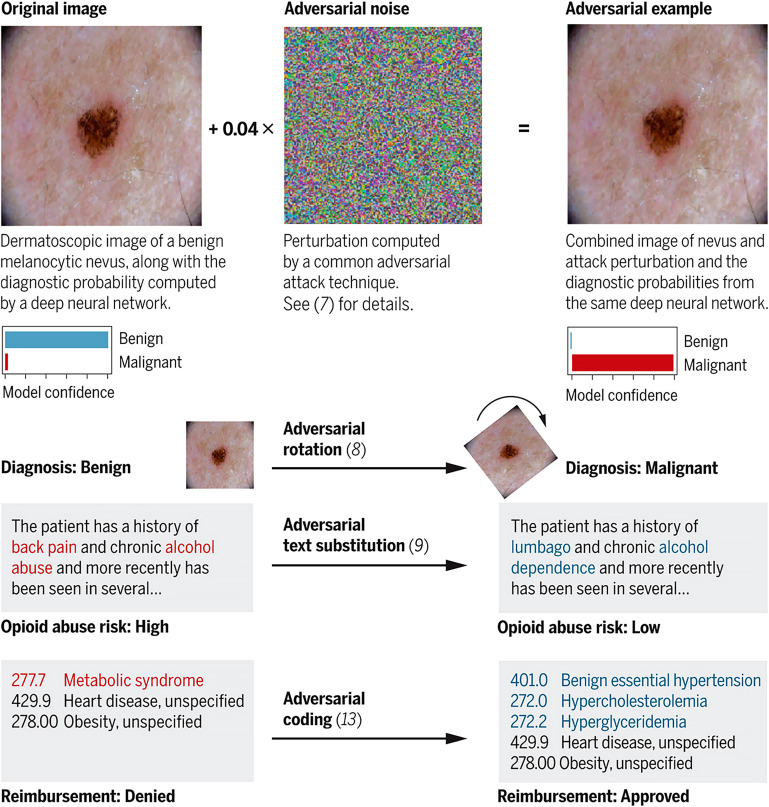
The anatomy of an adversarial attack. Demonstration of how subtle changes against various AI systems (image recognition and text recognition) can substantially alter clinical care and reimbursement. (Reproduced, with permission of the American Association for the Advancement of Science, from: Finlayson SG, Bowers JD, Ito J, Zittrain JL, Beam AL, Kohane IS. Adversarial attacks on medical machine learning. Science. 2019 Mar 22;363[6433]:1287-9; permission conveyed through Copyright Clearing Center, Inc.)

References

    1. Topol EJ. Deep medicine: how artificial intelligence can make healthcare human again. 1st ed. New York: Basic Books; 2019.
    1. Wikipedia. Dartmouth workshop. Accessed 2019 Aug 3. https://en.wikipedia.org/wiki/Dartmouth_workshop
    1. Hashimoto DA, Rosman G, Rus D, Meireles OR. Artificial intelligence in surgery: promises and perils. Ann Surg. 2018 Jul;268(1):70-6. Epub 2018 Feb 2. - PMC - PubMed
    1. Naylor CD. On the prospects for a (deep) learning health care system. JAMA. 2018. September 18;320(11):1099-100. Epub 2018 Sep 5. - PubMed
    1. Maxmen JS. The post-physician era: medicine in the twenty-first century. New York: Wiley; 1976.