. 2020 May 7;16(5):e1007852.
doi: 10.1371/journal.pcbi.1007852. eCollection 2020 May.

Single nucleotide polymorphisms affect RNA-protein interactions at a distance through modulation of RNA secondary structures

Affiliations

Single nucleotide polymorphisms affect RNA-protein interactions at a distance through modulation of RNA secondary structures

Elan Shatoff et al. PLoS Comput Biol. .

Abstract

Single nucleotide polymorphisms are widely associated with disease, but the ways in which they cause altered phenotypes are often unclear, especially when they appear in non-coding regions. One way in which non-coding polymorphisms could cause disease is by affecting crucial RNA-protein interactions. While it is clear that changing a protein binding motif will alter protein binding, it has been shown that single nucleotide polymorphisms can affect RNA secondary structure, and here we show that single nucleotide polymorphisms can affect RNA-protein interactions from outside binding motifs through altered RNA secondary structure. By using a modified version of the Vienna Package and PAR-CLIP data for HuR (ELAVL1) in humans we characterize the genome-wide effect of single nucleotide polymorphisms on HuR binding and show that they can have a many-fold effect on the affinity of HuR binding to RNA transcripts from tens of bases away. We also find some evidence that the effect of single nucleotide polymorphisms on protein binding might be under selection, with the non-reference alleles tending to make it harder for a protein to bind.


Conflict of interest statement

The authors have declared that no competing interests exist.

Figures
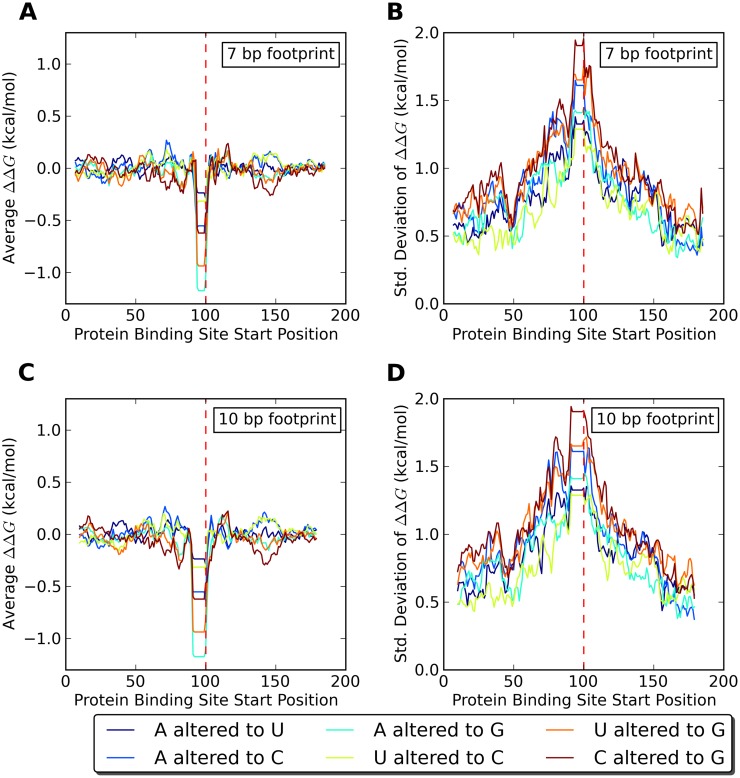
Fig 1
Fig 1. Effect of SNPs in random 201 nucleotide sequences on protein binding.
(A) and (C) Averages and (B) and (D) standard deviations for the change in effective RNA-protein binding free energy, ΔΔG, in response to six different single nucleotide sequence alterations averaged over 100 randomly chosen RNA sequences. (A) and (B) show data for a protein with a 7 bp footprint and (C) and (D) for a protein with a 10 bp footprint. The sequence alteration location (indicated by the dashed vertical red line) is static while the protein binding site start position is variable.
Fig 2
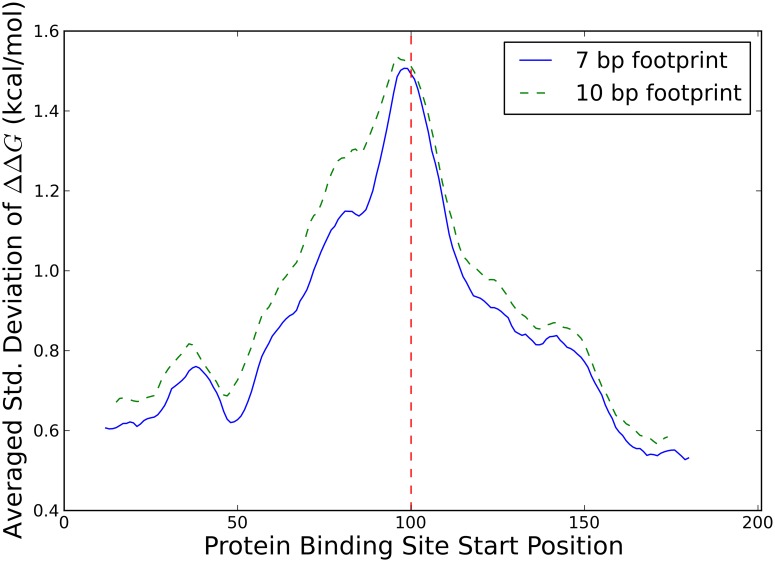
Fig 2. Effect of protein footprint on standard deviation of ΔΔG in 201 nucleotide sequences.
Standard deviations of the change in effective RNA-protein binding free energy, ΔΔG, from Fig 1B (solid blue line) and Fig 1D (dashed green line) above, averaged both over the six different single nucleotide sequence alterations and a 10 base pair running average to smooth the curves. Sequence alteration location (indicated by dashed vertical red line) is static while protein binding site start position is variable.
Fig 3
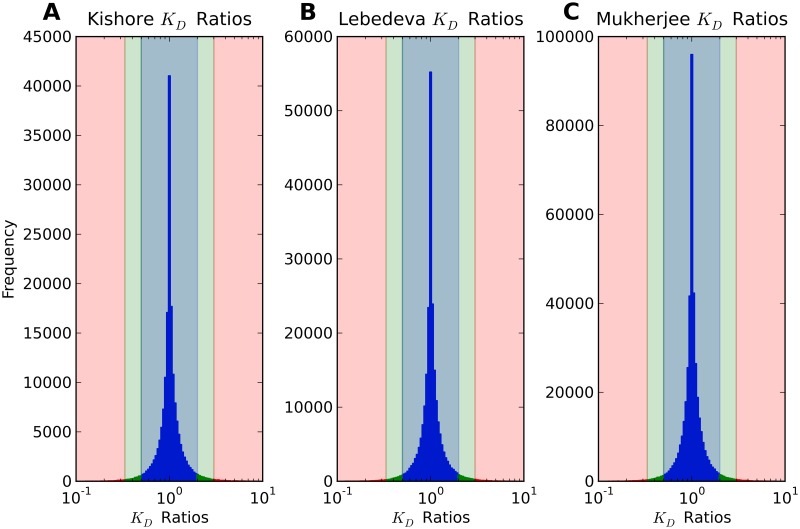
Fig 3. KD ratios of HuR binding to 201 nucleotide sequences with and without SNPs.
Histograms for the affinity ratios using (A) Kishore [30] HuR binding sites, (B) Lebedeva [31] HuR binding sites, and (C) Mukherjee [32] HuR binding sites. Affinity ratios are defined to be the dissociation constant KD for HuR binding to the alternate allele of the SNP over the dissociation constant KD for HuR binding to the reference sequence. Ratios larger than threefold are shown in red, ratios between two- and threefold are shown in green, and ratios less than twofold are shown in blue.
Fig 4
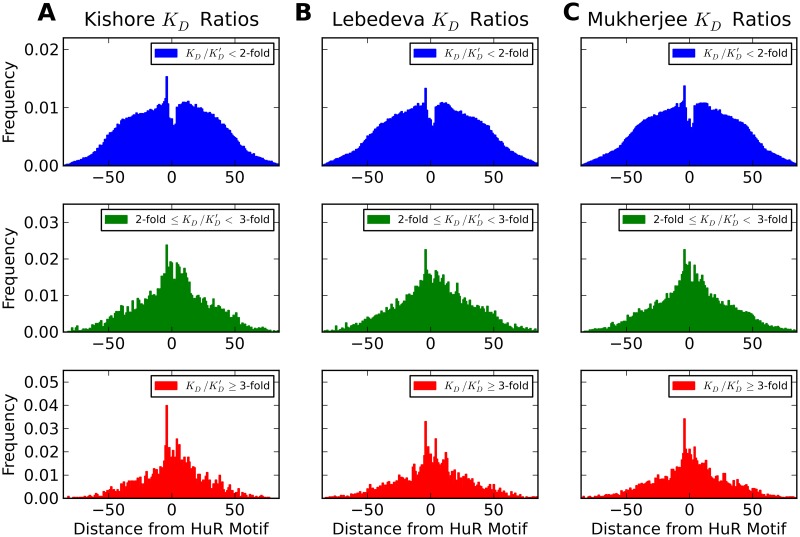
Fig 4. Effect of distance from motif on change of binding affinity due to SNPs in 201 nucleotide sequences.
Histograms of distances of SNP locations from the center of the nearest HuR binding motif for (A) the Kishore data set, (B) the Lebedeva data set, and (C) Mukherjee data set for different strengths of their effects on HuR binding. Distances where the SNP is upstream of the motif are negative. The top (blue) histograms are of SNPs with an absolute fold change (positive or negative) in binding affinity less than 2, the middle (green) histograms are of SNPs with a fold change between 2 and 3, and the bottom (red) histograms are of SNPs with a fold change of 3 or greater.
Fig 5
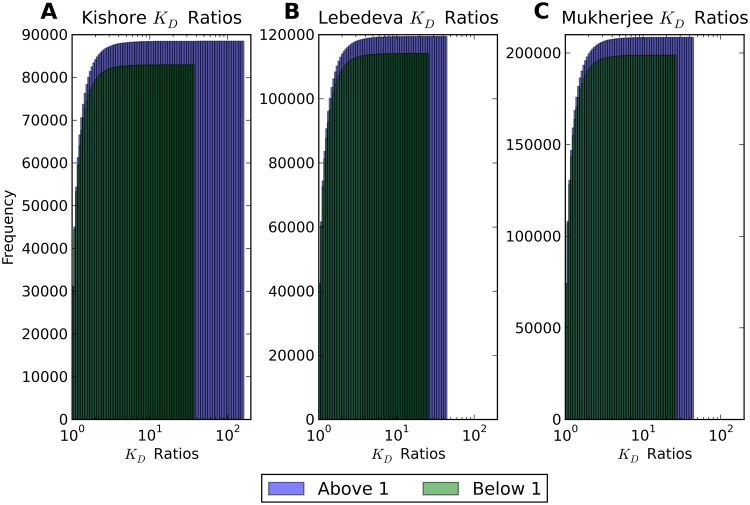
Fig 5. Cumulative histogram of KD ratios in 201 nucleotide sequences.
Cumulative histograms for the affinity ratios using (A) Kishore [30] HuR binding sites, (B) Lebedeva [31] HuR binding sites, and (C) Mukherjee [32] HuR binding sites. Ratios less than 1 are reciprocated to be larger than 1, and shown in dark (green), while ratios naturally larger than 1 are shown in lighter color (blue).
Fig 6
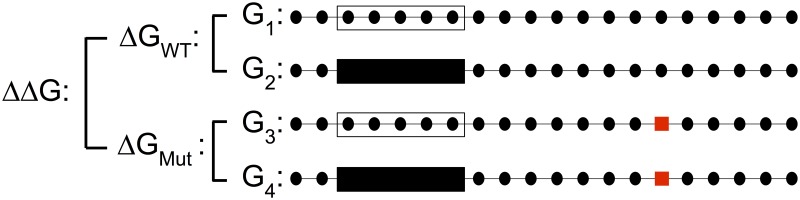
Fig 6. Possible configurations of a SNP and protein on RNA.
The four different configurations of an RNA subject to sequence variation interacting with a protein: wild type sequence not bound by a protein, wild type sequence bound by a protein, mutant sequence not bound by a protein, or mutant sequence bound by a protein. Lines represent RNA backbones, and black dots represent bases. Transparent and opaque boxes represent unbound and bound protein binding sites, and red squares represent a change in nucleotide identity between the wild type and mutant sequences. Bases bound by a protein cannot base pair, but the base that differs between wild type and mutant can.

References

    1. Vignal A, Milan D, SanCristobal M, Eggen A. A review on SNP and other types of molecular markers and their use in animal genetics. Genetics Selection Evolution. 2002;34(3):275 10.1186/1297-9686-34-3-275 - DOI - PMC - PubMed
    1. Shastry BS. SNP alleles in human disease and evolution. Journal Of Human Genetics. 2002;47:561 EP –. 10.1007/s100380200086 - DOI - PubMed
    1. Lee ST, Choi KW, Yeo HT, Kim JW, Ki CS, Cho YD. Identification of an Arg35X mutation in the PDCD10 gene in a patient with cerebral and multiple spinal cavernous malformations. Journal of the Neurological Sciences. 2008;267(1):177–181. 10.1016/j.jns.2007.10.018. - DOI - PubMed
    1. Maurano MT, Humbert R, Rynes E, Thurman RE, Haugen E, Wang H, et al. Systematic localization of common disease-associated variation in regulatory DNA. Science. 2012;337(6099):1190–1195. 10.1126/science.1222794 - DOI - PMC - PubMed
    1. Zhang F, Lupski JR. Non-coding genetic variants in human disease. Human molecular genetics. 2015;24(R1):R102–R110. 10.1093/hmg/ddv259 - DOI - PMC - PubMed

Publication types