


Defining preconception: exploring the concept of a preconception population
- PMID: 32381056
- PMCID: PMC7206804
- DOI: 10.1186/s12884-020-02973-1
Defining preconception: exploring the concept of a preconception population
Abstract
Background: Health prior to conception can significantly impact offspring health, however, a clear definition of the attributes of the preconception population is currently lacking. We aimed to use existing literature to explore the concept and attributes of a preconception population by: [1] identifying characteristics and research recruitment methods; and [2] generating an attribute-based working definition of a preconception population.
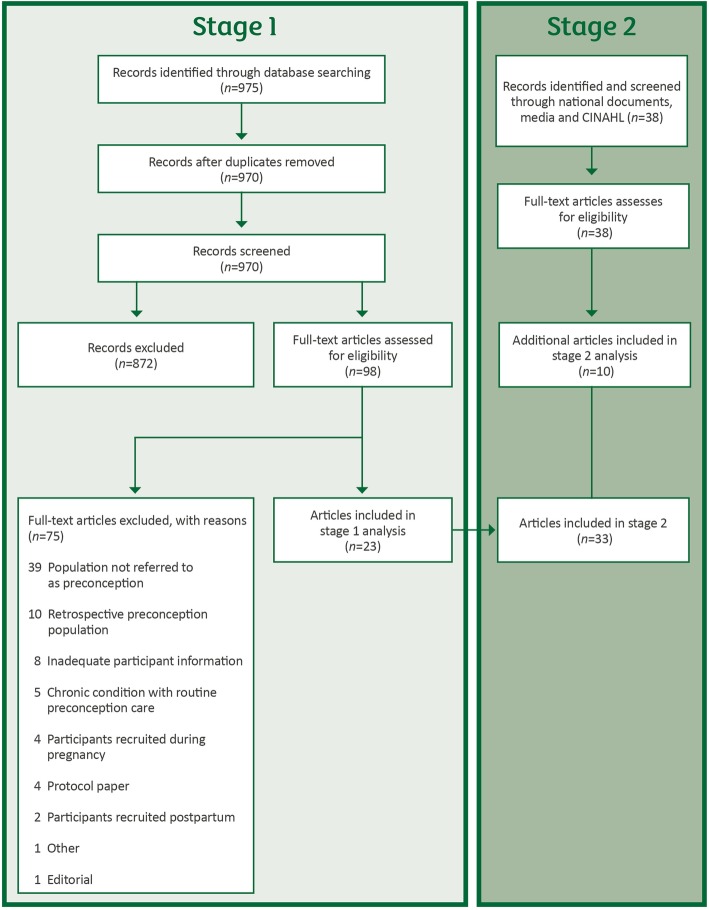
Methods: A rapid review of current literature using CINAHL and the subject heading 'pre-pregnancy care' was conducted (Stage 1). Data extracted included definitions of preconception, participant inclusion/exclusion criteria, participant characteristics, and recruitment methods. Stage 2 involved a wider search of relevant publications beyond peer-reviewed literature followed by a concept analysis of the phrase "preconception population" applying Walker and Avant's framework (Stage 2).
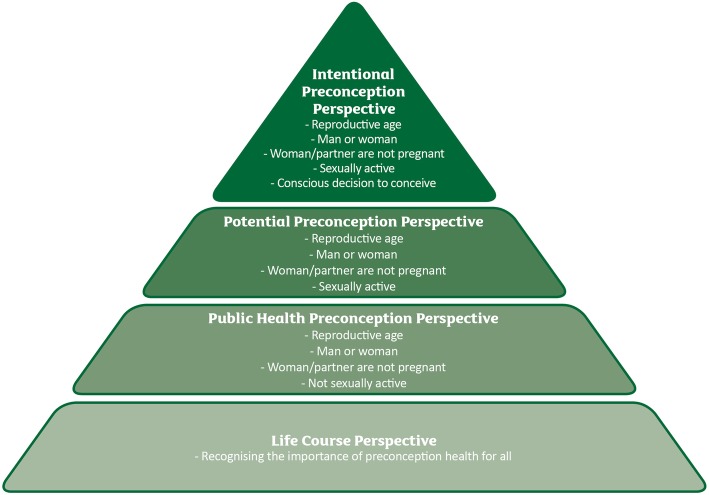
Results: Twenty-three papers (19 studies) were included in Stage 1. "Preconception" was explicitly defined in one study. Twelve studies specified participants must be planning a pregnancy. Stage 2 included 33 publications. Four key perspectives for the concept of the preconception population were derived: [1] intentional; [2] potential; [3] public health; and [4] life course.
Conclusions: Adopting these perspectives may allow researchers to accurately define, identify and recruit preconception populations and to develop interventions that are appropriately broad or tailored depending on population needs. We hope the definitions will facilitate research with this population and will subsequently improve the wellbeing of preconception men and women, which is essential to ensuring the health of future generations.
Keywords: Preconception; Pregnancy intention; Pregnancy planning; Public health.
Conflict of interest statement
Briony Hill is on the editorial board of BMC Pregnancy and Childbirth. The other authors declare that they have no competing interests.
Figures
References
-
- Rasmussen KM, Yaktine AL. Weight Gain During Pregnancy: Reexamining the Guidelines. Washington, DC: Institute of Medicine, National Research Council; 2013. - PubMed
Publication types
MeSH terms
LinkOut - more resources
Full Text Sources
Medical
