Intervention Effects on Language in Children With Autism: A Project AIM Meta-Analysis
- PMID: 32384865
- PMCID: PMC7842122
- DOI: 10.1044/2020_JSLHR-19-00167
Intervention Effects on Language in Children With Autism: A Project AIM Meta-Analysis
Abstract
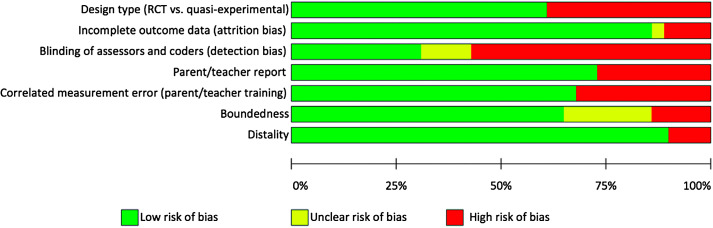
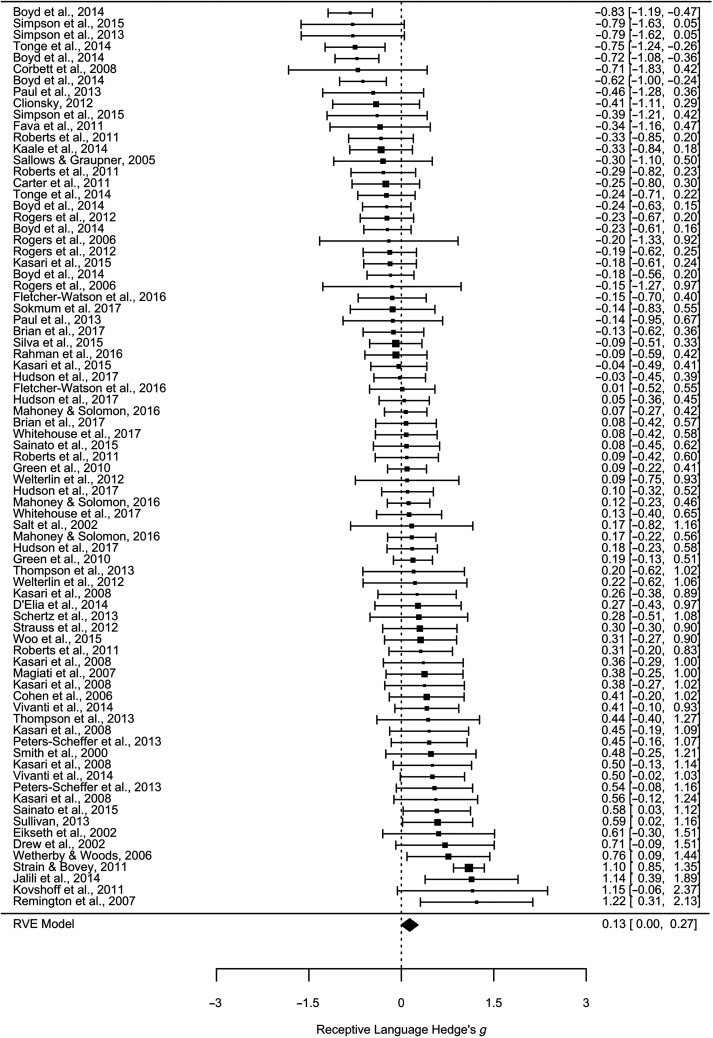
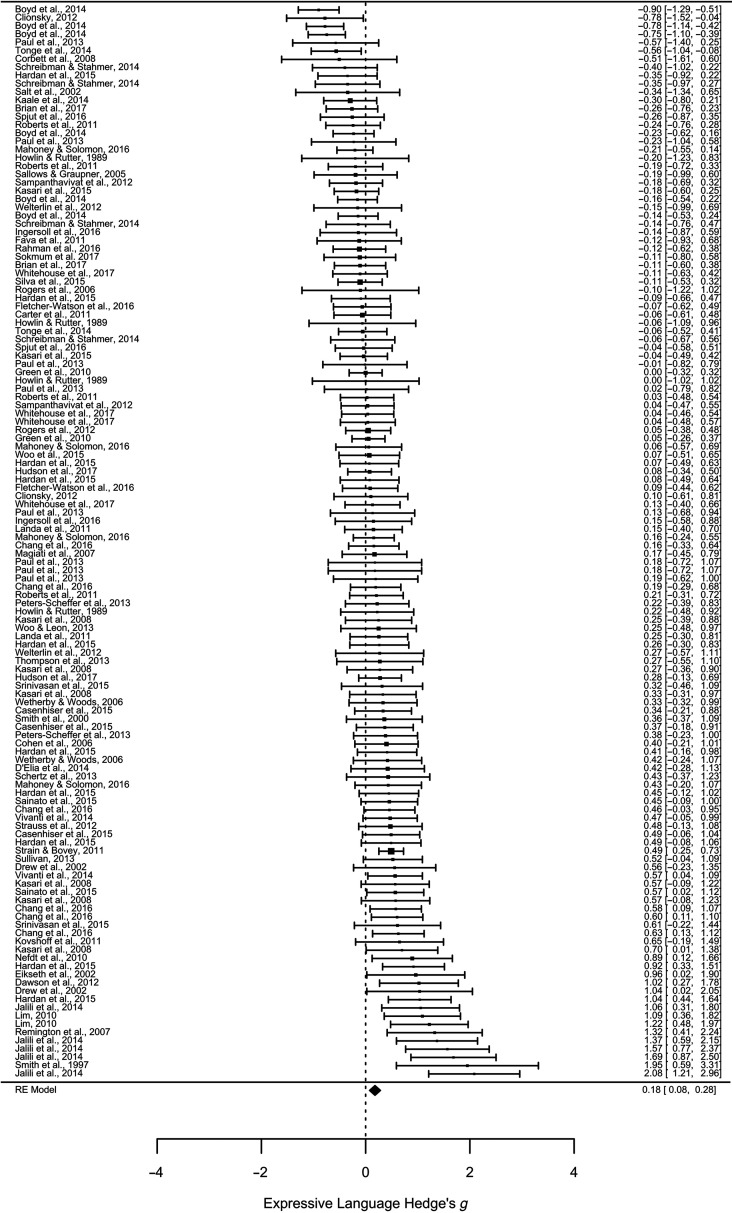
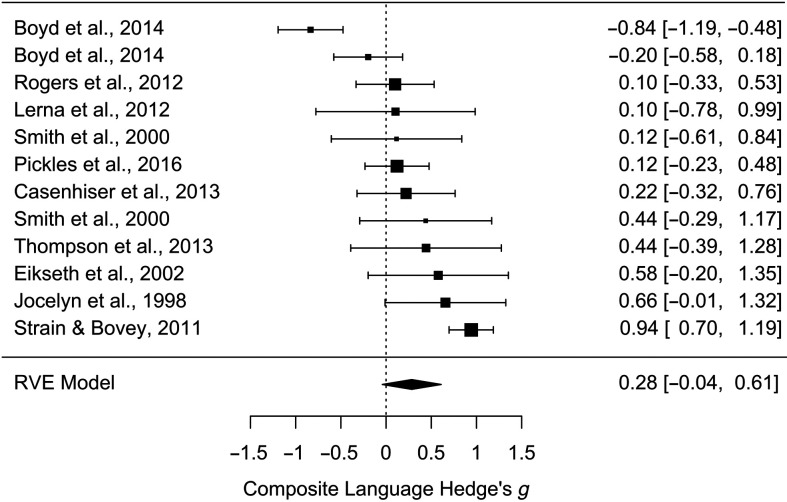
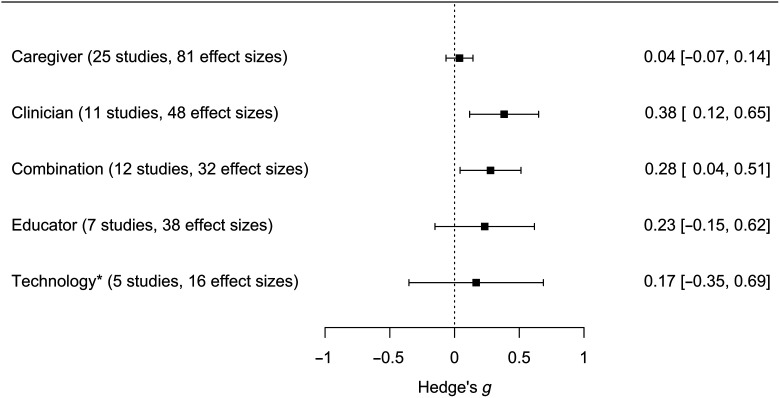
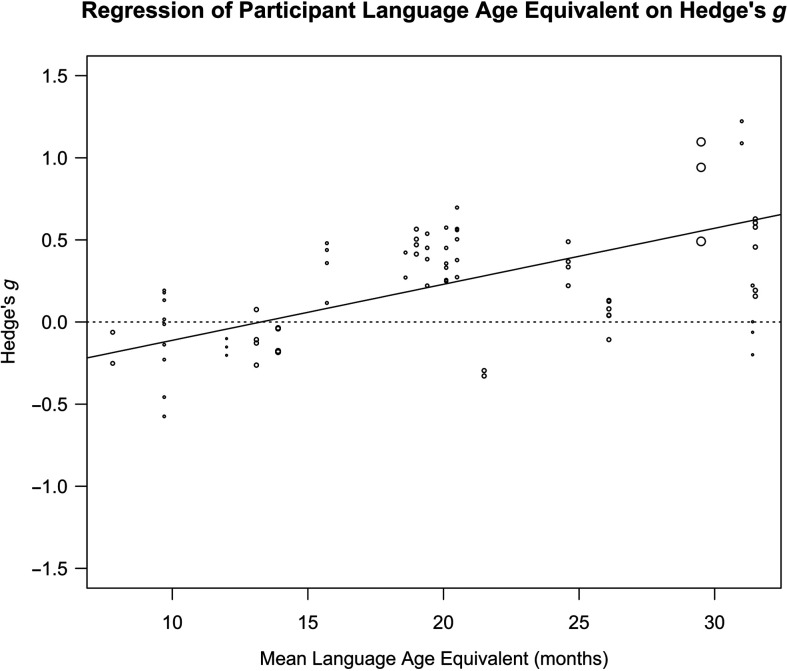
Purpose This study synthesized effects of interventions on language outcomes of young children (ages 0-8 years) with autism and evaluated the extent to which summary effects varied by intervention, participant, and outcome characteristics. Method A subset of effect sizes gathered for a larger meta-analysis (the Autism Intervention Meta-analysis or Project AIM) examining the effects of interventions for young children with autism, which were specific to language outcomes, was analyzed. Robust variance estimation and metaregression were used to calculate summary and moderated effects while controlling for intercorrelation among outcomes within studies. Results A total of 221 outcomes were gathered from 60 studies. The summary effect of intervention on language outcomes was small but significant. Summary effects were larger for expressive and composite language outcomes compared to receptive language outcomes. Interventions implemented by clinicians, or by clinicians and caregivers together, had summary effects that were significantly larger than interventions implemented by caregivers alone. Participants' pretreatment language age equivalent scores positively and significantly moderated intervention effects, such that effects were significantly larger on average when samples of children had higher pretreatment language levels. Effects were not moderated by cumulative intervention intensity, intervention type, autism symptomatology, chronological age, or the proximity or boundedness of outcomes. Study quality concerns were apparent for a majority of included outcomes. Conclusions We found evidence that intervention can facilitate improvements in language outcomes for young children with autism. Effects were largest for expressive and composite language outcomes, for children with initially higher language abilities, and for interventions implemented by clinicians or by caregivers and clinicians combined. However, quality concerns of included studies and borderline significance of some results temper our conclusions regarding intervention effectiveness and corresponding moderators.
Figures
References
-
- American Psychiatric Association. (2000). Diagnostic and statistical manual of mental disorders (4th ed., text revision).
-
- American Psychiatric Association. (2012). DSM-5 development: Autism spectrum disorder. http://www.dsm5.org/ProposedRevisions/Pages/proposedrevision.aspx?rid=94
-
- American Psychiatric Association. (2013). Diagnostic and statistical manual of mental disorders (5th ed.).
-
- American Speech-Language-Hearing Association. (n.d.). Autism [Practice Portal]. Retrieved August, 12, 2019, fromhttp://www.asha.org/Practice-Portal/Clinical-Topics/Autism/ https://www.asha.org/Practice-Portal/Clinical-Topics/Autism/
-
- Bacon E. C., Osuna S., Courchesne E., & Pierce K. (2019). Naturalistic language sampling to characterize the language abilities of 3-year-olds with autism spectrum disorder. Autism, 23(3), 699–712. https://doi.org/10.1177/1362361318766241 - PMC - PubMed
Publication types
MeSH terms
Grants and funding
LinkOut - more resources
Full Text Sources
Medical