


Effects of fish oil supplementation on glucose control and lipid levels among patients with type 2 diabetes mellitus: a Meta-analysis of randomized controlled trials
- PMID: 32384902
- PMCID: PMC7206824
- DOI: 10.1186/s12944-020-01214-w
Effects of fish oil supplementation on glucose control and lipid levels among patients with type 2 diabetes mellitus: a Meta-analysis of randomized controlled trials
Abstract
Background: Previous studies have yielded inconsistent findings on the role of fish oil in type 2 diabetes mellitus (T2DM). We systematically summarized the available evidence from randomized controlled trials (RCT) and aimed to investigate the effects of fish oil supplementation on glucose control and lipid levels among patients with T2DM.
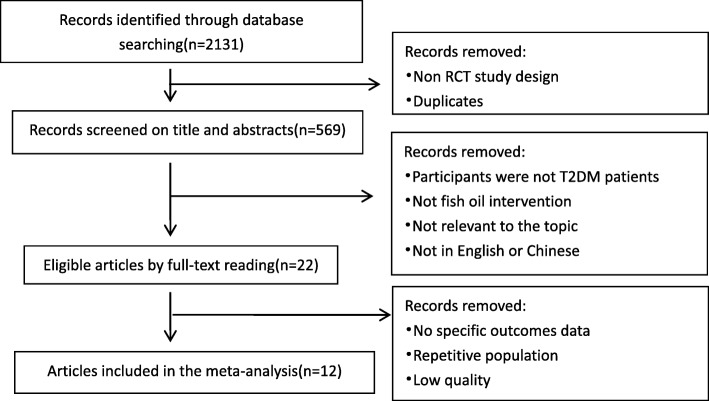
Methods: A comprehensive literature search was performed in electronic databases (PubMed, ProQuest, Cochrane Library, CNKI, VIP, and Wanfang) to identify all relevant RCTs which were published up to May 31st, 2019. We used Modified Jadad Score system to evaluate the quality of each included RCT. The pooled effects were estimated using random-effects model and presented as standardized mean differences with 95% confidence intervals.
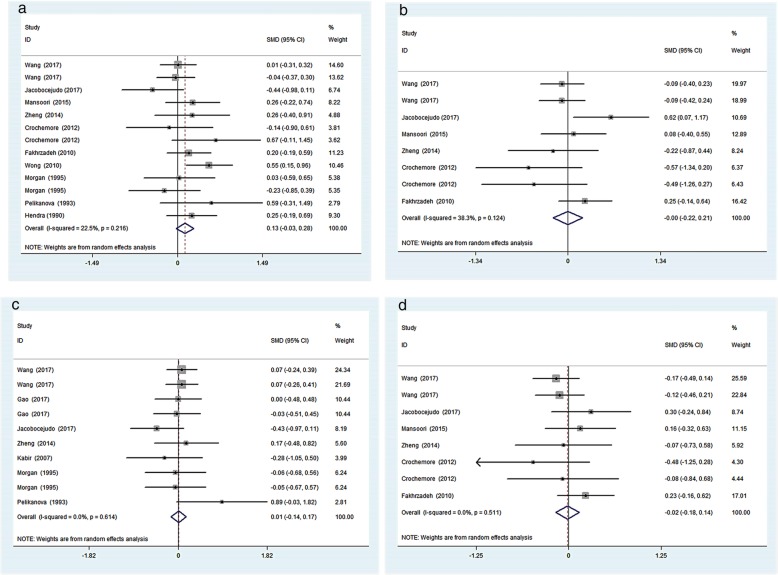
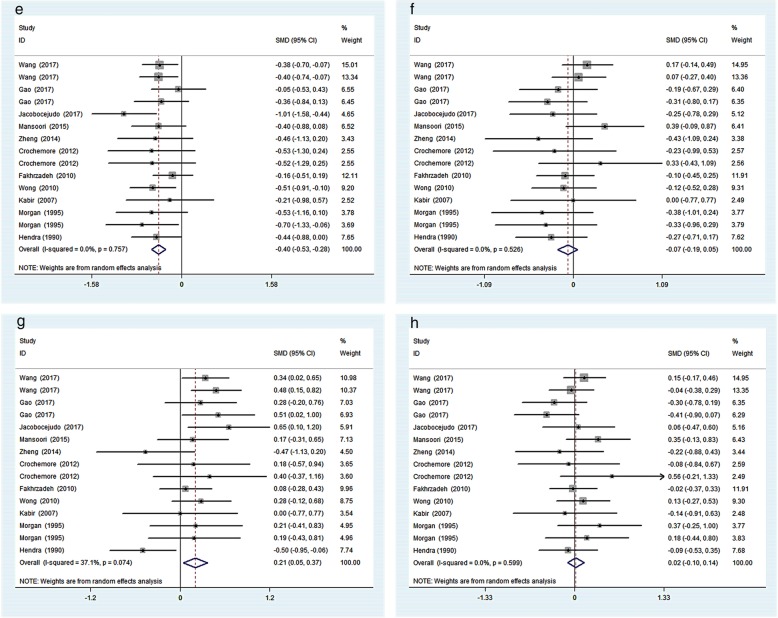
Results: A total of 12 RCTs were included in this meta-analysis. There was no significant difference in glucose control outcomes comparing fish oil supplementation to placebo. The effect size of fasting plasma glucose (FPG) was 0.13 (95% CI: - 0.03 to 0.28, p > 0.05). No marked change was observed in fasting insulin (FINS), glycosylated hemoglobin (HbA1c), and HOMA of insulin resistance (HOMA-IR) levels. Fish oil supplementation was associated with a decrease of triglyceride (TG) level by - 0.40 (95%CI: - 0.53 to - 0.28, p < 0.05), and an increase of high density lipoprotein (HDL) cholesterol level by 0.21 (95%CI: 0.05 to 0.37, p < 0.05). In subgroup analysis, HDL cholesterol level was higher among Asian and low-dose(< 2 g/d n-3 PUFA) subgroups compared to their counterparts (p < 0.05). TG level was lower in mid and long duration groups, along with an inconspicuous difference in short duration group.
Conclusions: This meta-analysis shows that among patients with T2DM, fish oil supplementation leads to a favorable blood lipids profile but does not improve glucose control.
Keywords: Fish oil; Meta-analysis; Omega-3 fatty acids; Randomized clinical trials; Type 2 diabetes mellitus.
Conflict of interest statement
The authors declare that they have no competing interests.
Figures
References
-
- World Health Organization. World Health Organization (2016) Global Report on Diabetes. 2016. p. 20–31.
-
- Afshin A, Sur PJ, Fay KA, Cornaby L, Ferrara G, Salama JS, Mullany EC, Abate KH, Abbafati C, Abebe Z, et al. Health effects of dietary risks in 195 countries, 1990–2017: a systematic analysis for the global burden of disease study 2017. Lancet. 2019;393(10184):1958–1972. doi: 10.1016/S0140-6736(19)30041-8. - DOI - PMC - PubMed
Publication types
MeSH terms
Substances
Grants and funding
LinkOut - more resources
Full Text Sources
Medical
Miscellaneous
