


Effects of coal-fired PM2.5 on the expression levels of atherosclerosis-related proteins and the phosphorylation level of MAPK in ApoE-/- mice
- PMID: 32384920
- PMCID: PMC7206822
- DOI: 10.1186/s40360-020-00411-8
Effects of coal-fired PM2.5 on the expression levels of atherosclerosis-related proteins and the phosphorylation level of MAPK in ApoE-/- mice
Abstract
Background: Air pollution increases the morbidity and mortality of cardiovascular disease (CVD). Atherosclerosis (AS) is the pathological basis of most CVD, and the progression of atherosclerosis and the increase of fragile plaque rupture are the mechanism basis of the relationship between atmospheric particulate pollution and CVD. The aim of the present study was to investigate the effects of coal-fired fine particulate matter (PM2.5) on the expression levels of atherosclerosis-related proteins (von Willebrand factor (vWF), Endothelin-1 (ET-1), intercellular adhesion molecule-1 (ICAM-1), and E-selectin, and to explore the role and mechanism of the progression of atherosclerosis induced by coal-fired PM2.5 via the mitogen-activated protein kinase (MAPK) signaling pathways.
Methods: Different concentrations of PM2.5 were given to apolipoprotein-E knockout (ApoE-/-) mice via intratracheal instillation for 8 weeks. Enzyme-linked immunosorbent assay (ELISA) was used to detect the levels of vWF, ET-1 in serum of mice. Immunohistochemistry was used to observe the expression and distribution of ICAM-1 and E-selectin in the aorta of mice. Western blot was used to investigate the phosphoylation of proteins relevant to MAPK signaling pathways.
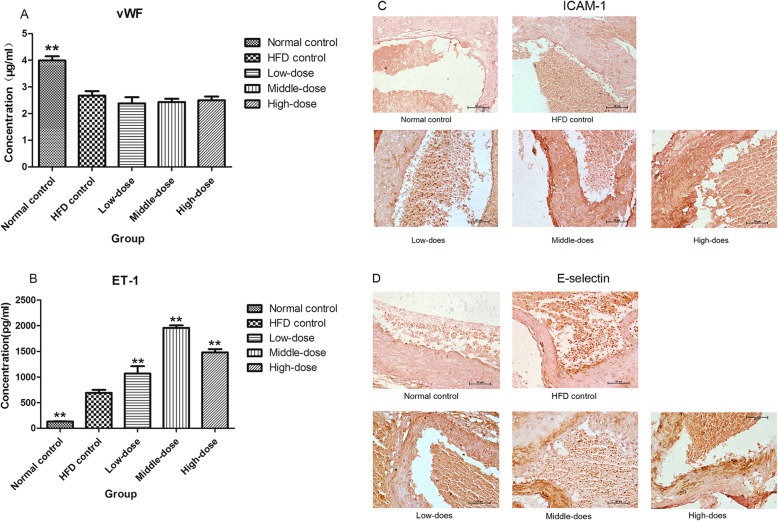
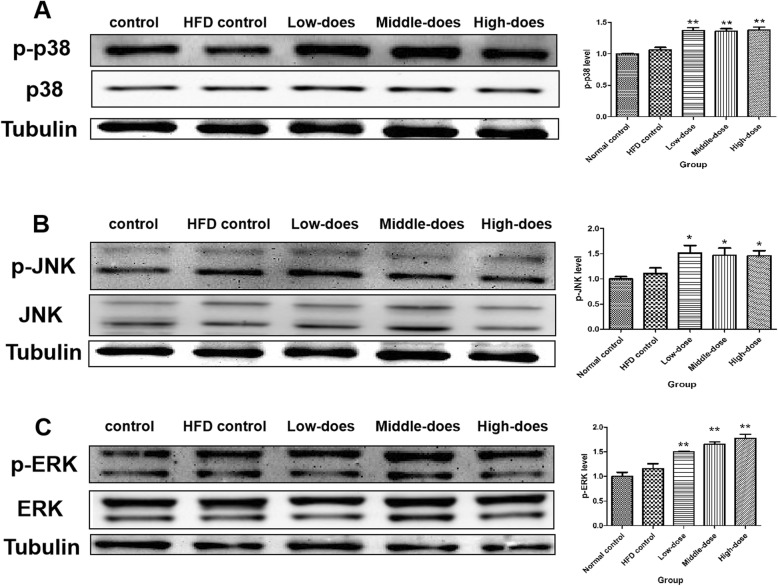
Results: Coal-fired PM2.5 exacerbated atherosclerosis induced by a high-fat diet. Fibrous cap formation, foam cells accumulation, and atherosclerotic lesions were observed in the aortas of PM2.5-treated mice. Coal-fired PM2.5 increased the protein levels of ET-1, ICAM-1, and E-selectin, but there was no significant difference in the vWF levels between the PM2.5-treatment mice and the HFD control mice. Coal-fired PM2.5 promoted the phosphorylation of p38, c-Jun N-terminal kinase (JNK), extracellular signal-regulated kinase (ERK) in aortic tissues of mice.
Conclusion: Coal-derived PM2.5 exacerbated the formation of atherosclerosis in mice, increased the expression levels of atherosclerosis-related proteins in mice serum, and promoted the phosphorylation of proteins relevant to MAPK signaling pathway. Thus, MAPK signaling pathway may play a role in the atherosclerosis pathogenesis induced by Coal-derived PM2.5.
Keywords: ApoE−/− mice; Atherosclerosis; Coal-fired PM2.5.
Conflict of interest statement
The authors declare that they have no competing interests.
Figures

References
-
- Gakidou E, Afshin A, Abajobir AA, Abate KH, Abbafati C, Abbas KM, Abd-Allah F, Abdulle AM, Abera SF, Aboyans V. Global, regional, and national comparative risk assessment of 84 behavioural, environmental and occupational, and metabolic risks or clusters of risks, 1990–2016: A systematic analysis for the global burden of disease study 2016. Lancet. 2017;390(10100):1345–1422. doi: 10.1016/S0140-6736(17)32366-8. - DOI - PMC - PubMed
Publication types
MeSH terms
Substances
Grants and funding
LinkOut - more resources
Full Text Sources
Medical
Research Materials
Miscellaneous
