


Non-destructive ZooMS identification reveals strategic bone tool raw material selection by Neandertals
- PMID: 32385291
- PMCID: PMC7210944
- DOI: 10.1038/s41598-020-64358-w
Non-destructive ZooMS identification reveals strategic bone tool raw material selection by Neandertals
Abstract
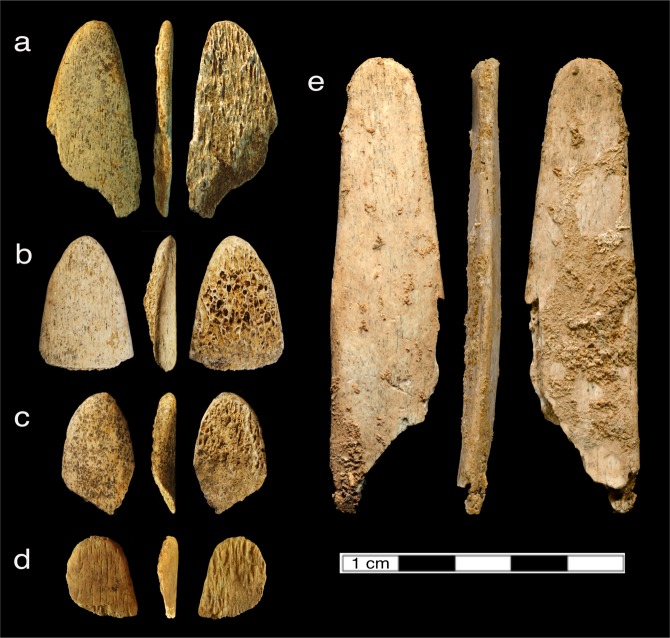
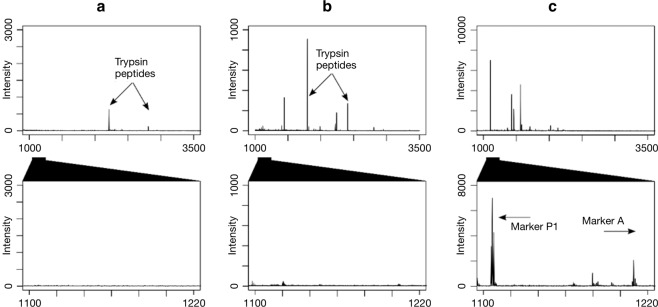
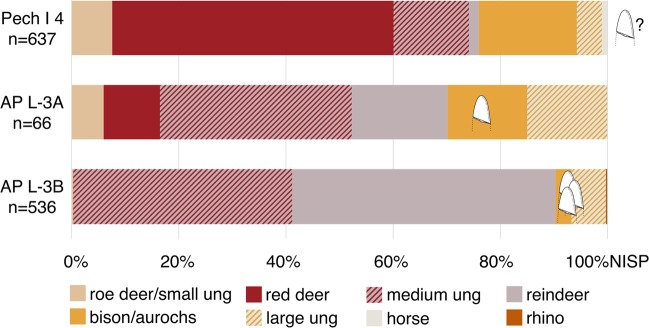
Five nearly identical fragments of specialized bone tools, interpreted as lissoirs (French for "smoothers"), have been found at two Middle Paleolithic sites in southwest France. The finds span three separate archaeological deposits, suggesting continuity in the behavior of late Neandertals. Using standard morphological assessments, we determined that the lissoirs were produced on ribs of medium-sized ungulates. However, since these bones are highly fragmented and anthropogenically modified, species determinations were challenging. Also, conservative curation policy recommends minimizing destructive sampling of rare, fragile, or small artifacts for molecular identification methods. To better understand raw material selection for these five lissoirs, we reassess their taxonomy using a non-destructive ZooMS methodology based on triboelectric capture of collagen. We sampled four storage containers and obtained identifiable MALDI-TOF MS collagen fingerprints, all indicative of the same taxonomic clade, which includes aurochs and bison (Bos sp. and Bison sp.). The fifth specimen, which was stored in a plastic bag, provided no useful MALDI-TOF MS spectra. We show that the choice of large bovid ribs in an archaeological layer dominated by reindeer (Rangifer tarandus) demonstrates strategic selection by these Neandertals. Furthermore, our results highlight the value of a promising technique for the non-destructive analysis of bone artifacts.
Conflict of interest statement
The authors declare no competing interests.
Figures
References
-
- Leroi-Gourhan, A. Etude des Restes Humains Fossiles Provenant des Grottes d’Arcy-sur-Cure. (Masson et Cie. éditeurs, 1958).
-
- d’Errico, F., Julien, M., Liolios, D., Vanhaeren, M. & Baffier, D. Many awls in our argument. Bone tool manufacture and use in the Châtelperronian and Aurignacian levels of the Grotte du Renne at Arcy-sur-Cure. The chronology of the Aurignacian and of the transitional technocomplexes: Dating, stratigraphies, cultural implications, 247-270 (2003).
-
- Martisius, N. L. The Middle Paleolithic lissoirs (smoothers) from Abri Peyrony and Pech-de-l’Azé I: investigating Neandertal bone tool material selection, manufacture, and use PhD thesis, University of California, Davis, (2019).
