


Impact of NPS MedicineWise general practitioner education programs and Choosing Wisely Australia recommendations on prescribing of proton pump inhibitors in Australia
- PMID: 32386520
- PMCID: PMC7211331
- DOI: 10.1186/s12875-020-01158-1
Impact of NPS MedicineWise general practitioner education programs and Choosing Wisely Australia recommendations on prescribing of proton pump inhibitors in Australia
Abstract
Background: This study evaluated the impact of multifaceted NPS MedicineWise programs that targeted all general practitioners (GPs) in Australia in 2009 and 2015 with the aim of reducing unnecessary prescribing of proton pump inhibitors (PPIs) and encouraged stepping down to a lower strength PPI or to discontinue treatment. The 2015 intervention coincided with the release of Choosing Wisely Australia recommendations from the Royal Australian College of General Practitioners (RACGP).
Methods: Outcome measures included monthly dispensing rates of different strength PPIs prescribed by GPs to concessional patients in Australia. All PPIs were categorized according to the May 2019 revised classifications for standard and low strength PPIs except for esomeprazole 40 mg which was classified as a standard strength and esomeprazole 20 mg as low strength for this analysis. Time series analyses was conducted of the dispensing rates of PPI prescriptions for concessional patients between January 2006 and June 2016 using the Pharmaceutical Benefits Scheme (PBS) and Medicare Benefits Schedule (MBS) databases in Australia. Participants were GPs with dispensed PPI prescriptions to concessional patients between January 2006 and June 2016.
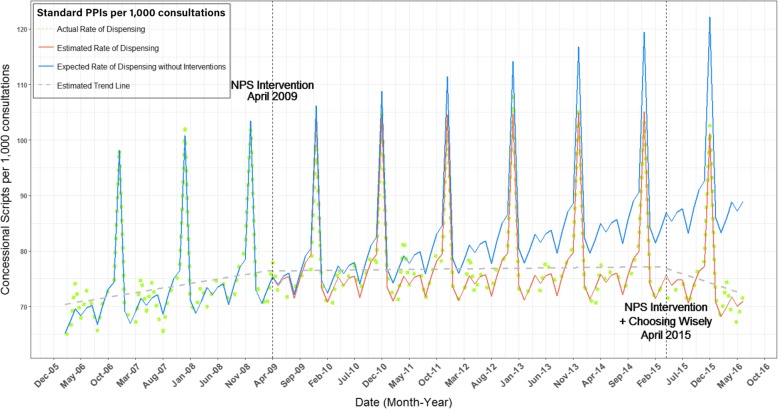
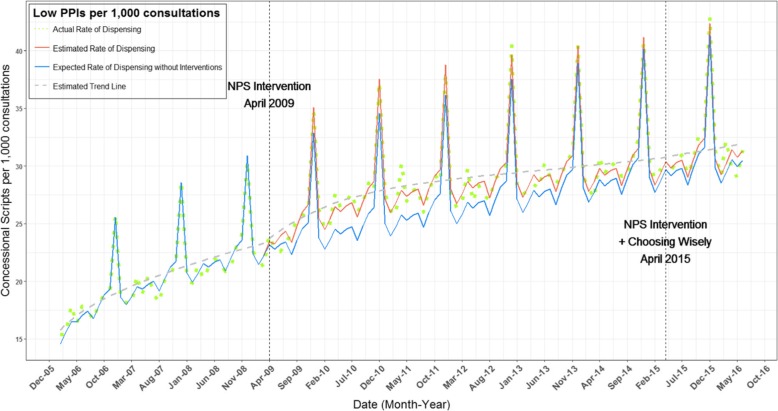
Results: Following the 2009 NPS MedicineWise program we observed a 6.7% reduction in the expected dispensing rate of standard strength PPIs for concessional patients between April 2006 and March 2015, and an 8.6% reduction between April 2009 and June 2016 following the 2015 program launch. We observed a significant increase of 5.6% in the dispensing rate of low strength PPIs for concessional patients between April 2009 and March 2015, and no significant change in trend following the 2015 program.
Conclusions: The NPS MedicineWise programs were associated with reductions in the dispensing rate of standard strength PPIs by June 2016 and an increase in the dispensing rate of low-strength PPIs by March 2015 although this trend did not continue following the 2015 program. This suggests that GPs are stepping down patients to lower strength PPIs following the educational programs. However, lower strength PPIs are still not the majority of PPIs dispensed in Australian and regular interventions to sustain and improve PPI management by GPs may be warranted.
Keywords: Choosing Wisely Australia; Education; General practice; NPS MedicineWise programs; PPI; Proton pump inhibitors; Quality use of medicines.
Conflict of interest statement
The authors declare that they have no competing interests.
Figures
References
-
- Choosing Wisely Australia: Royal Australian College of General Practitioners: tests, treatments and procedures clinicians and consumers should question [http://www.choosingwisely.org.au/recommendations/racgp] Accessed on 31 January 2018.
-
- Cancer Council Australia,: Clinical practice guidelines for the diagnosis and management of Barrett’s Oesophagus and Early Oesophageal Adenocarcinoma [https://wiki.cancer.org.au/australia/Guidelines:Barrett%27s] Accessed on 31 January 2018.
-
- Therapeutic Guidelines Limited: Therapeutic guidelines: gastrointestinal - disorders of the oesophagus [https://tgldcdp.tg.org.au/viewTopic?topicfile=disorders-oesophagus#toc_d...] Accessed on 31 January 2018.
Publication types
MeSH terms
Substances
Grants and funding
LinkOut - more resources
Full Text Sources
Miscellaneous
